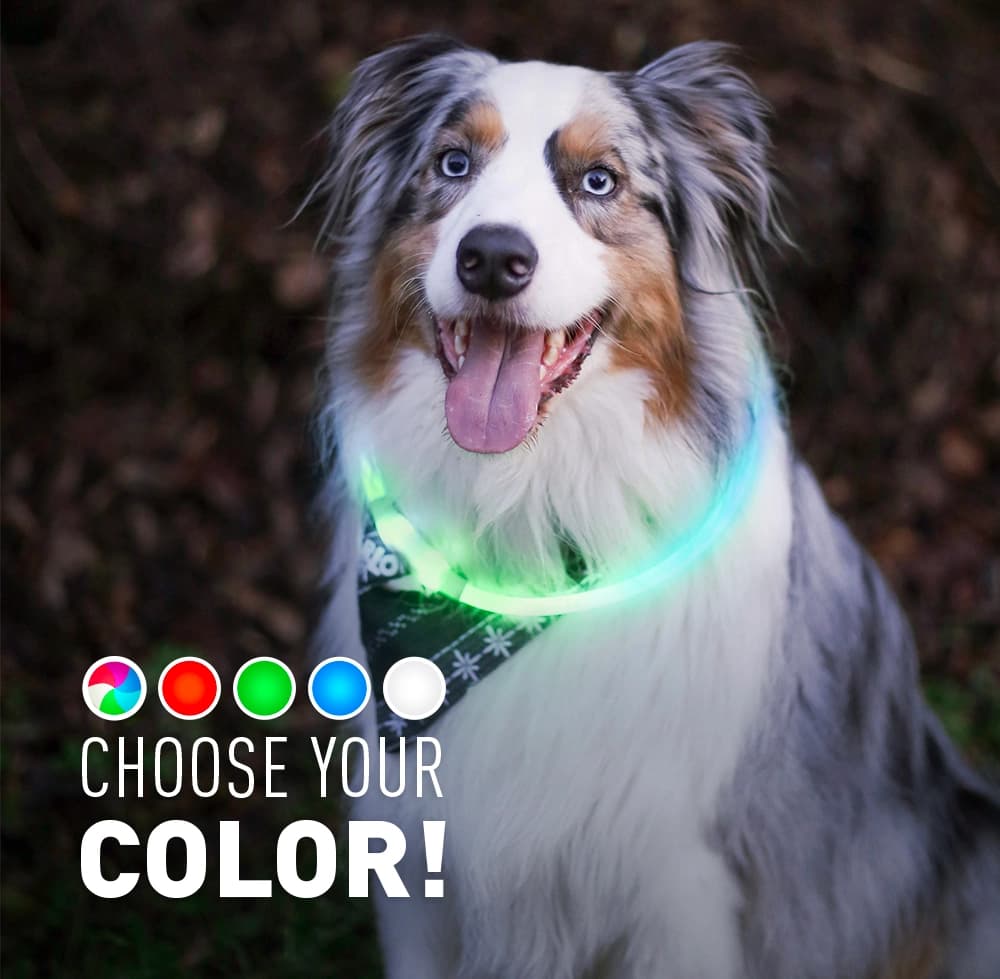
A flexible cut-to-fit necklace that adds 360-degree illumination over the dog's normal collar. Disc-O Select cycles colors or holds red, green, or blue; the full size fits roughly 12-27 inches, charges in 1.5 hours, and runs about 5.5 hours. It offers good value and broad size adjustment, but the middling official rating and cut-once sizing require care.
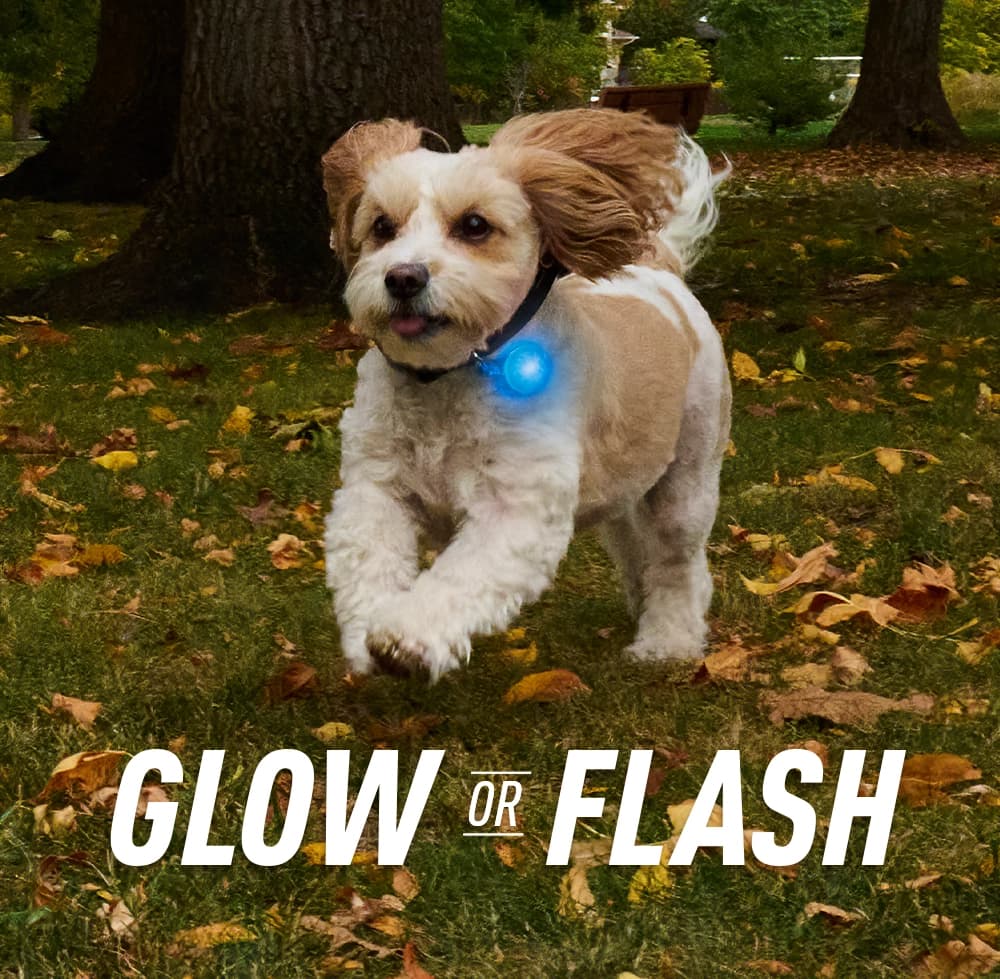
A small weather-resistant push-button light with a stainless-steel carabiner that clips to collars, harnesses, or leashes. It offers steady and flash modes, charges in about two hours, and runs for about 3.5 hours. The low price and simple attachment are useful for routine walks, but runtime and body coverage are lower than the four products above.
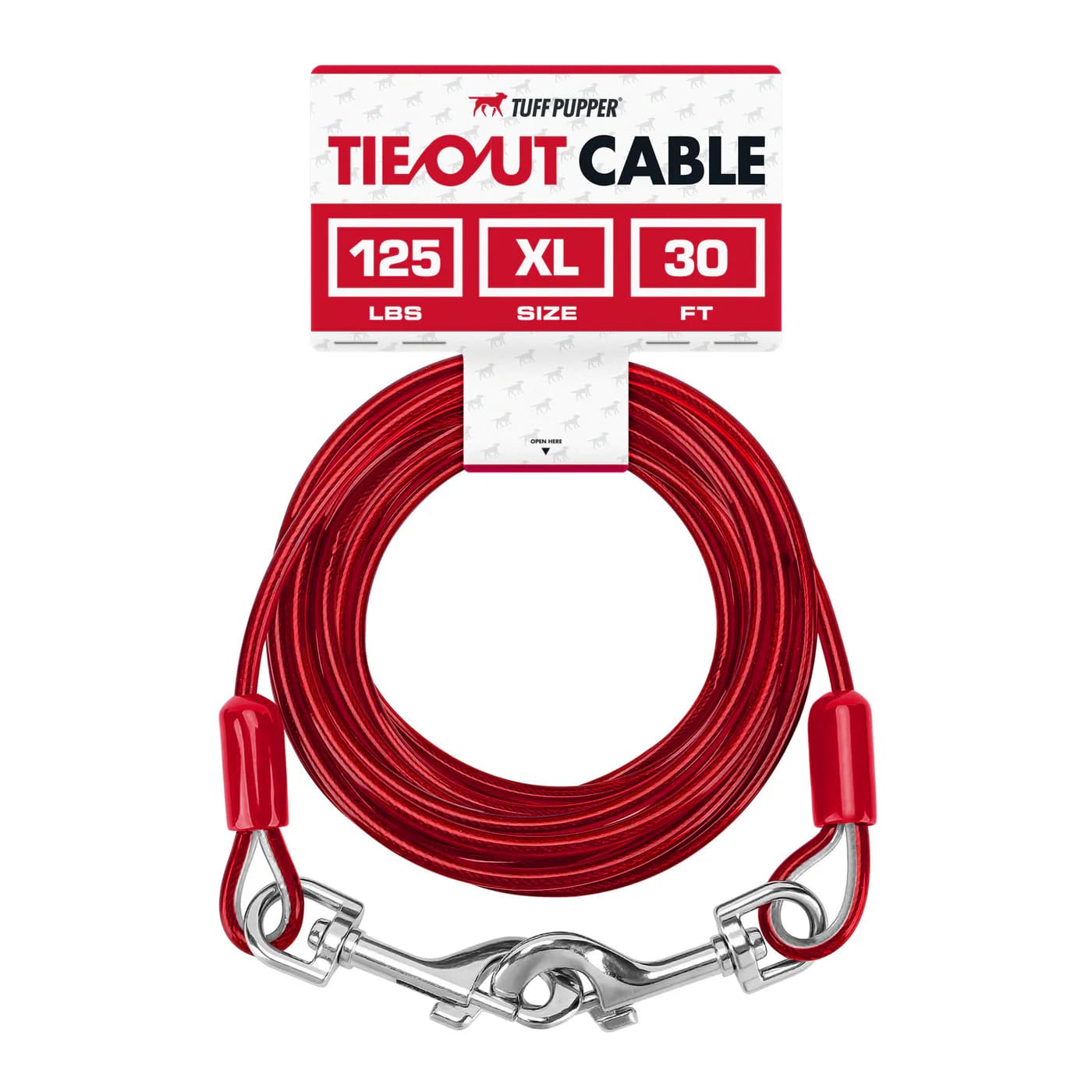
Tuff Pupper offers the broadest documented size matrix in this comparison, from 15- and 25-foot cables rated for dogs up to 35 or 60 pounds through 25- to 100-foot versions labeled for 90, 125, or 250 pounds. Galvanized steel cable, sealed PVC, reinforced eyelets, and swiveling clips make it a practical cable to pair with a campsite-appropriate anchor. The cable is not a complete system because no stake, tree strap, or other anchor is included, the official store ships this item only within the United States, and one brand-site reviewer questioned the clip strength on a 125-pound version; select by the dog's actual weight and inspect the clips rather than relying on headline cable-strength claims.
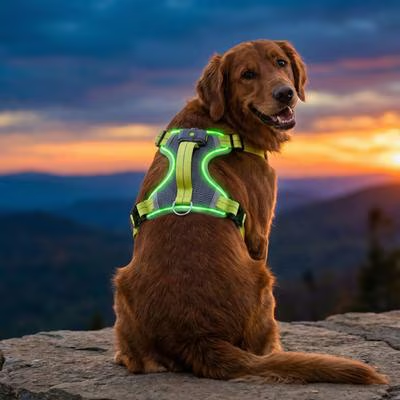
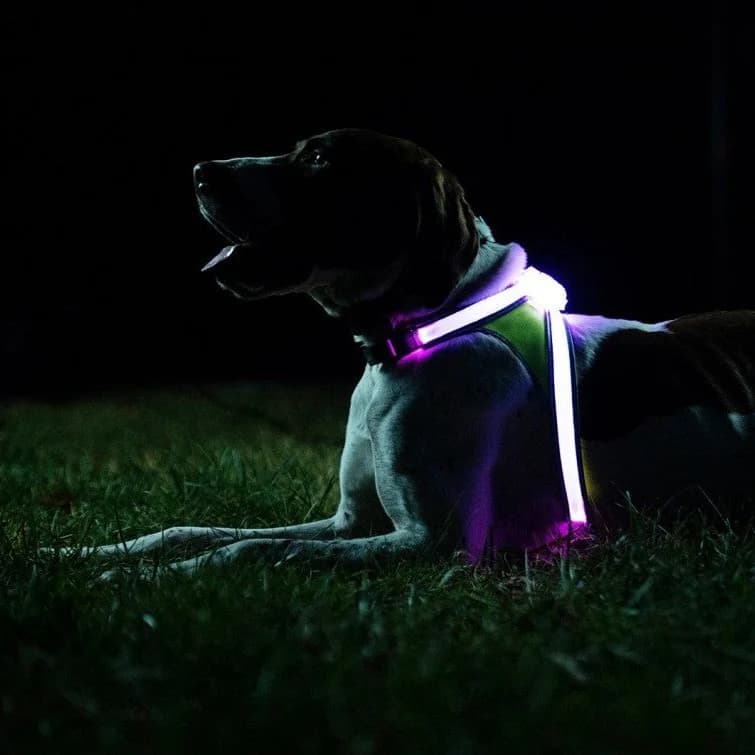
The K-Nite combines built-in rechargeable LEDs, reflective strips, and four adjustable straps in a lightweight walking-harness layout. Chewy showed four sizes with neck measurements from 14 to 36 inches and chest measurements from 15 to 38 inches. The review sample is modest and includes concerns about light connections and escape potential, so owners should inspect both lighting hardware and strap fit indoors before relying on it outside. The listing does not establish runtime or a water-resistance rating.

5 Best Dog Safety Lights for Night Walks and Camping
Five current dog lights compared from official specifications, brand-store prices, public review signals, attachment design, weather resistance, and runtime. These products improve visibility but do not replace a leash, reflective gear, supervision, or safe route selection; stated visibility distances are manufacturer claims rather than guarantees in every weather or coat type.
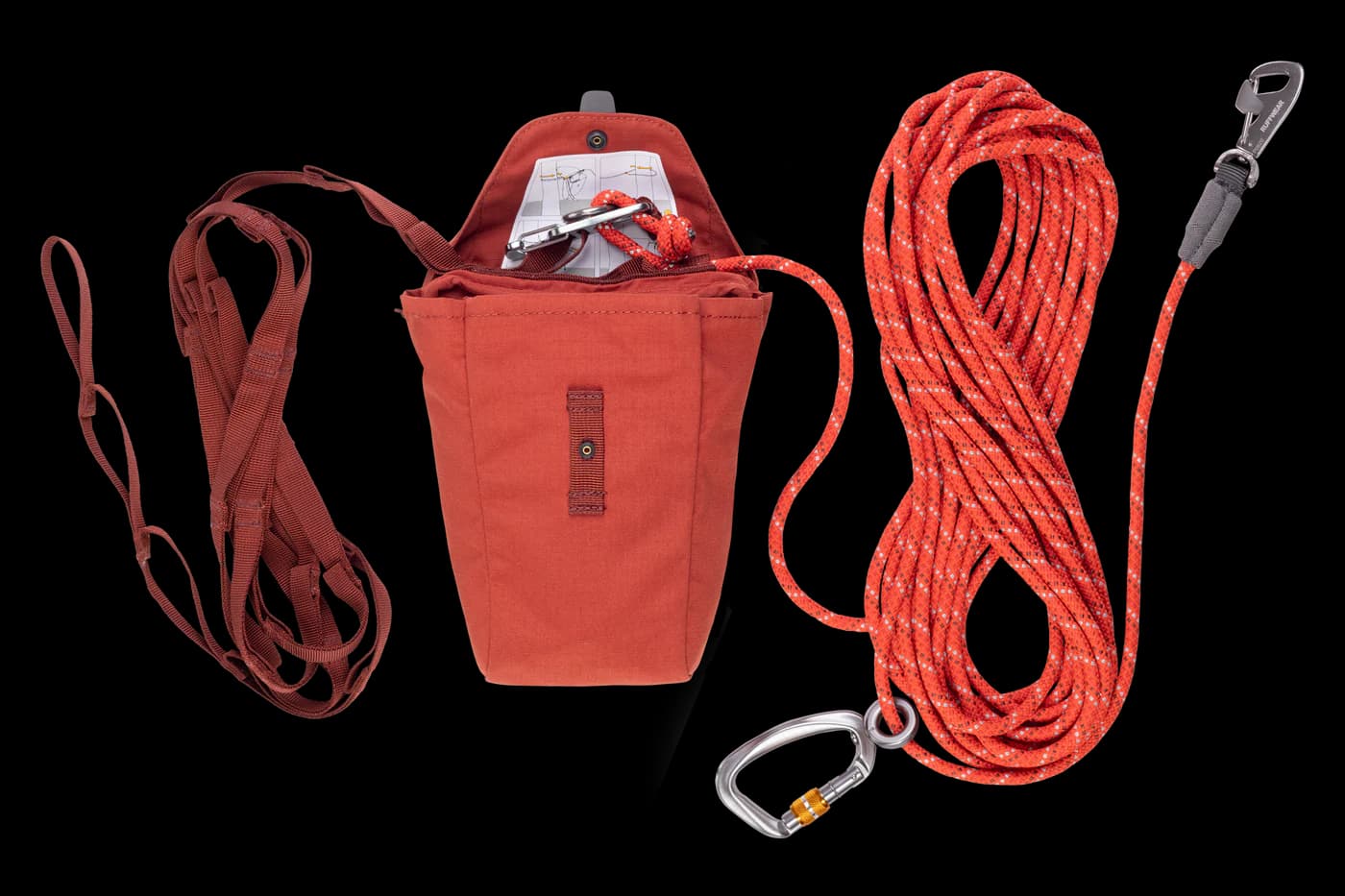
8 Best Dog Tie-Outs for Camping and Supervised Campsites
Eight currently orderable campsite tether systems compared from official setup instructions, anchor and terrain requirements, published dog-weight guidance, line-management hardware, current price and stock, and product-specific public review signals. The list covers tree-to-tree hitches, a single-tree portable leash/hitch, cable-and-anchor combinations, a multi-dog travel line, and stake-only hardware. A tie-out is never an escape-proof enclosure and should never replace active supervision: connect only to a correctly fitted back-clip harness, not a collar; follow campground and leash rules; choose a level area clear of roads, fires, water, wildlife, tent lines, furniture, branches, and other dogs; keep water and shade available; prevent running starts into the end of the line; inspect the anchor, soil or trees, cable, rope, coating, swivels, clips, and harness before every session; actively prevent entanglement; and stop immediately if the dog becomes distressed, tangled, or able to reach a hazard.

How to Choose a Pet GPS Tracker Plan and Check Coverage
A buyer's method for checking a pet GPS tracker's real cellular footprint, subscription cost, update modes, battery tradeoffs, fit and recovery workflow before committing to a plan.

Cat Travel and Camping Safety Guide
A practical, evidence-led plan for deciding whether a cat should travel, preparing a carrier, securing the vehicle, preventing campsite escapes, managing food and litter, and responding to health concerns.
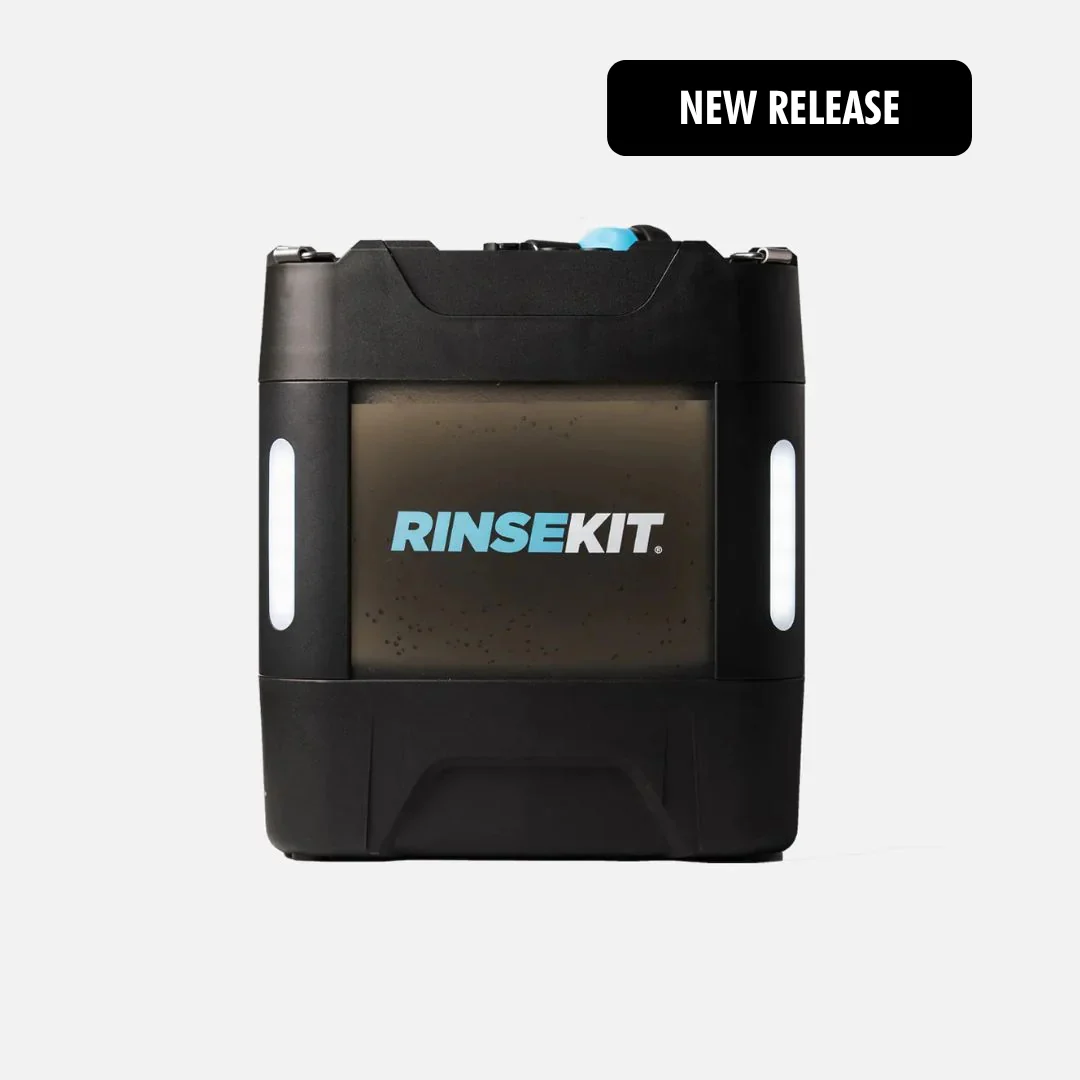
How to Rinse a Muddy Dog at a Trailhead or Campsite
An eight-step, campsite-aware routine for rinsing mud from a dog with portable showers, covering setup, lukewarm water, gentle pressure, drying, and responsible runoff.
How to Choose a Pet GPS Tracker Plan and Check Coverage