Understand why AirTag is not GPS, why a microchip is not a locator, and how satellite reception, cellular service, update frequency, battery life and subscription status affect a real pet GPS tracker.

An AirTag, a pet GPS tracker, and a microchip solve three different problems. AirTag is a Bluetooth item finder that can be detected by nearby devices participating in Apple's Find My network. Apple explicitly says its current AirTag is designed for objects, not people or pets. A pet GPS tracker usually calculates its own position from navigation satellites and sends that position through a cellular network to the maker's app. A veterinary microchip stores an identification number that a compatible scanner can read after someone physically finds the animal. The American Veterinary Medical Association states that a microchip is not a GPS device and cannot track a lost animal. Start with these distinctions, because calling all three products trackers hides the most important differences in update speed, coverage, power, and recovery workflow.
AirTag does not contain the GPS and cellular system used by a typical pet GPS tracker. It broadcasts a Bluetooth signal. When a participating Apple device detects an out-of-range AirTag, the Find My network can relay an approximate location to its owner. Apple Support explains that Find My displays a location and timestamp when the item connects to the network; when it cannot be located, the app shows where and when it was last found and can notify the owner after a later detection. Precision Finding is a nearby-search feature on compatible Apple hardware, not continuous remote GPS. This design can produce useful detections in a busy neighborhood, airport, or other place with passing Apple devices. Updates can be delayed or absent in sparsely populated countryside, dense terrain, or any location where no participating device passes close enough.
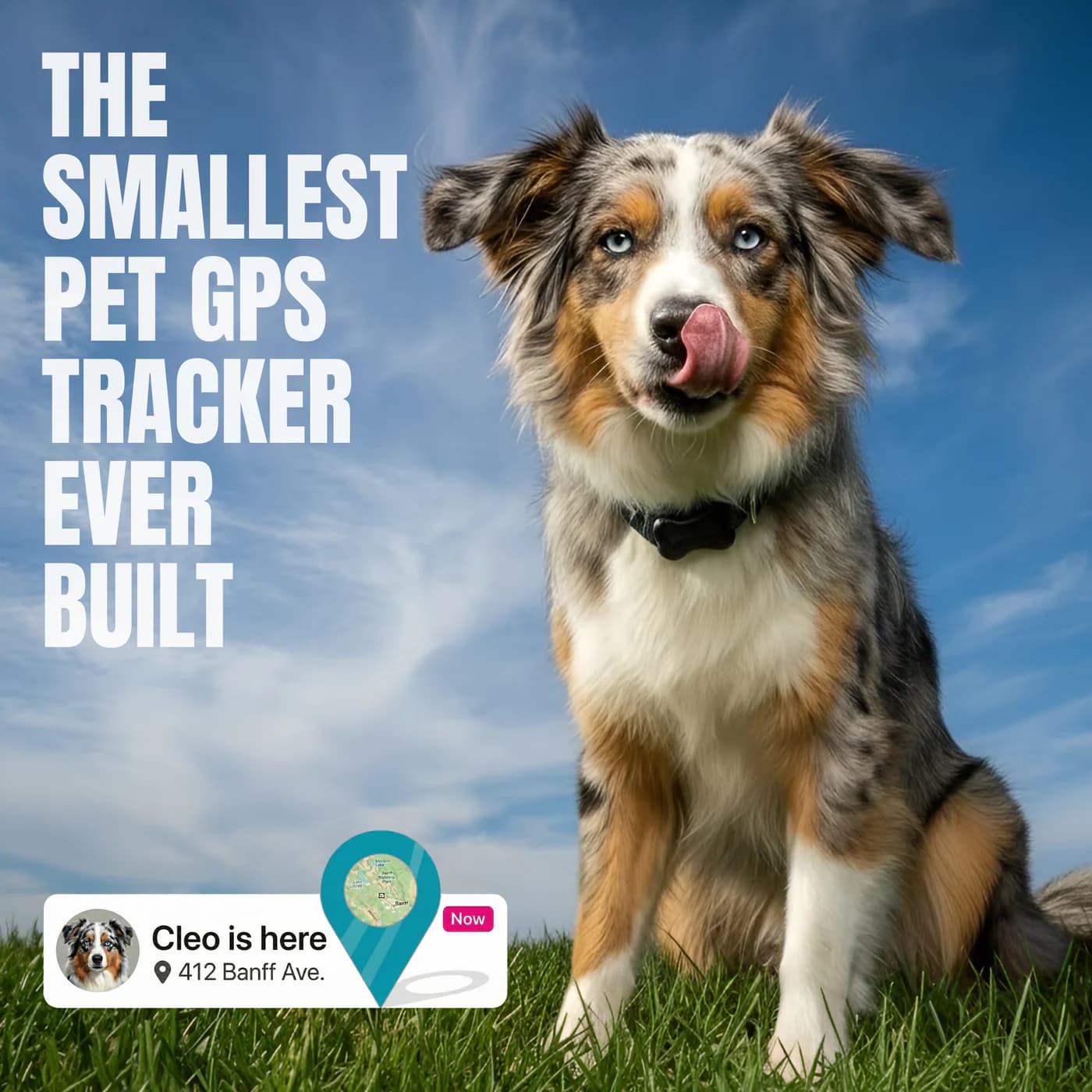
Most dedicated pet trackers combine two separate links. A GNSS receiver listens for signals from GPS or other navigation satellites to calculate a position, while an embedded cellular modem sends that position to an online service and then to the owner's phone. The satellites do not deliver the map update to the app. If the tracker can see enough satellites but has no supported cellular connection, it may calculate a position yet be unable to upload it promptly; exact offline behavior depends on the model. If cellular service is available but the tracker is indoors, under rock, or surrounded by signal-blocking structures, the position itself may be delayed or less accurate. The built-in SIM or eSIM and server service are why many pet GPS products require an active subscription. Also check the advertised refresh rate: normal mode, lost mode, and live mode can report at very different intervals.
Do not choose from a national coverage slogan alone. Imagine the first ten minutes after an escape at home, beside a highway rest area, in a wooded campground, and on a rural trail. AirTag depends on a nearby Find My participant seeing its Bluetooth signal, so its performance is tied to local device traffic rather than a continuous connection of its own. A cellular pet tracker can report without another passerby's phone, but only when its satellite reception, supported mobile network, battery, account, and attachment all work. Tractive's official battery guidance notes that limited satellite access in dense forests, urban canyons, and indoor spaces can weaken reception and increase power use. A tracker can also be torn off with a collar or lost separately from the animal. Neither option proves a pet is at the exact map pin, and neither replaces an immediate physical search, calls to shelters, or updated identification.
AirTag's replaceable CR2032 coin battery supports a low-power item-finding design, while pet GPS units normally use a rechargeable battery to acquire and transmit positions repeatedly. Their headline runtimes are therefore not directly comparable. For example, Tractive says its default mode can update every 2 to 60 minutes depending on activity and settings, while LIVE Tracking updates every 2 to 3 seconds. Tractive also says live use, weak cellular service, weak satellite reception, and the absence of a power-saving zone shorten runtime. Other brands use different intervals and modes, so verify the exact model rather than applying those figures universally. A claim such as up to several days or weeks may assume time at home on Wi-Fi or Bluetooth, infrequent updates, low-power mode, or little movement. It is not a promise of equally long continuous live tracking. Plan charging around the demanding scenario you actually need.
AirTag is managed through Apple's Find My ecosystem, and its privacy protections influence how it behaves. Apple says Find My communications are encrypted and participating devices remain anonymous. AirTag and compatible Bluetooth tags also use unwanted-tracking protections: a separated tag seen moving with someone may trigger an alert on an iPhone or Android phone, and an AirTag separated from its owner can eventually make a sound. Those protections are important, but they reinforce that AirTag was not designed as a silent pet-monitoring service. A dedicated GPS brand has its own account, app, data retention rules, family-sharing options, and supported phone requirements. Before buying, check who can see the pet, how access can be revoked, whether location history is included in the chosen plan, and what happens to remote tracking if billing expires or the service is discontinued.
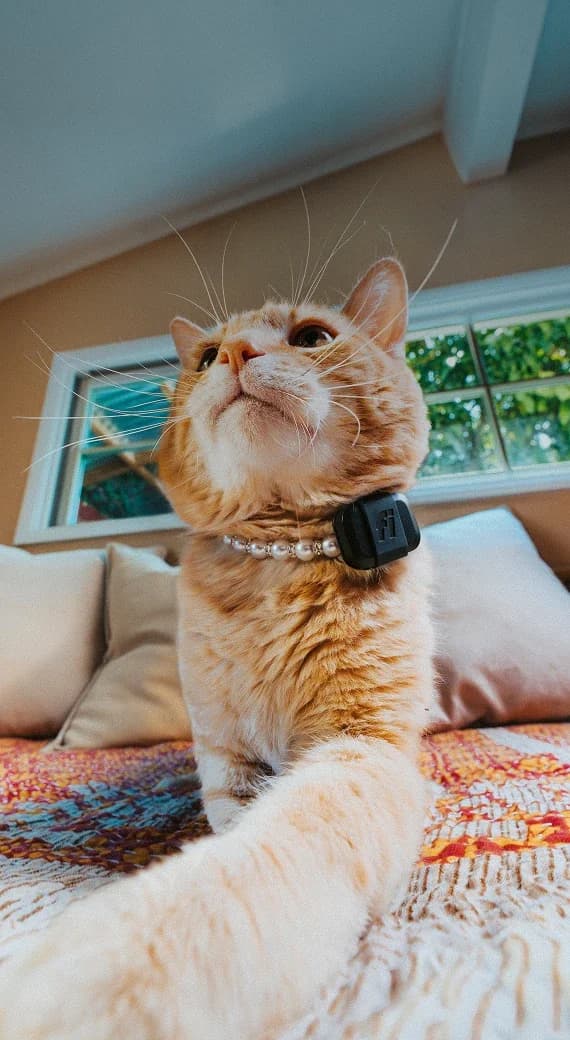
A location device can help direct a search, but permanent and visible identification help another person return the pet. An implanted microchip has no battery and does not broadcast a live position. A shelter or veterinary clinic must scan it, identify the registry, and use the registered contact details. Registration therefore matters as much as implantation: confirm the chip number, phone numbers, address, alternate contact, and registry record whenever you move or change numbers. Add a legible collar tag with a reachable phone number when the pet can safely wear one. For cats, discuss an appropriate breakaway collar and the weight of any attachment with a veterinarian; for every pet, inspect the mount and skin regularly. A lost tracker, dead battery, expired plan, or unavailable network should not erase the animal's identity. Keep a current clear photograph and vaccination or ownership records available too.
For an escape-prone pet, road travel, unfamiliar lodging, or large outdoor areas, a properly sized cellular GPS tracker with verified local coverage is generally the more relevant electronic tool because it is built to send its own remote location updates. It is still a backup to a leash, secure carrier, fence, supervision, microchip, and ID tag. AirTag may help recover an item in a populated Find My environment, but Apple does not design it for pets and it should not be presented as equivalent live GPS. Before relying on any device, activate the plan, charge it, update firmware, confirm notifications, and conduct a controlled outdoor test at home and along likely routes. Learn what the timestamp, accuracy circle, normal mode, live mode, last-known location, and low-battery alert mean. Write down whom to call and where to search if the map stops updating. The best choice is not the longest specification list; it is a layered recovery system whose limitations you have already tested.
We used these primary or authoritative references when checking this guide. Product instructions and local rules can change, so confirm details that affect your trip.
Yes. It explains the main decision points in plain language and links to relevant product reviews when published options are available.
No. Prices, coupons, stock, and shipping terms can change. Confirm the current offer on the retailer page before checkout.
Related content