Use this evidence-led guide to decide whether harness outings suit an individual cat, introduce equipment without force, recognize stress early, and keep every outdoor session brief, supervised, and backed by secure containment.

Harness walking is optional enrichment, not a requirement for a healthy cat. Begin by asking whether this individual seeks doors, investigates new spaces, recovers quickly from mild surprises, and will take food or play during calm training. A cat who freezes, hides, pants, struggles continuously, redirects aggression, or remains distressed after a session is not consenting to the current plan. RSPCA Australia's current Safe and Happy Cats guidance explains that cats are individuals, unfamiliar animals, people, or unusual noises may feel threatening, and a safe escape-proof outdoor area can provide stimulation without the risks of roaming. For a cat that does not relax during leash training, those principles support choosing secure containment instead. FelineVMA likewise treats a harness and leash as one possible form of controlled outdoor access, not a universal solution. Indoor climbing, scent games, window perches, a catio, or an escape-resistant garden enclosure may provide better enrichment. Respect refusal, avoid carrying a reluctant cat outdoors to force progress, and reassess the goal whenever behavior changes.
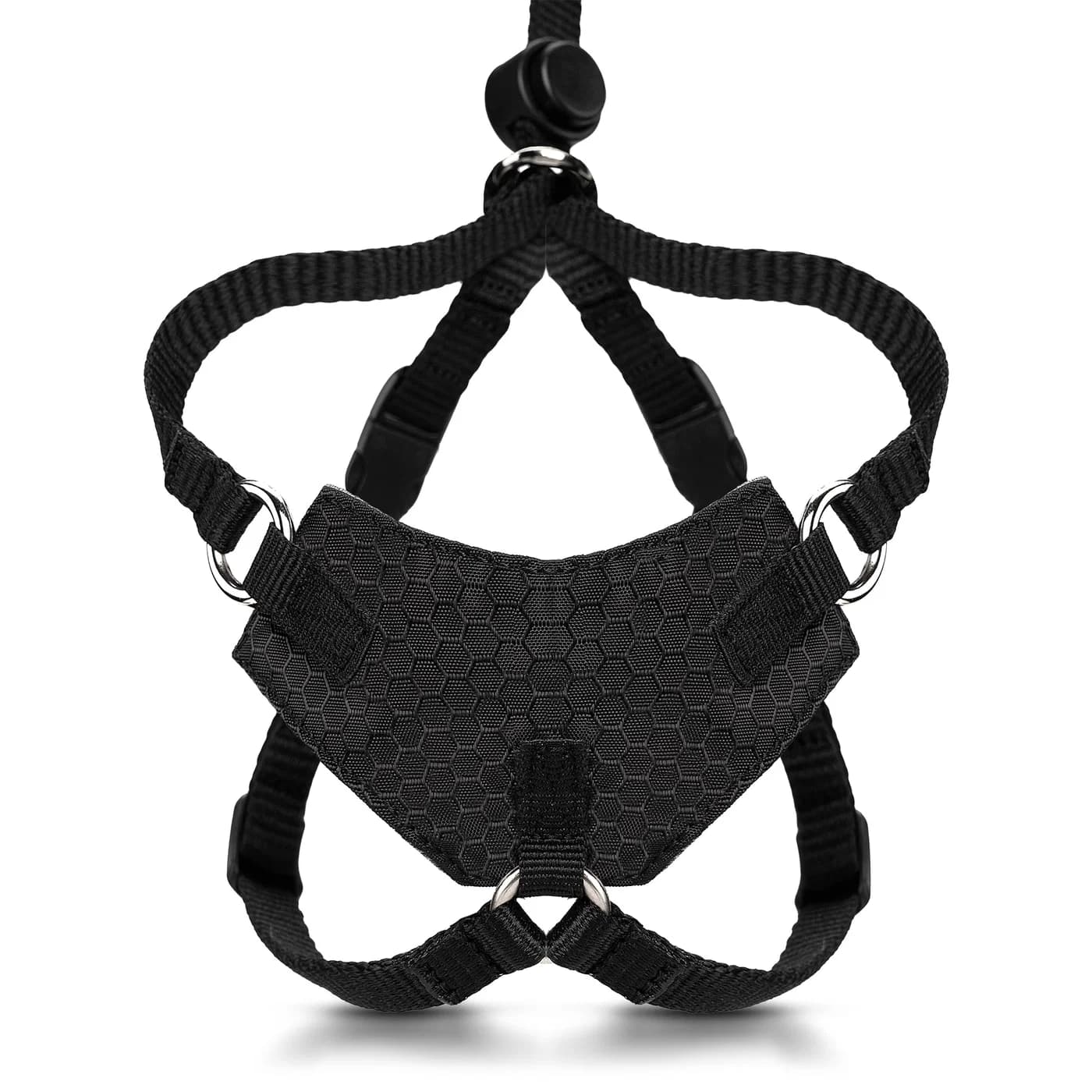
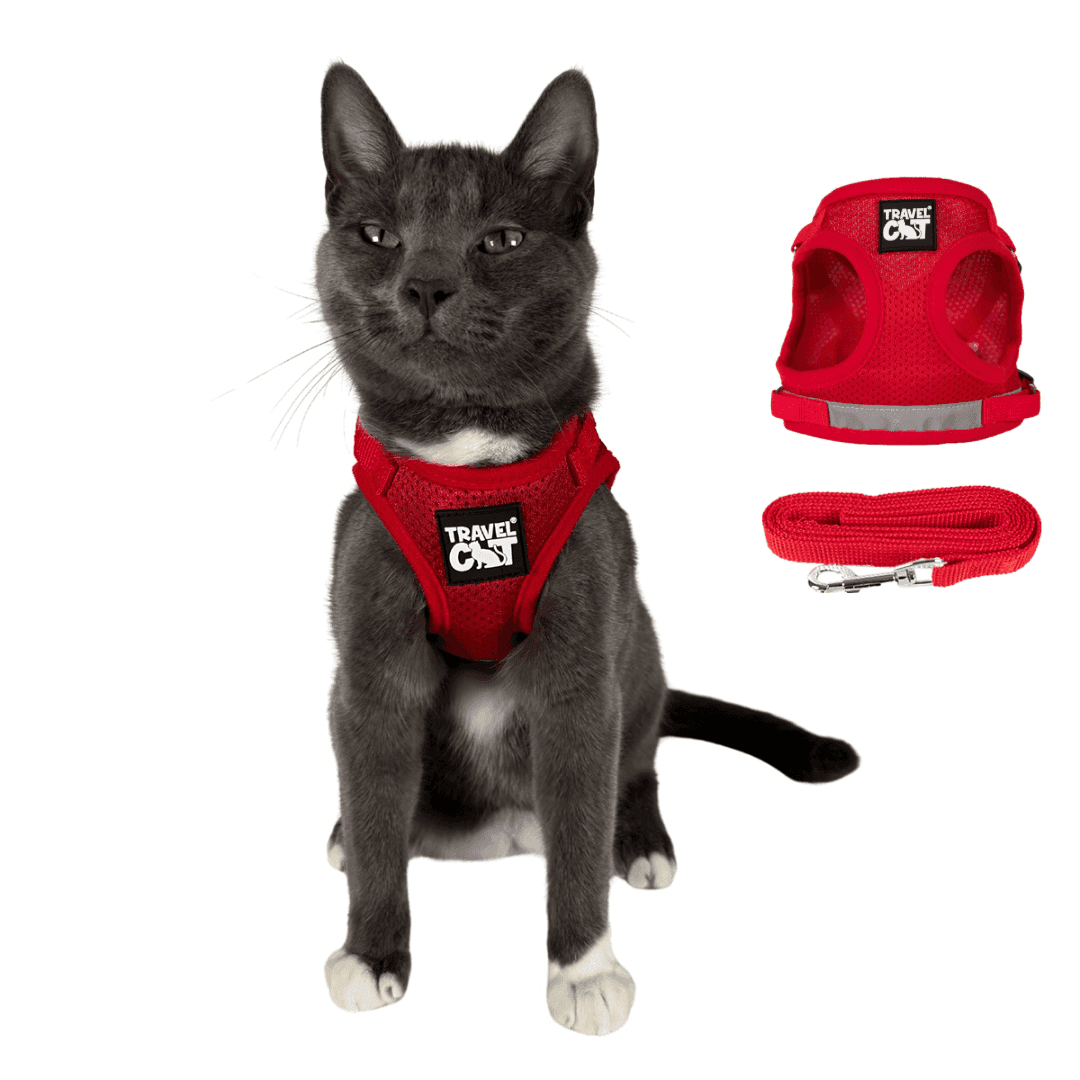
Use a harness designed for cats rather than attaching a leash to a collar. Measure the actual cat at the points named by the manufacturer, compare those measurements with the current size chart, and adjust every strap while the cat is standing naturally. The harness should stay flat, permit normal shoulder movement and breathing, and resist rotating over the head or slipping behind the elbows. Check that fingers can pass under the material without leaving enough slack for a foreleg or jaw to enter. Observe the cat walking, turning, crouching, and backing up indoors before trusting the fit. Recheck after growth, weight change, grooming, or a product wash. Marketing terms such as escape-proof or no-escape are not guarantees: cats can reverse, twist, compress their bodies, or exploit damaged hardware. Inspect stitching, buckles, closures, and leash attachment before every use, and replace equipment that is distorted, frayed, or cracked.
Training starts before the harness touches the cat. Leave it in a familiar, quiet room where the cat can approach or leave freely. Pair voluntary investigation with something the cat values, such as a small treat, a meal, gentle play, or calm attention. When the cat remains relaxed, briefly touch the harness to the shoulder or side, reward, and remove it. Progress to laying it over the back, placing the head through an opening if the design requires it, and manipulating one fastener without closing it. Keep sessions short enough that the cat still wants to participate. Do not chase, restrain, corner, or withhold food to secure compliance. If the cat lowers the body tensely, flattens the ears, dilates the pupils, hides, hisses, stops eating, or tries urgently to escape, pause and return to an easier step later. Choice is part of the training method, not a reward reserved for the end.
Fasten the harness for only a second or two at first, reward calm behavior, then remove it before the cat struggles. Across separate sessions, add time gradually while the cat eats, plays, explores, or performs a familiar cue. Some cats initially crouch or roll because the equipment feels unfamiliar; do not pull them upright or assume they will simply get over it. Progress only when movement, breathing, posture, appetite, and recovery remain normal. Check frequently for rubbing at the armpits, neck, sternum, and closure points, and stop if skin becomes red or hair is trapped. If the cat repeatedly bites the harness, freezes for the whole session, avoids the training area, or becomes more worried from day to day, shorten the step or discontinue the project. There is no deadline. A week, several months, or a decision not to proceed can all be appropriate outcomes.
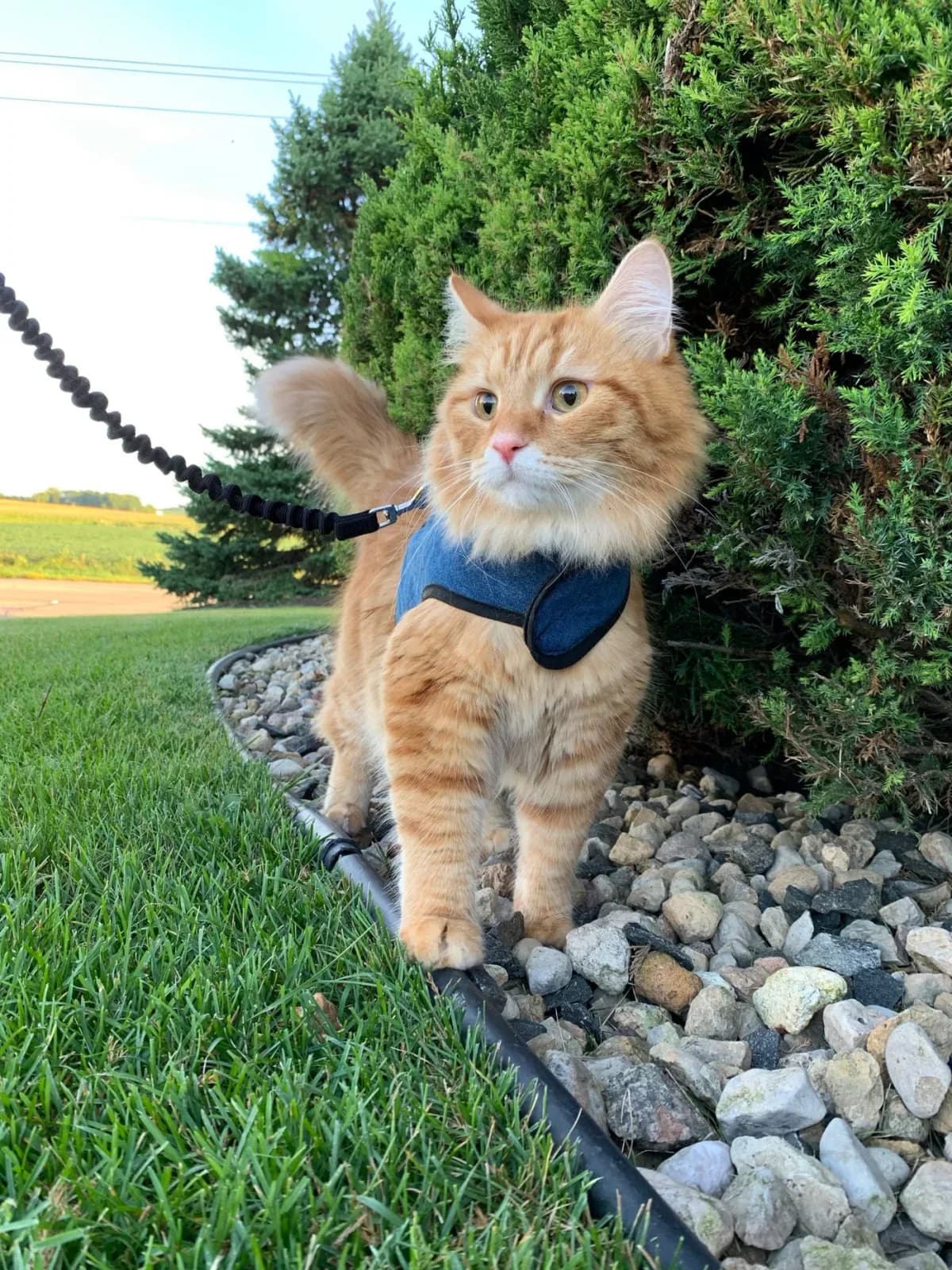
When the cat moves comfortably in the harness, attach a lightweight fixed-length leash indoors. Cat Friendly Homes suggests a light leash around five to six feet and advises against retractable designs, which can add sudden tension, noise, and entanglement risk. Begin by holding the leash with generous slack and following the cat rather than steering. Prevent it from catching on furniture, legs, or narrow gaps; do not leave it trailing without direct attention. Reward check-ins, relaxed turns, and moving toward you, then practice gentle directional guidance using body position and a food or toy target instead of dragging. Never jerk the leash, pull a cat from hiding, or clip it to a neck collar. Teach a return cue and calm pickup separately. Indoor practice should include ordinary household sounds and movement at a level that keeps the cat engaged and able to retreat to a familiar safe place.
Most serious failures happen during transitions, so practice them before going outside. Put the harness on and attach the leash while the cat is inside a fully closed room, carrier, porch, or other primary barrier. Confirm the fit and your grip before opening the next barrier. Teach the cat to wait on a mat or return for a reward away from the door, but do not treat that cue as physical containment. For early sessions, transport the cat through exposed areas in a secure carrier and open it only inside a closed enclosure or quiet fenced space that you have inspected. Never open a front door directly onto an unsecured street while fastening equipment. Keep household members informed so nobody opens a second exit unexpectedly. A microchip and current identification improve recovery prospects but do not prevent escape. Plan the return route before departure, keep the carrier available, and end the session while entry is still calm rather than after the cat is exhausted or alarmed.
Choose a calm, familiar, enclosed yard or similar low-traffic space, not a busy park, pet store, roadside, or dog area. Start with one or two minutes near the secure exit or open carrier, then let the cat decide whether to sniff, sit, retreat, or go back inside. Keep the leash slack without allowing access to fences, dense shrubs, poisonous plants, wildlife, vehicles, or places where the line can snag. One attentive adult should supervise continuously; never tether a cat, tie the leash to an object, or leave the cat in outdoor gear unattended. End early if dogs approach, machinery starts, weather changes, or the cat becomes hypervigilant, low and tense, unwilling to eat, frantic, unusually still, or difficult to redirect. Increase duration and distance only after several relaxed recoveries. The goal is safe choice and enrichment, not a walking distance, route, photograph, or performance target.
Before regular outdoor access, ask a veterinarian about vaccinations, parasite prevention, and health risks appropriate to the cat and location, especially for young, elderly, chronically ill, or recently adopted cats. Keep microchip registration and contact details current. Check the forecast, ground temperature, shade, and air quality; postpone outings in heat, cold, smoke, storms, or other conditions the cat does not tolerate. After each session, examine the coat, skin, ears, paws, and harness contact points. CDC advises checking pets for ticks after outdoor exposure and warns that cats are sensitive to many chemicals, so never apply a tick product without veterinary guidance. Clean and dry the harness as directed, then inspect closures before storage. Open-mouth breathing, breathing difficulty, collapse, repeated vomiting, marked weakness, pain, injury, suspected poisoning, or persistent appetite, elimination, or behavior changes require prompt veterinary advice; urgent or rapidly worsening signs need emergency care.
We used these primary or authoritative references when checking this guide. Product instructions and local rules can change, so confirm details that affect your trip.
Yes. It explains the main decision points in plain language and links to relevant product reviews when published options are available.
No. Prices, coupons, stock, and shipping terms can change. Confirm the current offer on the retailer page before checkout.
Related content