Learn how to choose a safe rinse site, prepare portable water, control pressure and temperature, keep a dog calm, manage pump, roof-rack, and gravity showers, and dispose of muddy gray water responsibly.
Before unpacking water, move the dog to a stable, low-traffic spot away from roads, tent doors, cooking areas, and natural water. Clip the leash to a secure harness, but keep enough slack for the dog to turn and step away. Check the coat and paws for cuts, thorns, burrs, hot spots, or anything that should be handled before rinsing. If the dog is shivering, limping, guarding a body part, or unusually quiet, postpone the bath and assess the problem first. Lay out the washer, towel, treats, and waste container within reach so the process does not stop halfway. A rinse should reduce mud without turning the trailhead into a puddle. Choose durable ground where runoff can be collected or dispersed according to campground rules, never directly beside a creek, lake, or storm drain.
NEMO Equipment
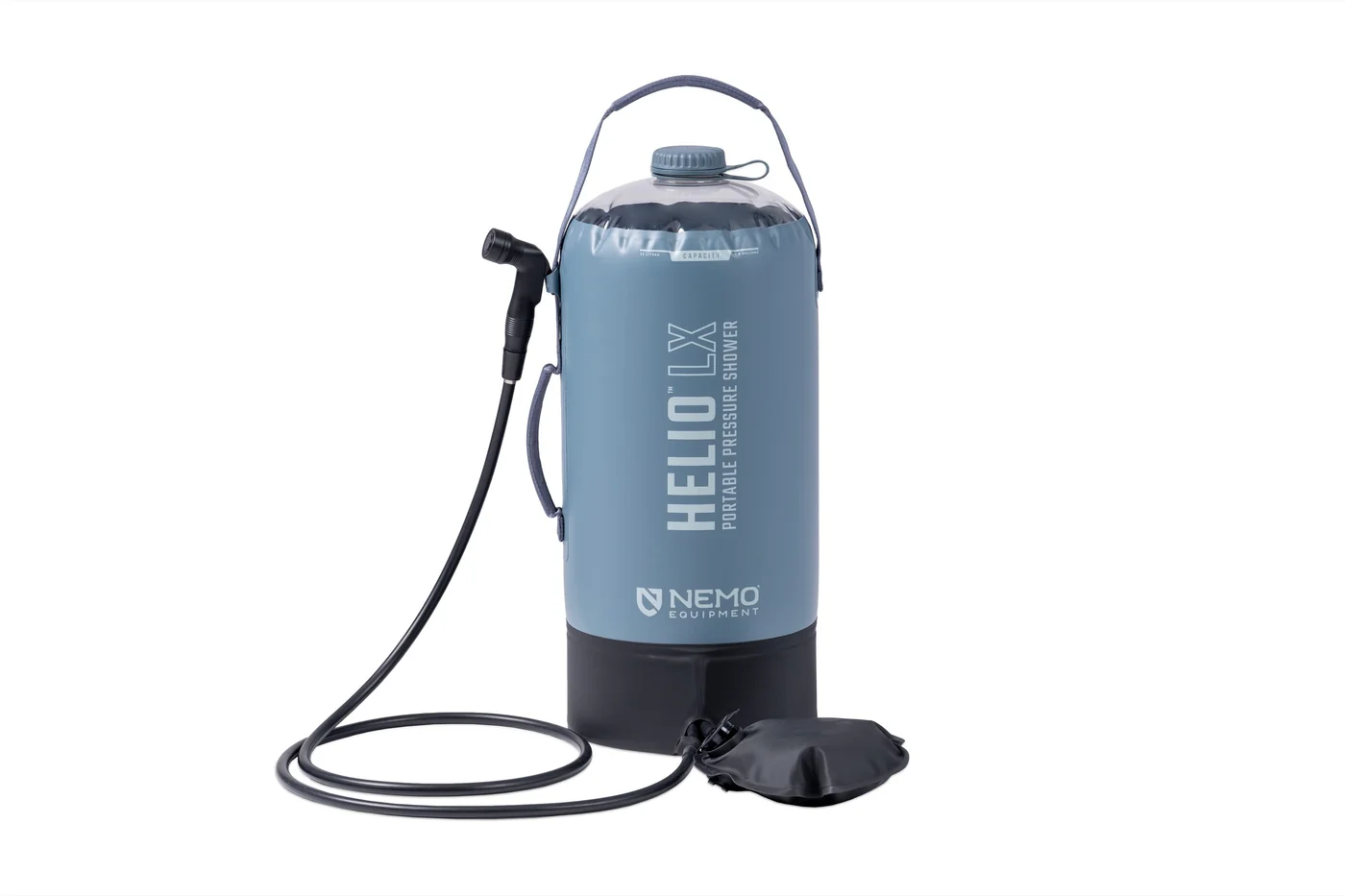
Helio LX holds 5.8 gallons in a collapsible ground-standing reservoir and uses a foot pump to maintain seven to ten minutes of steady spray. NEMO explicitly lists washing a dog and muddy paws among its uses, and the seven-foot hose reaches around a medium or large dog without hanging the tank. It provides more water than the electric pumps without battery dependence, but a filled reservoir is heavy, the current official page has conflicting stock controls, and the purchase path relies on a low-stock authorized retailer.
A dog coming off a cold, wet hike may need a different rinse from one overheated after sun exposure, but neither should be shocked with icy or hot water. Test every batch on the inside of your wrist; it should feel lukewarm, not noticeably hot. Water warmed in a vehicle or sun can develop hot layers, so mix it and retest at the nozzle. The NEMO Helio LX is a natural fit when you want a self-contained reservoir that is pressurized with a foot pump instead of being hung overhead. Set it on level ground, pressurize it before bringing the dog close, and start with the lowest useful flow. Let the dog inspect the hose, then wet one paw or lower leg first. Pause if the dog freezes, pants when it is not hot, tucks its tail, pins its ears, lip-licks repeatedly, or tries to escape.
RinseKit
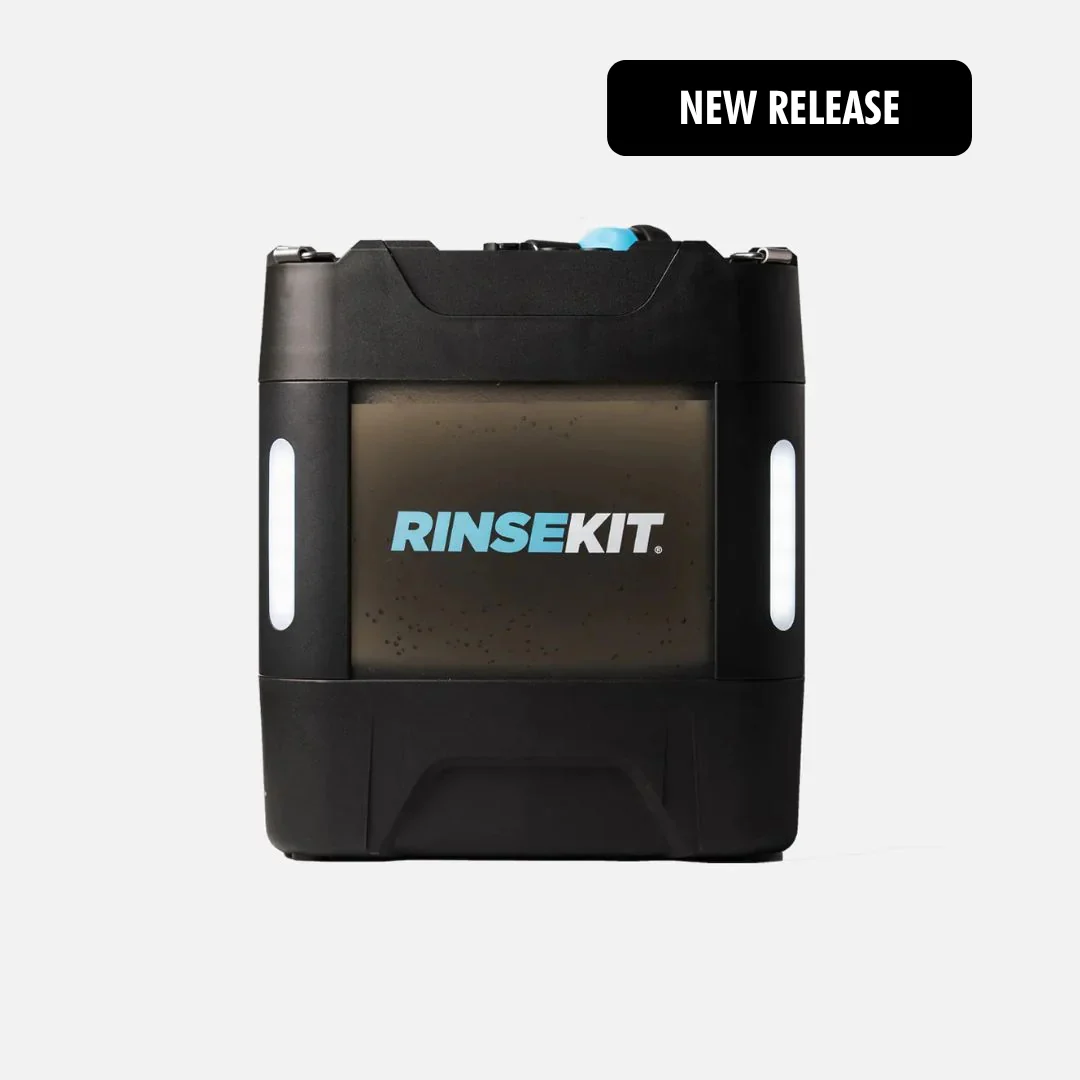
The PRO 2.0 combines a four-gallon tank, push-button battery pressurization, a seven-foot hose, five spray patterns, USB-C charging, water-level markings, and corner lights in a self-contained box. The shower pattern is documented at about four and a half minutes per tank, while mist lasts much longer. It is the most complete vehicle-based cleanup station here, but it weighs 47 pounds when full, has no built-in heater, and its stronger settings must not be aimed at a dog's skin.
More pressure is not automatically more cleaning. A narrow jet can drive grit deeper into dense fur, sting irritated skin, and make a worried dog harder to handle. With the battery-pressurized RinseKit PRO 2.0 4-Gallon, select a broad, gentle pattern and test the spray into the collection area before aiming it at the dog. Hold the nozzle close enough to limit splash but far enough that the stream does not flatten the skin. Work from the paws upward, following the direction of hair growth. Use fingers or a soft cloth to loosen dried mud rather than increasing pressure. Keep one hand on the dog only if that contact is reassuring; restraint can intensify panic. Stop the water between body zones. Those short pauses conserve the finite tank and give the dog repeated chances to settle.
FLEXTAIL
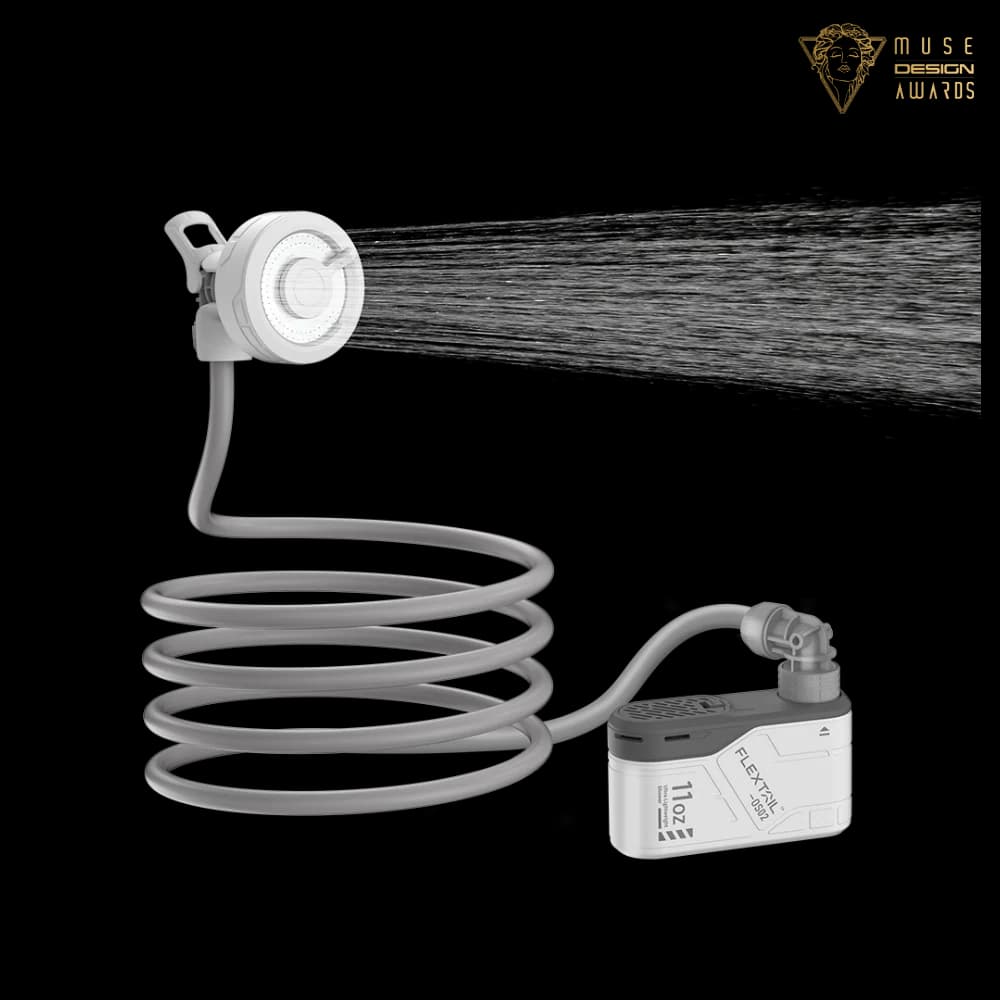
MAX SHOWER packages an 11-ounce IPX7 pump, showerhead, and roughly seven-foot hose into a compact USB-C rechargeable system. FLEXTAIL documents 2.2 and 3.0 liters per minute, 70 to 110 minutes of runtime, and pet cleaning as an intended use. It is easy to carry and has the deepest review evidence among the small pumps, but it provides no water container or heater, and the handler must keep the intake submerged in a separate bucket.
A pump-only shower changes the setup because the water container is part of your system. The FLEXTAIL MAX SHOWER draws from a separate bucket or similar vessel, so choose one that is clean, stable, deep enough to keep the intake submerged, and easy to carry without sloshing. Place it on level, durable ground and route the hose where neither paws nor people will trip over it. Fill the container from an approved source rather than dipping equipment into a lake or stream. Keep the clean-water bucket uphill from the dog and the runoff collection point. Do not return a muddy showerhead to the source water, and do not mix shampoo into the bucket unless both the appliance instructions and site rules allow it. Prime and test the pump before the dog steps into position; unfamiliar motor noise may itself be a stress trigger.
Ivation
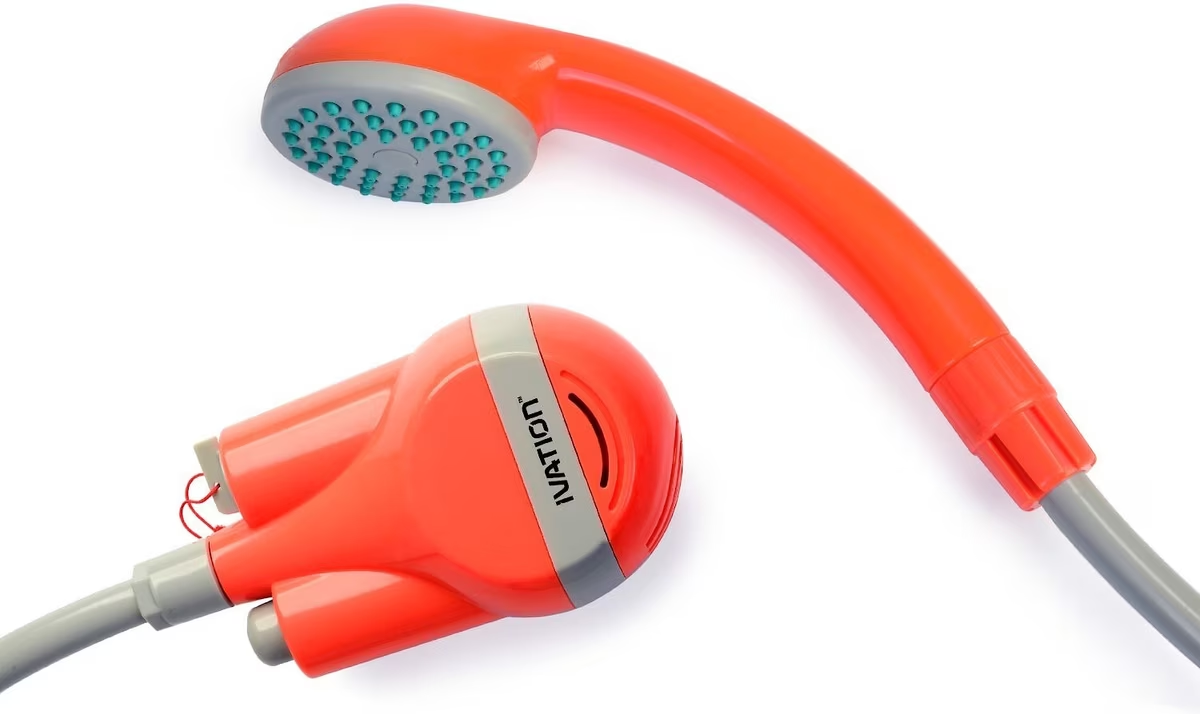
Ivation's pump draws water from a bucket and produces a documented 0.66-gallon-per-minute stream that the brand describes as suitable for small pets. The 2,200mAh battery runs for up to 60 minutes, while a suction mount, S-hook, and inline switch help with campsite setup. It costs less than the FLEXTAIL and has a deliberately gentle flow, but it is heavier, offers only one flow pattern, and still requires a separate water container.

Rechargeable convenience is useful only when the rinse can still end safely if the battery runs low. Before leaving home, charge the Ivation IVAPSH01 Portable Outdoor Shower as directed, inspect its hose and seals, and confirm that the pump runs in clean water. At the trailhead, reserve enough water for a final pass over the paws and belly instead of spending most of it on the back. Keep a capped bottle of clean water as a simple backup. Position the controls where they can be reached without letting go of the leash, and keep charging connections protected according to the manufacturer’s instructions. If the pump pitch changes, flow becomes irregular, or the dog startles at the sound, turn it off before adjusting anything. Never troubleshoot a powered pump while the dog is tangled in the hose or standing in pooled water.
Yakima
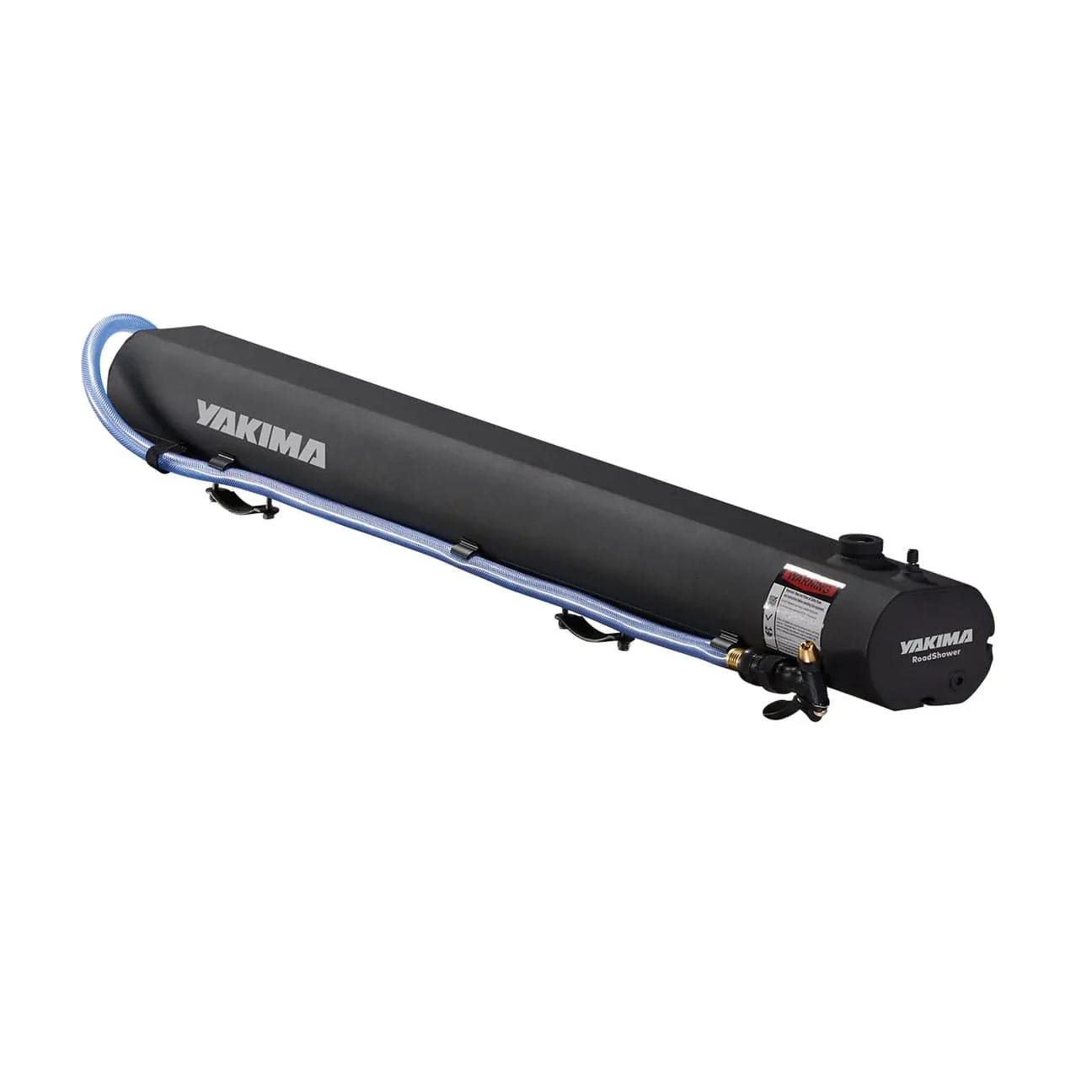
RoadShower 4G bolts to compatible crossbars and keeps four gallons ready on the vehicle. Its welded aluminum tank can be pressurized through a Schrader valve or garden hose, includes a 55-inch hose, and uses solar exposure to warm water. It avoids unloading a tank at every trailhead and Yakima explicitly mentions dirty paws, but it is expensive, adds 53 pounds when full, requires rack compatibility and installation, and has meaningful owner complaints about hoses and fittings.
A roof-mounted tank solves the carrying problem but adds vehicle, heat, and load-management risks. The Yakima RoadShower 4G should be mounted and filled only within the rack, vehicle, and product load limits specified by the manufacturers. Check attachment points before driving and again before opening the valve. Park on stable ground, set the brake, and keep the hose out of traffic lanes. Water warmed on a roof can become much hotter than the surrounding air suggests. Release a small amount away from the dog, mix or cool the supply if needed, and test the outlet water on your inner wrist every time the vehicle has been sitting in sun. Do not ask the dog to wait beneath the tank, and do not climb on the vehicle while holding the leash. Bring the hose down and establish a quiet rinse area at ground level.
Sea to Summit
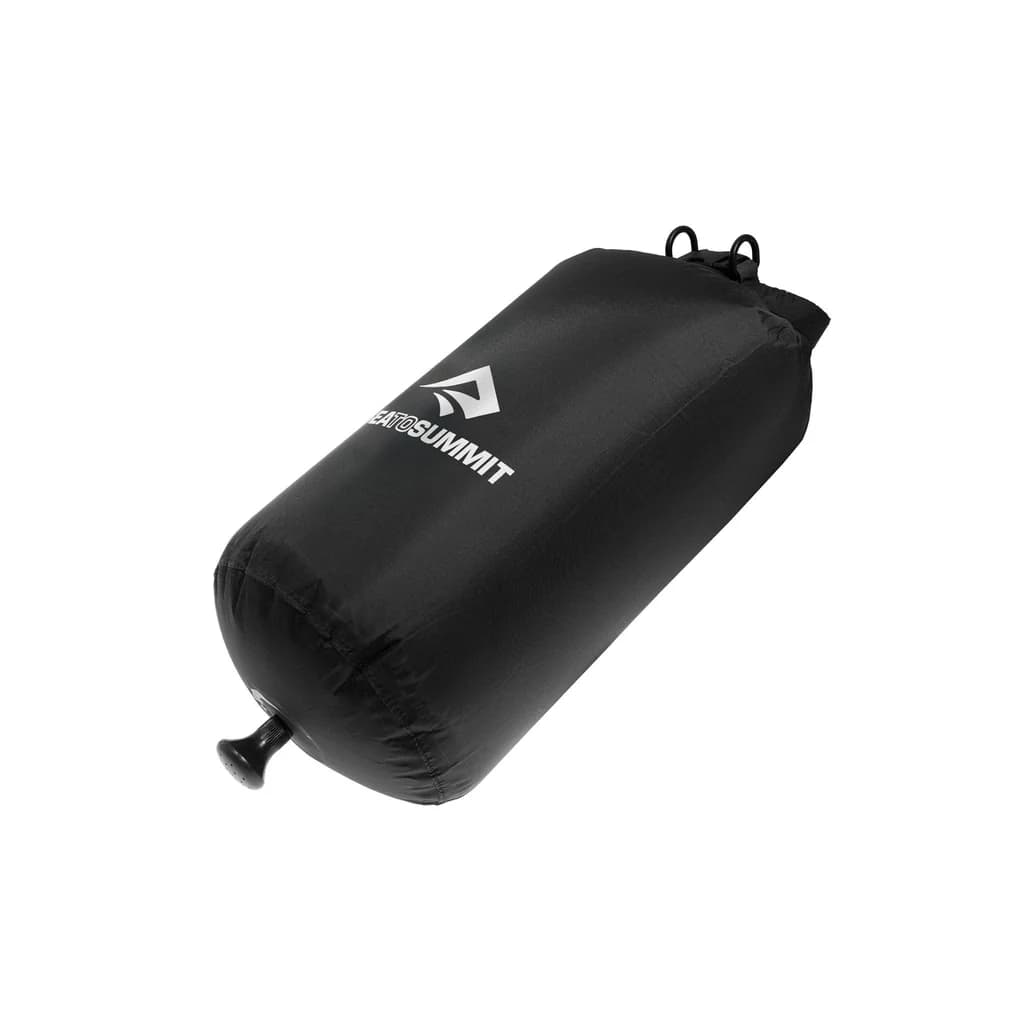
The Pocket Shower carries 10 liters in a 4.2-ounce roll-top nylon bag and supplies about eight minutes of gravity-fed flow through a twist-control showerhead. It packs much smaller than a tank and can double as a dry sack, making it the most realistic backpacking option here. It is not designed specifically for pets, requires a secure overhead support and careful lifting of about 22 pounds of water, and delivers far less pressure than a pump system.
A gravity bag is quiet and mechanically simple, which can help when a dog dislikes pump noise, but it still needs a safe support. Fill the Sea to Summit Pocket Shower only to a weight the chosen anchor can reliably hold. Use an approved campsite structure or another load-rated support; do not damage trees or hang it where it could fall onto the dog. A higher bag produces more head pressure, so begin at the lowest practical height and open the flow control gradually. Stand to one side while checking the suspension and temperature. Guide water along the shoulders, sides, legs, and underside rather than pouring it over the head. Because the reservoir is limited, loosen heavy mud with a damp towel first and use the shower for the final rinse. Close the valve while repositioning the dog or checking the coat.
Do not direct any shower stream at the eyes, ear canals, nose, or mouth. Clean the face with a separate damp cloth, wiping away from the eyes, and keep the inner ears dry. If the dog suddenly shakes its head, paws at an ear, squints, coughs, or becomes distressed, stop and assess before continuing. Shampoo is often unnecessary for a trailhead mud rinse; “biodegradable” does not mean harmless in a stream. Use any dog-safe cleanser only where local rules permit, then capture and dispose of gray water as the campground directs. Strain or bag solid mud, hair, and debris rather than leaving a slick patch for the next visitor. Towel-dry the belly, armpits, legs, between the toes, and beneath gear. Recheck for abrasions and burrs, offer water and a calm reward, and let the dog warm up or cool down before returning to the vehicle or tent.
We used these primary or authoritative references when checking this guide. Product instructions and local rules can change, so confirm details that affect your trip.
Yes. It explains the main decision points in plain language and links to relevant product reviews when published options are available.
No. Prices, coupons, stock, and shipping terms can change. Confirm the current offer on the retailer page before checkout.
Related content