Learn how gel, water-filled, and frozen-insert dog cooling mats differ; how to size and place one indoors or in shade; how to manage chewing and puncture risks; and when overheating requires immediate veterinary care.
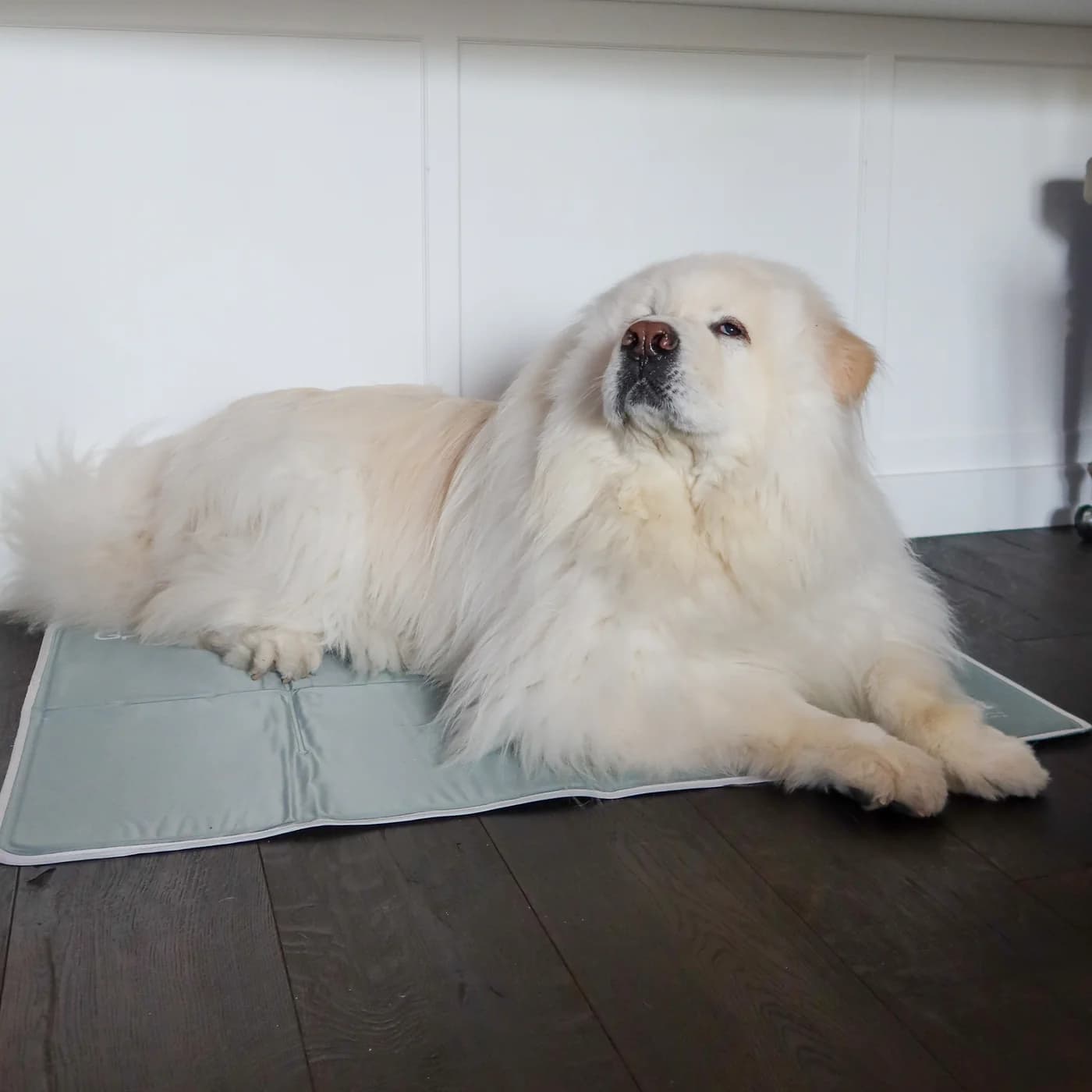
The Green Pet Shop
The Cool Pet Pad uses a pressure-activated non-toxic gel that the brand says cools for up to three hours and resets after 15 to 20 minutes without use. Five size bands cover pets from under eight pounds to over 80 pounds, and the foldable wipe-clean format needs no water, power, or refrigeration. It is the clearest all-around option for indoor rooms, air-conditioned vehicles, and shaded temperature-controlled rest, but direct sun, a hot car, chewing, or punctures can make it ineffective or unsafe.
A cooling mat can give a dog a cooler resting surface, but it is only one part of a hot-weather plan. Pressure-activated gel pads absorb heat while the dog lies on them and need time without pressure to reset. Water-filled beds move body heat into a cooler core, while frozen inserts provide a colder option that must be prepared before use. Performance changes with room temperature, direct sun, airflow, dog size, and time in use, so a brand's duration statement is not a universal result. AKC guidance says cooling mats do not replace hydration, shade, sun protection, or frequent breaks. K&H likewise states that its water-filled bed is not a life-saving device. Use a mat for planned rest while also providing fresh water and a genuinely cool environment. Never use one as permission to exercise through dangerous heat, leave a dog in a warm space, or wait at home when the dog shows signs of heat-related illness.
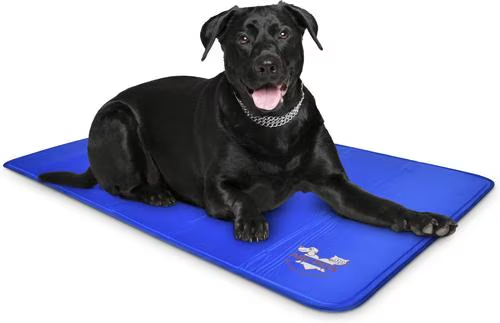
Arf Pets
Arf Pets pairs a non-toxic solid-gel core with a puncture-resistant nylon exterior in three large footprints, topping out at 35 by 55 inches. The brand says it cools for up to three hours, resets after 15 to 20 minutes of non-use, and needs no water, battery, refrigerator, or outlet. It provides more sprawl room than most passive mats and has a substantial retailer review sample, although its less-than-half-inch profile is firm and a determined chewer can still damage it.

Start with where the mat will be used and how your dog rests. A self-resetting gel pad is convenient indoors because it needs no water or electricity, but a dog that tears bedding may expose inner gel. A water-filled bed provides broad cushioning, although it becomes heavy and must stay away from sharp objects. A frozen-insert system suits short supervised breaks but requires freezer access and careful assembly. Measure your dog's relaxed length, then compare it with usable mat area rather than the package name. The dog should place most or all of the torso on the surface and change position without hanging off every edge. AKC advises that a larger mat can serve a smaller dog, while an undersized mat cannot provide equal coverage. Also check weight, care instructions, surface material, recharge process, and temperature limits. For puppies, persistent chewers, or dogs with medical conditions, discuss the safest option with a veterinarian.
Frisco
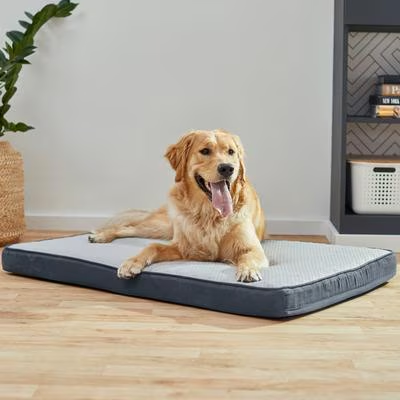
Frisco places cooling fabric over orthopedic foam to give older dogs or pressure-sensitive pets more support than a thin gel sheet. Six crate-oriented lengths run from 24 to 54 inches; smaller versions are about two inches thick and the 36-inch and larger mats are about three inches thick. The removable cover is machine washable and the review sample is unusually large, but the foam must be spot cleaned, is not waterproof, and some public feedback describes only a mild cooling effect.
Choose a quiet indoor location before introducing the mat. A smooth tile, linoleum, or concrete floor in an air-conditioned or ventilated room helps release absorbed heat. Keep the mat away from sunny windows, heaters, blocked vents, and hot appliances. K&H and Green Pet both warn that direct sunlight warms a cooling pad and reduces its usefulness. Lay it flat, remove nearby sharp objects, and fill and close a water-based model exactly as instructed. Give the dog an ordinary bed and enough open floor space to leave the cool surface whenever desired; never restrain the dog on it. Some dogs investigate a new texture gradually, so allow calm, voluntary contact instead of forcing prolonged use. Place fresh water nearby without positioning the bowl where a spill could hide a leak. During the first sessions, stay in the room and note whether the dog settles comfortably, avoids the mat, becomes restless, or starts scratching or chewing.
K&H Pet Products
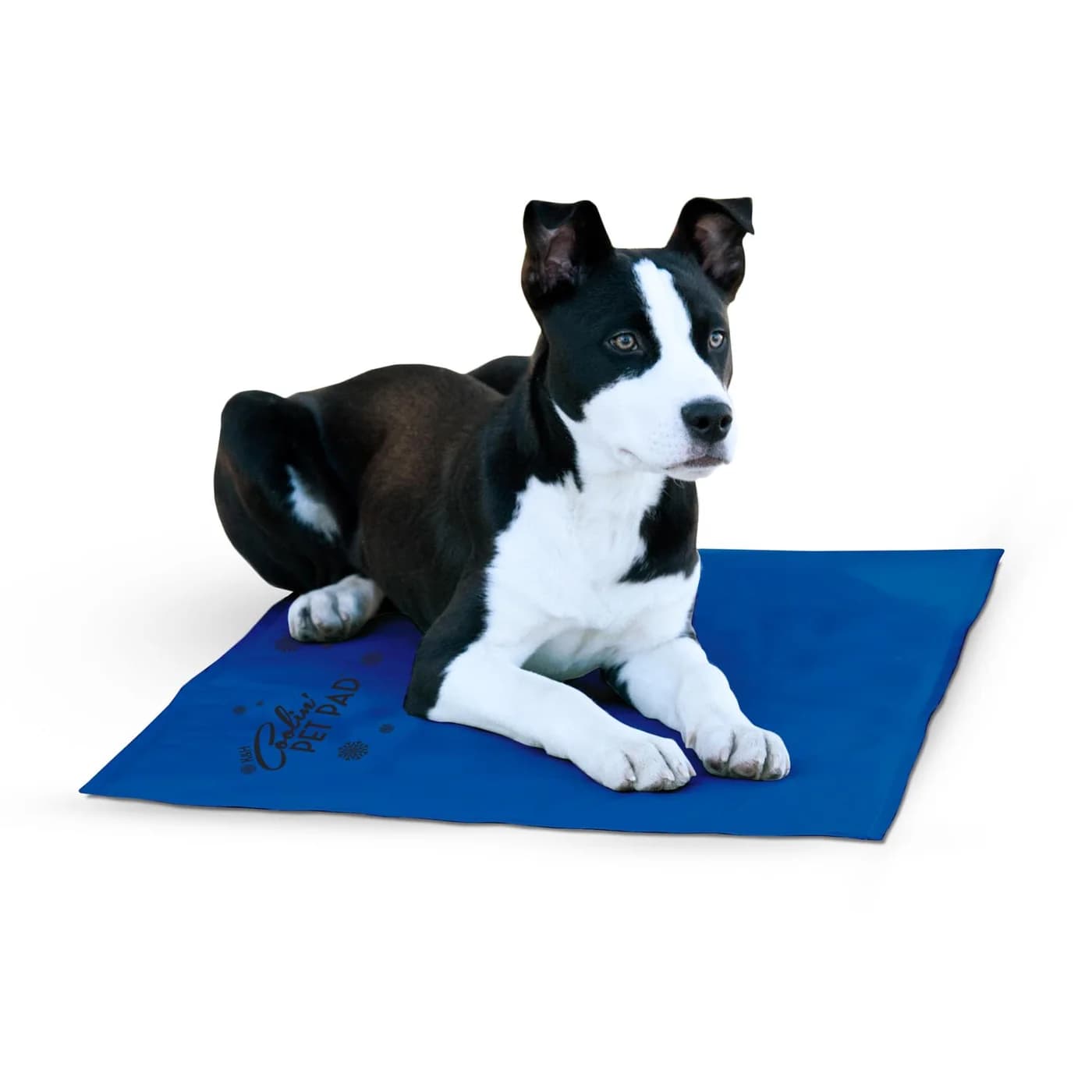
The Coolin' Pet Pad uses water rather than gel or electricity to wick body heat into the surrounding air. Four sizes run from 11 by 15 inches to 27 by 38 inches, and the pad remains lightweight until it is filled, which is useful when packing for an RV, cabin, or campsite. K&H recommends shade and a hard floor because carpet reduces heat transfer; the need to add water, hand wash the surface, and protect it from punctures makes it less convenient than a dry self-cooling pad.
Outdoors, treat the mat as a supervised rest station, not portable air conditioning. Put it on smooth ground under reliable shade, with airflow and fresh water nearby. Check that shifting sun will not reach the spot, and never place it on hot pavement, a sun-heated vehicle floor, sharp gravel, or vegetation that could puncture it. K&H says its water bed works best in shade, while Green Pet explains that a hot environment can make gel absorb ambient heat instead of the dog's heat. Plan activity for cooler hours, shorten exercise in humidity, and stop before the dog becomes reluctant or heavily panting. Cornell recommends avoiding strenuous activity during the hottest part of the day and keeping dogs indoors during extreme heat. Check the mat and dog at every break. If the surface feels warm, move it to a cooler place and follow its reset instructions rather than assuming it still provides relief.
furrybaby
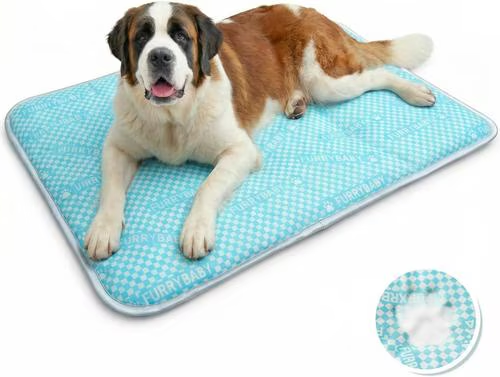
furrybaby combines a nylon surface with phase-change material that changes color as temperatures shift, giving owners a visual cue that is unusual among cooling mats. The brand states a Q-max value of 0.5, while the foldable, nonslip, machine-washable design needs no water, electricity, or refrigeration. The X-Large 43.82-by-31.87-inch version was the only orderable size when checked, the public review sample is small, and the cooling numbers are manufacturer claims rather than independent test results.
No cooling mat should be assumed chew-proof or puncture-proof. Puncture-resistant means a cover is designed to resist ordinary wear; it does not guarantee protection from determined teeth, digging, long nails, or sharp ground. Before every use, inspect seams, valves, fill caps, corners, the underside, and removable inserts. Trim the dog's nails, place the mat on a smooth surface, and check beneath water-filled products for moisture. Stop using it if the cover tears, gel shifts abnormally, an insert opens, or liquid appears. Green Pet warns that even non-toxic gel is not meant for consumption and advises veterinary contact if a pet ingests any part of the pad. A dog that routinely destroys bedding should not be left alone with a gel or water mat. A protective cover may reduce abrasion, but it does not remove the need for supervision. Keep the packaging and instructions available so a veterinarian can identify the material if exposure occurs.
Bedsure
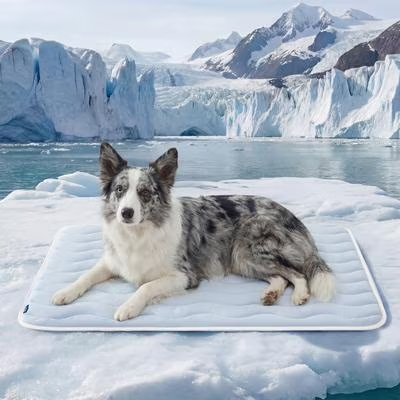
Bedsure uses a cool-touch breathable top, light polypropylene-cotton fill, quilt stitching, and a nonslip base in a half-inch mat that can go through a washing machine and dryer. Four sizes fit common crate and travel footprints, and the absence of gel, water, or a power supply simplifies packing and care. The tradeoff is performance: this is a passive fabric mat rather than an active gel, water-core, or ice-assisted system, so buyers should expect a lighter cooling sensation and limited cushioning.
Prepare the mat in a cool room before loading the vehicle, then position it flat where it cannot slide, fold over the dog, block ventilation, or interfere with a harness or crate. The CDC advises securing a crate and ensuring that the animal can stand, sit, lie down, and turn around with adequate ventilation. Carry water and a bowl, stop frequently, and inspect both dog and mat during the trip. A cooling mat does not make a parked vehicle safe. The CDC states that temperatures can rise dangerously within minutes and that a pet must never be left alone there. At camp, inspect the ground, maintain continuous shade, and store the mat in the coolest available place. Do not leave a frozen insert where a dog can chew it or freeze a water bed unless its maker permits it. If air conditioning fails or the campsite remains dangerously hot, move the dog to a climate-controlled location.
Follow the exact care label because cleaning rules differ by construction. Green Pet recommends wiping its gel pad with a soft cloth, mild soap, and water, then drying it fully. K&H gives similar directions for the Cool Bed III but says not to put the water bed in a washing machine. A modular product may instead have a machine-washable cover after water, foam, or frozen components are removed. Empty or reset a mat only as directed; lifting a heavy water bed by one corner can damage its core. After cleaning, inspect seams, caps, and inserts, dry every layer, and store the product in a cool, dry place away from sun and the dog's reach. Do not fold a model that must remain flat or let a water bed freeze when instructions prohibit it. Before the next trip, inspect stored mats for odor, mold, brittleness, leaks, and missing parts rather than assuming a clean exterior means the interior remains usable.
A cooling mat is not treatment for heatstroke. Cornell lists heavy panting, seeking shade, whining, reluctance to play, and drooling as early signs of overheating. Continued excessive panting or drooling, difficulty breathing, vomiting, bloody diarrhea, weakness, confusion, seizures, or collapse require immediate veterinary care. Stop activity, move the dog out of heat, and contact a veterinary hospital while arranging transport. UC Davis says a veterinarian may advise room-temperature water and a fan; ice water can constrict skin blood vessels and interfere with heat loss. Do not wrap the dog in wet blankets, because insulation can trap heat and limit evaporation. Tufts likewise warns that home cooling must not delay medical attention. A dog that seems to improve may still have internal or neurologic injury requiring examination. Keep the nearest emergency clinic's number available before a trip. The correct role of a mat is planned comfort for a stable dog—not diagnosis, monitoring, or emergency treatment.
We used these primary or authoritative references when checking this guide. Product instructions and local rules can change, so confirm details that affect your trip.
Yes. It explains the main decision points in plain language and links to relevant product reviews when published options are available.
No. Prices, coupons, stock, and shipping terms can change. Confirm the current offer on the retailer page before checkout.
Related content