Learn how to divide everyday and high-value rewards, keep treat calories within the daily plan, deliver rewards at the right moment, carry trail essentials separately, and clean a pouch safely after the outing.
Wilderdog
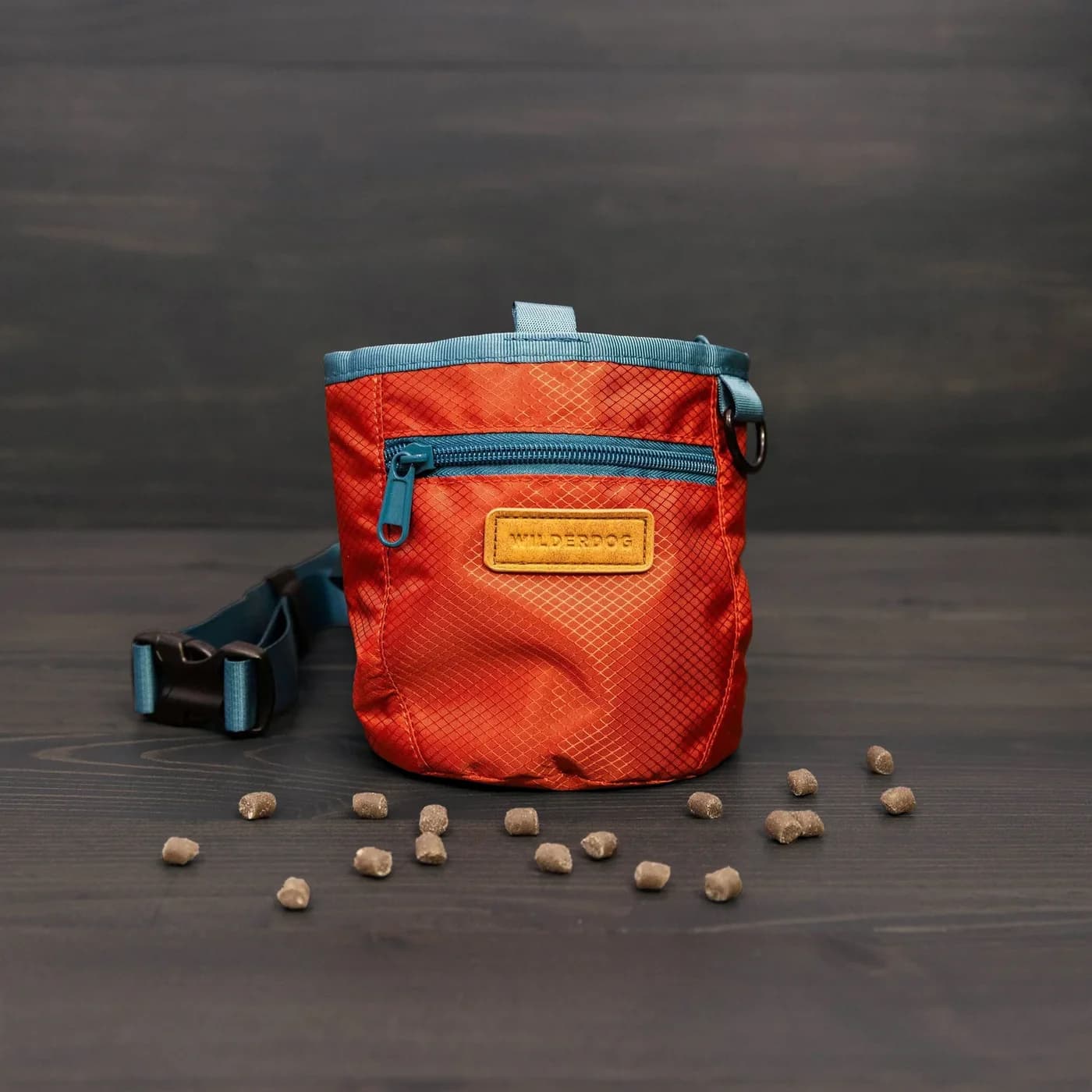
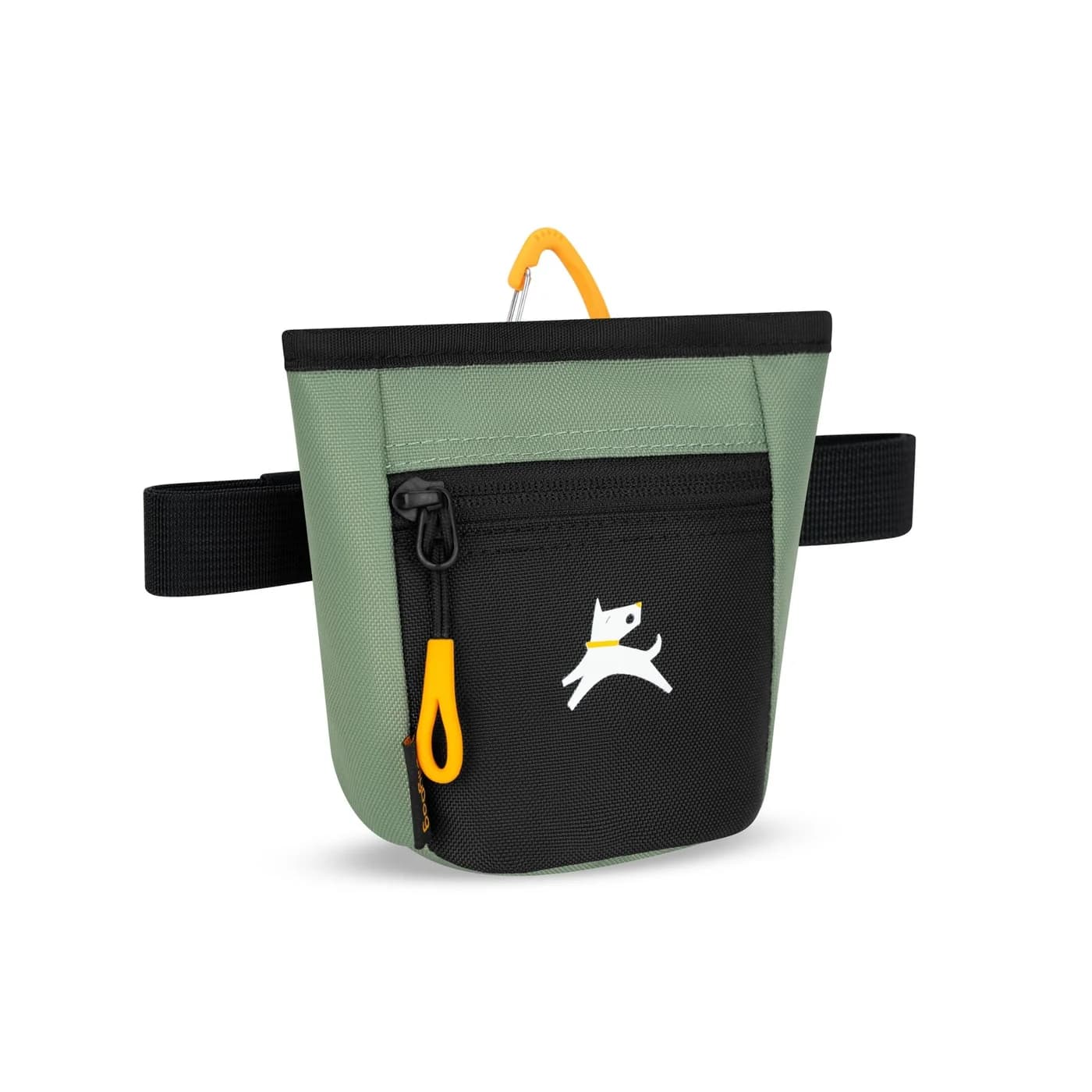
Wilderdog combines a magnetic opening for quick rewards with a full zipper that secures the same main compartment between sessions. The 0.8-liter ripstop pouch can ride on its waist strap or included locking mini carabiner, while a second zip pocket keeps small essentials separate. A 52-inch maximum waist strap and elastic strap keepers suit active use, although the five-ounce pouch is more structured than a minimalist treat tote.

A treat pouch is most useful as a timing tool, not simply as a bag of snacks. The American Veterinary Society of Animal Behavior recommends reward-based methods for canine training and describes markers, treats, toys, and other appropriate reinforcers as tools for teaching desired behavior. Before leaving home, decide which actions you plan to reinforce, such as voluntary check-ins, a loose leash, a prompt recall, or moving past another trail user calmly. Keep the food out of sight until the behavior occurs so the dog learns that listening can produce a reward even when a treat is not already in your hand. The Wilderdog Dog Training Treat Pouch combines magnetic access with a zipper option, so a handler can use quick access during an active session and a more secure closure between exercises. The pouch supports the training sequence, but it does not replace clear cues, safe distance from distractions, or a realistic plan for the dog's current skill level.
EzyDog
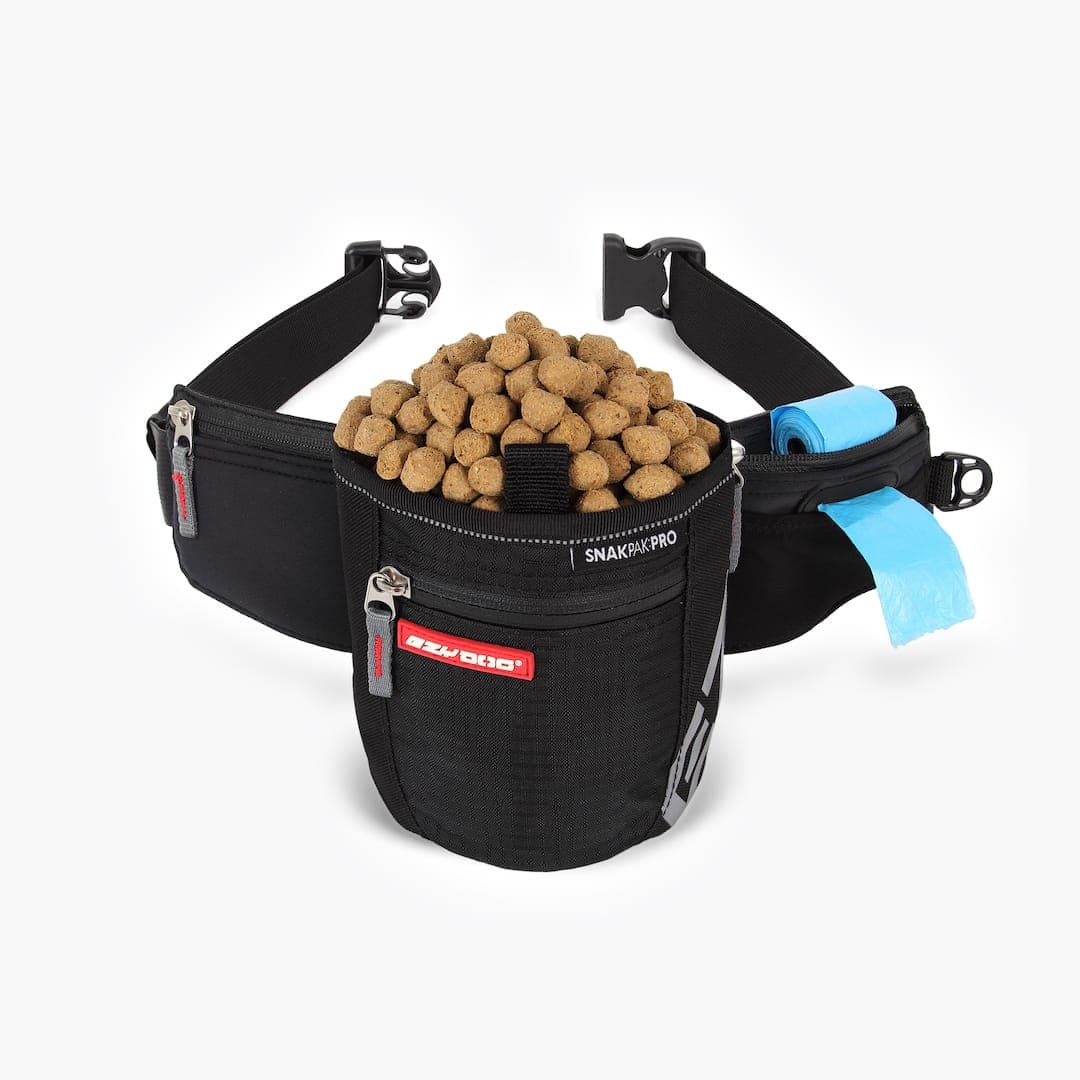
SnakPak Pro is a 750-milliliter belt system with twin magnetic access points, a pull-up waterproof lining, a built-in waste-bag dispenser, and separate waterproof zip pockets for a phone, keys, or money. The listed 22.5-to-56-inch belt range provides broad fit coverage, and the double opening can be useful when either hand is occupied. It is the most fully equipped pouch here, but the belt format, larger footprint, and premium direct price are more than a short neighborhood session requires.

Measure the session's rewards before filling the pouch. AVMA and AKC guidance says treats, including training rewards, should generally stay below 10 percent of a dog's daily calories; they are part of the daily allowance rather than an unlimited addition to it. Check the calorie statement on the food or treat package, decide how many pieces fit the day's plan, and reduce the regular meal by roughly the calories used for rewards without allowing nutritionally incomplete treats to replace too much balanced food. Break suitable treats into pea-sized or smaller pieces so a short walk can include many clear repetitions without quickly exhausting the budget. Regular kibble can count as part of the measured ration when it is motivating enough. The belt-style EzyDog SnakPak Pro Treat Belt can hold the amount assigned to the outing, but avoid filling spare space merely because it is available. Dogs with weight, digestive, allergy, or medical concerns need an individualized plan from their veterinarian.
OllyDog
The Goodie Treat Bag uses a magnetic main opening, removable 52-inch waist belt, quick-release buckle, and front zip pocket in a 2.72-ounce water-resistant body. OllyDog says the recycled-polyester construction repurposes three plastic bottles, while the compact 4.25-by-5.25-by-3-inch shape keeps the pouch less bulky than a full belt system. It should be hand washed and air dried, and the magnetic opening is convenient rather than fully spill-proof.
Divide rewards by difficulty before the walk. Put most of the allowance into a routine tier for familiar behaviors in quiet areas, then reserve a smaller high-value tier for harder moments such as a recall away from a scent, a calm pass at a safe distance, or a successful leave-it response. AKC notes that the reward must matter to the individual dog and that more distracting environments may require more motivating food. Test both tiers at home rather than introducing an unfamiliar rich treat halfway down a trail. A small reusable food-safe liner or separate inner container keeps the tiers distinct when the pouch has one main compartment. With a compact carrier such as the OllyDog Goodie Treat Bag, load only the amount expected for the planned distance and keep a sealed backup portion in the main hiking pack if the route is long. Do not mix keys, coins, loose hand sanitizer, or a used waste bag into the food compartment.
PetSafe
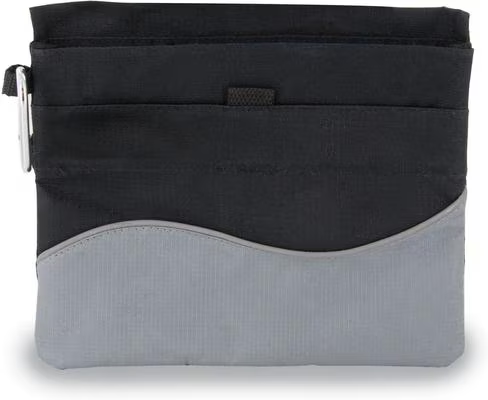
Treat Pouch Sport uses a structured hinge so its divided main pocket can stay open for one-handed reward access and close snugly afterward. A detachable adjustable belt, belt clip, front pocket, loops, and metal carabiner support several tools, while the water- and stain-resistant fabric and PVC-lined treat area are designed for frequent use. At roughly 8 by 8 by 2 inches it carries more structure than a simple tote, and the hinge can feel bulky at the waist.

Put on the same clothing, leash, and backpack you will use outside, then rehearse the complete motion indoors. Hold the leash in its normal hand, open the pouch with the other hand, take one small reward, close the pouch, and walk several steps. Jog briefly, bend, and step over a low object to check that the pouch does not swing heavily, spill food, or interfere with the leash. Position it where your hand reaches naturally without forcing your shoulder behind your body. The PetSafe Treat Pouch Sport provides a divided inner pocket, belt attachment options, and a closure designed for one-handed access, which makes it a useful example of organizing two reward levels while keeping the delivery motion simple. Place a clean clicker or whistle on its intended loop and unused waste bags in a separate pocket. Before reaching the trail, confirm that every clip and buckle is closed and that your dog cannot push its nose directly into the pouch while standing beside you.
Blue-9
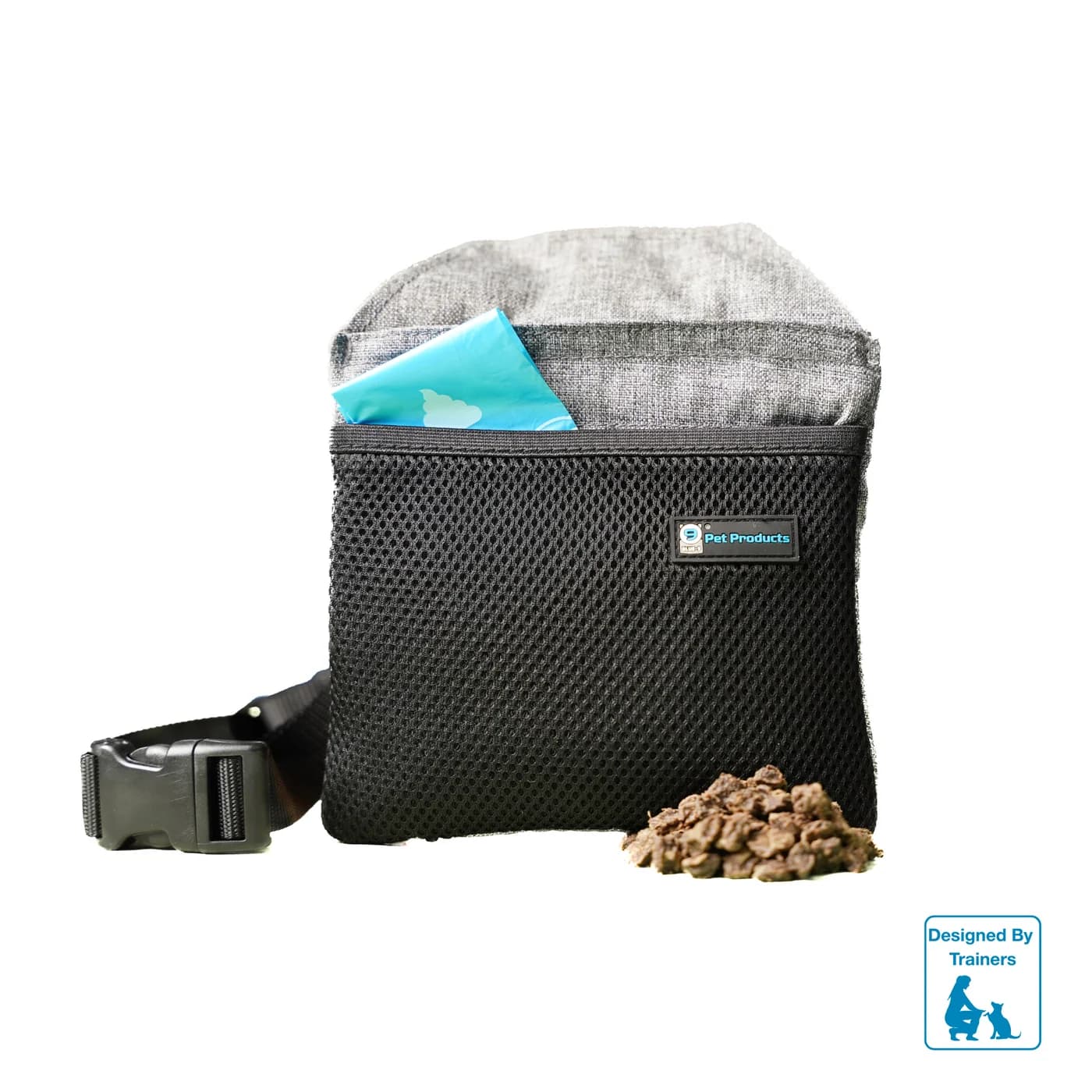
Blue-9's proprietary snap-back opening closes automatically after the hand leaves, avoiding both a zipper step and a permanently open mouth. The slim lightweight pouch is built for repeated training access and has room for treats plus keys, a phone, or waste bags. It can be wiped clean or hand washed, but the official page does not publish capacity or exact dimensions, making its fit and load less measurable than the higher-ranked pouches.
On the walk, the order should be behavior, marker, then food delivery. Watch for the exact action you want, mark it with a consistent word or click, and immediately reach into the pouch. If the dog looks at you voluntarily, mark that glance before moving your hand; reaching early can turn the pouch itself into a lure and make the lesson less clear. Deliver the reward close to the position you want to reinforce, such as beside your leg for loose-leash walking, rather than tossing it forward and encouraging another surge to the end of the leash. The Blue-9 INSPIRE Training Treat Pouch can be used in the same rehearsed sequence: the useful feature is not simply carrying food but allowing the handler to keep the food hidden until after the marker. For a new behavior, reward successful repetitions frequently. Once the response is reliable, gradually mix in praise, permission to sniff, play, or intermittent food rewards instead of stopping reinforcement abruptly.
PET N PET
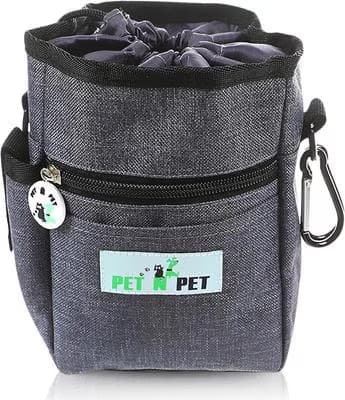
PET N PET offers three carry modes—waist, shoulder, or belt clip—along with a built-in waste-bag dispenser, two-zone storage, a secure drawstring, and three included bag rolls. The 6-by-3-by-7.8-inch nylon pouch holds more training extras than most compact designs and has one of the largest review samples in the comparison. Its drawstring requires a deliberate pull rather than instant magnetic access, and the full pouch can feel tall at the hip.
Turn ordinary walking moments into brief exercises, then return to a normal walk. For a check-in game, mark and reward voluntary eye contact several times in a low-distraction stretch. For pace changes, get the dog's attention, change speed smoothly, and reward when the dog matches you without tightening the leash. For recall practice, begin in a place where it is legal and safe, use a long line if needed, and pay generously for a prompt return; a pouch is not a reason to test an unproven off-leash recall. A roomier option such as the PET N PET Dog Training Treat Pouch can carry the measured routine tier and a small high-value reserve, but keep sessions short enough that the dog can still succeed. If the dog is too worried, overexcited, or unable to take food, increase distance from the trigger and lower the difficulty instead of repeatedly presenting treats. Finish a short successful repetition before fatigue, heat, or frustration degrades the response.
Treat storage does not become food-safe merely because the pouch has a coated lining. FDA guidance says dry pet food should remain cool and dry, below 80 degrees Fahrenheit, while unused canned or pouched food should be refrigerated promptly or discarded. Follow the treat label, avoid carrying perishable moist food for hours without temperature control, and throw away anything that smells spoiled, looks changed, or has become soaked with unknown water. Wash or sanitize hands before packing food and wash with soap and water for at least 20 seconds after handling pet food and treats when facilities are available. The pouch should remain a quick-access training item, not the entire hiking kit. AKC's trail checklist also includes drinking water and a bowl, a sturdy six-foot leash, identification, waste bags, and a pet first-aid kit. Carry water and emergency supplies in a backpack or larger waist pack so their weight does not make the treat pouch bounce or pull open.
Reset the pouch as soon as the walk ends. Return only clean, shelf-stable leftovers to appropriate storage; discard damp, dirty, overheated, or questionable pieces rather than leaving them in the pouch for tomorrow. Shake out crumbs, inspect seams and corners for greasy residue, and follow the maker's care label because cleaning instructions differ by material and hardware. Wilderdog specifies a gentle machine wash with low or no heat and hang drying for its treat pouch, while other designs may require hand washing. CDC guidance likewise says to follow the product's cleaning instructions and clean pet items more often when they look dirty or smell bad. Let every layer dry completely before closing zippers or refilling the compartment. Finally, note roughly how much of the measured reward allowance was used, refill unused waste bags, inspect the waist strap and clips, and store the empty pouch away from the dog's reach. A dry, prechecked pouch makes the next walk faster without carrying yesterday's crumbs, moisture, or odor forward.
We used these primary or authoritative references when checking this guide. Product instructions and local rules can change, so confirm details that affect your trip.
Yes. It explains the main decision points in plain language and links to relevant product reviews when published options are available.
No. Prices, coupons, stock, and shipping terms can change. Confirm the current offer on the retailer page before checkout.
Related content