Learn how to prepare a dog rescue sling, assess whether carrying is safe, protect a possibly injured spine, manage heat and breathing risks, and contact a veterinarian, 911, or park rangers during a trail emergency.
Fido Pro
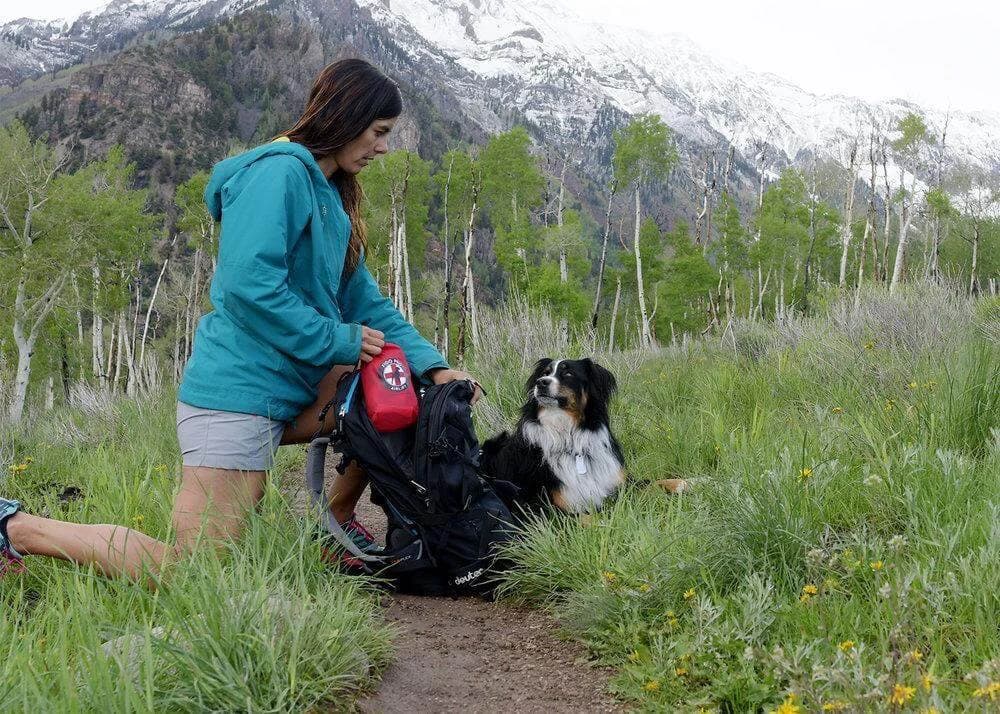
The Airlift Original V2 uses a patented eight-point suspension layout to support a dog from the chest through the rear while one handler carries the load on their back. Medium, Large, and XL sizes cover documented dog-weight bands from 20 to 130 pounds, and removable high-density shoulder pads are included for longer carries. It offers the strongest combination of full-body support, current direct availability, deep first-party media, and verified brand instruction, but lifting a large dog from the ground remains physically demanding and the sling must be sized and practiced before a crisis.
Stop and look for hazards before touching the dog. Loose rock, traffic, swift water, wildlife, lightning, heat, and a steep trail edge can turn one patient into two. Note your location, trail name, nearest junction, time, weather, and what happened. Call a veterinarian or emergency veterinary hospital for transport advice as soon as communication is possible. If a person is injured, the terrain cannot be crossed safely, or the party cannot evacuate without additional danger, call 911, park dispatch, or a ranger and describe both the human and animal situation accurately. The National Park Service warns that backcountry rescue is not guaranteed and may take hours, so do not promise that a pet-only rescue team or helicopter will come. If there is no service, send two capable adults for help when practical and leave someone with the dog. First aid and a rescue sling are bridges to professional care, not a diagnosis or treatment plan.
Ruffwear
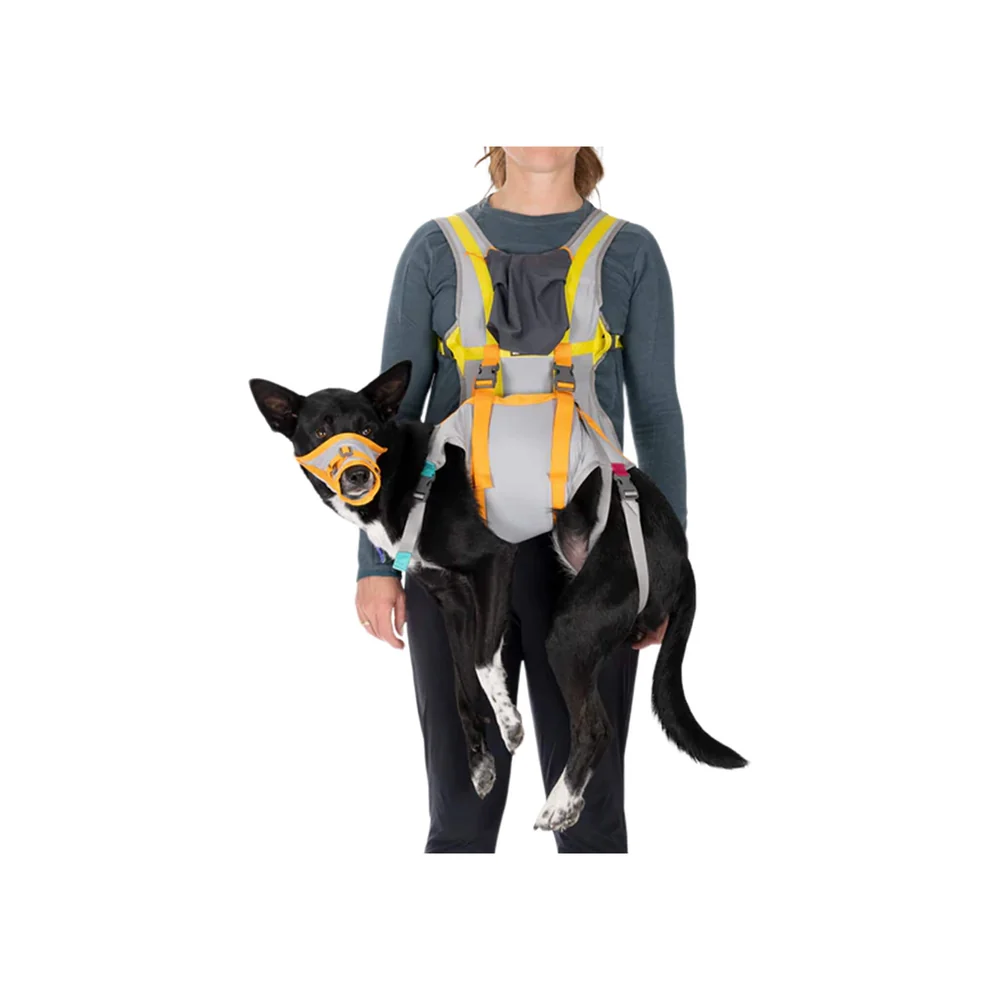
BackTrak combines a human vest with a built-in dog sling and a lightweight first-aid muzzle, using color-coded straps and continuous support webbing for front or back carry. Three girth sizes cover 22 to 36 inches, the complete kit weighs 0.99 to 1.21 pounds, and Ruffwear states that the sling can support dogs up to 103 pounds. It is the most complete ready-made kit in the comparison and has the deepest direct review sample, although it is heavier than ultralight slings, takes practice to configure, and can hang too low when a short handler carries a tall dog.

A rescue sling can help when a dog cannot walk yet can be loaded without worsening breathing, bleeding, or distress. It is not automatically appropriate for every fall, collapse, or limp. VCA advises keeping movement to a minimum when nervous-system injury, fracture, or spinal injury is possible. The Red Cross recommends a flat board for a dog that appears to have a spinal injury; a rigid makeshift stretcher can support the body when a sling cannot. Do not twist the back, pull on a limb, massage the spine, attempt to reset a bone, or apply an improvised splint unless a veterinarian or trained responder directs you. Avoid loading a dog that is actively seizing, struggling to breathe, bleeding uncontrollably, or becoming frantic in the sling. Stabilize the scene, call for guidance, and reassess. The Ruffwear BackTrak is a complete human-vest-and-sling system, but its design does not override those medical limits or make a hazardous carry safe.
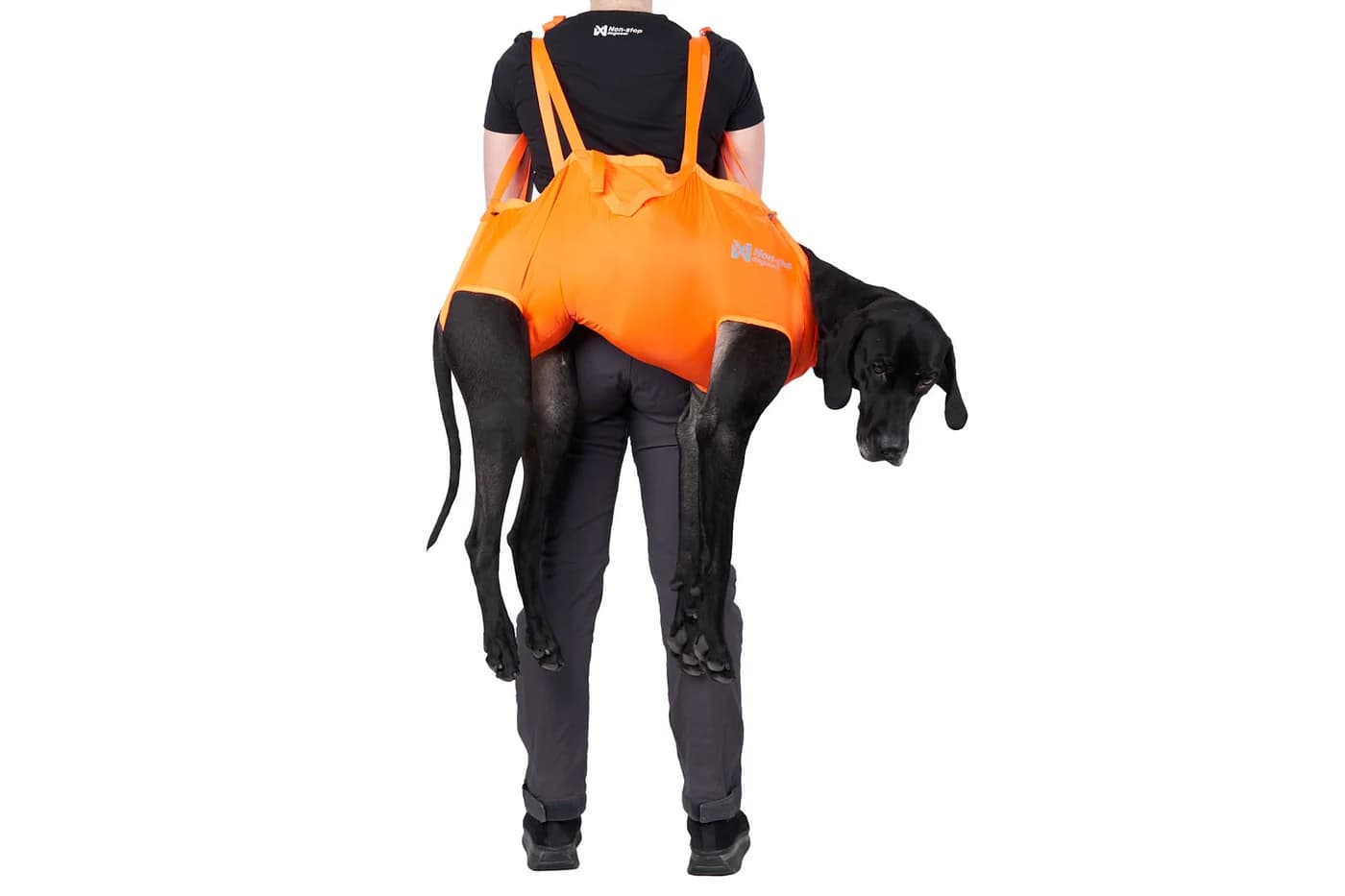
Non-stop Dogwear
Developed with the Norwegian Search and Rescue Dog Association, this high-visibility sling has no front or back orientation and packs to 5.9 to 8.2 ounces. Four size bands cover 11 to 99.2 pounds, four leg openings spread the dog's weight, and the straps can be used for front, side, or back carry. It is the easiest full-body system to keep in every pack, but the shoulder straps have no padding or hardware adjustment, the user must tie knots to set length, and the larger US sizes were unavailable when checked.
Fit begins before the trip. Record the dog's current weight and the measurement required by the specific maker, such as girth or the distance between the front and rear legs. Compare both values with the current size chart instead of assuming that every brand's Medium or Large means the same thing. The sling should support the torso without a narrow strap cutting into the abdomen, the dog folding sharply, or leg openings pulling tightly into the groin. Confirm that buckles close fully and straps cannot loosen during a short practice lift. A product's published dog-weight range is not proof that one hiker can carry that load over roots, steps, or a long descent. The carrier must also consider height match, back and knee health, balance, pack weight, heat, and distance. Non-stop dogwear sizes its four-leg-opening rescue sling by weight and leg spacing; those are product-specific instructions, not a universal medical fitting rule. For a heavy dog, plan for two carriers or professional assistance.
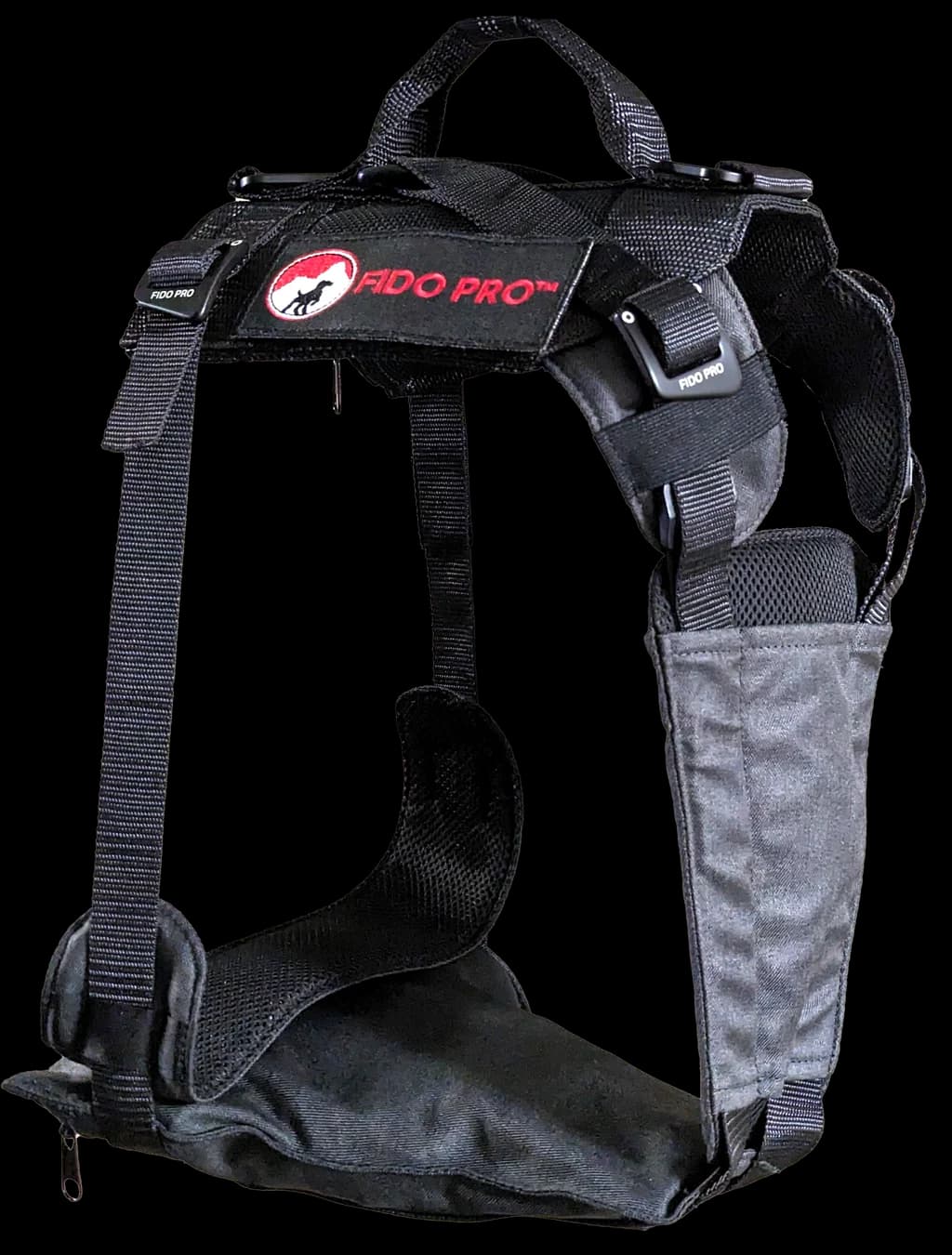
Fido Pro
Panza V2 is a daily trail harness whose body opens into an integrated rescue sling, so runners, riders, and lightweight hikers do not need to remember a separate carrier. The single adjustable design targets dogs around 30 to 95 pounds and adds gear pockets, chest and belly brush guards, and a lifting handle. Carry readiness is excellent because the dog wears the system from the start, but one adjustable size will not suit every body shape and the buyer must verify neck girth and the 10-to-22-inch front-to-rear-leg range.
Do not let an injury be the first time either partner sees the equipment. At home, place the packed sling on the floor, reward calm investigation, and practice each buckle without lifting. Fit the human straps separately, then fit the dog portion while the dog is relaxed. Progress to a partial lift for a few seconds, a complete lift close to the floor, and several short steps on level ground. Stop if the dog pants from stress, freezes, fights the gear, or shows pain. Practice taking the sling off just as carefully as putting it on, because a rushed release can drop or twist the dog. Recheck the session occasionally and after changing the dog's weight or coat length. A built-in system such as the Fido Pro Panza Harness V2 may reduce deployment steps, but its emergency sling still needs correct sizing, familiarization, and inspection. Training improves speed and coordination; it does not qualify the owner to diagnose an injury or perform a technical rescue.
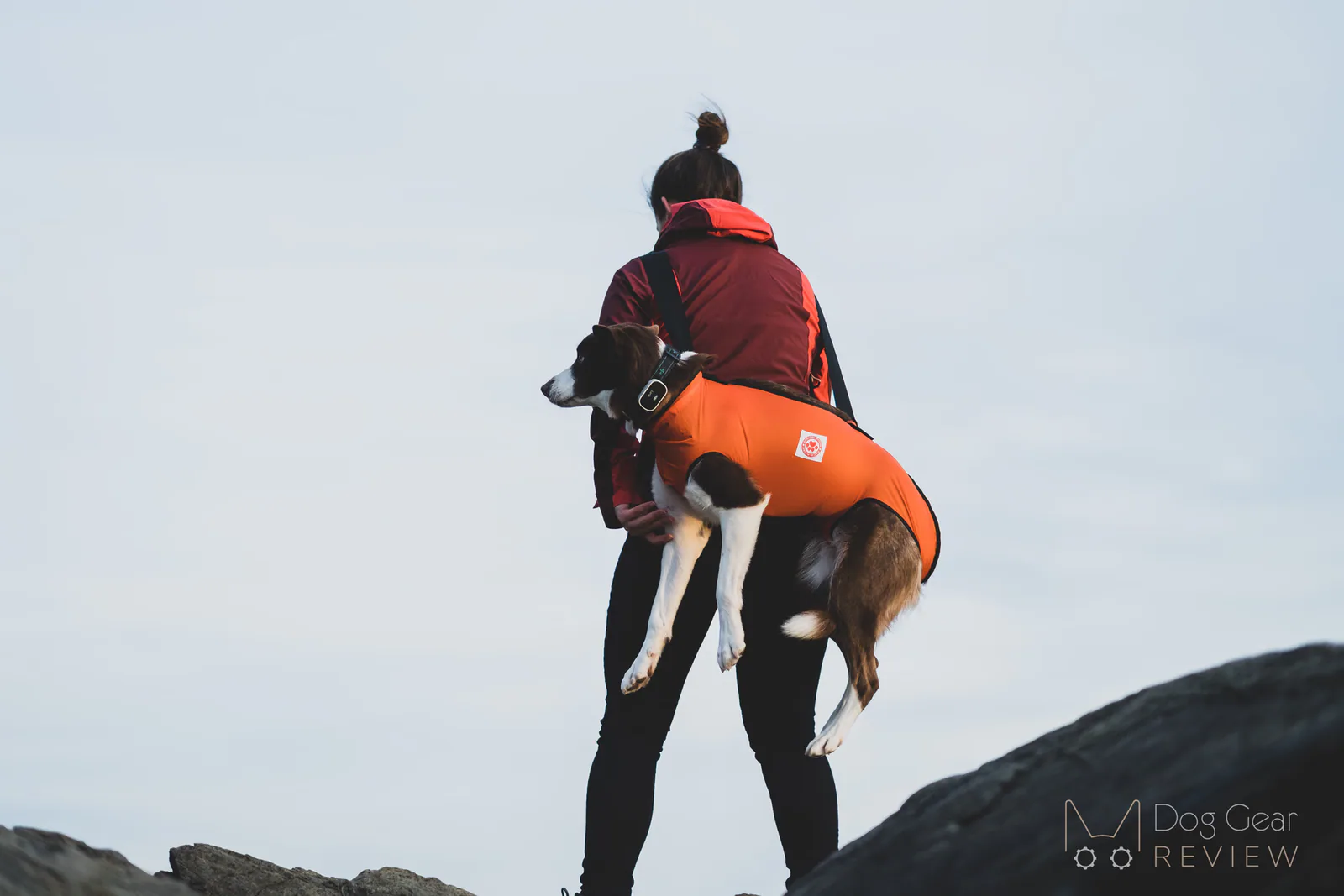
Mountain Dogware
Pack-a-Paw is a compact one-piece harness designed specifically to let a hiker carry an injured dog on their back. The handmade US construction uses a simple two-size system, metal hardware, and a lightweight packable body that avoids the bulk of a human vest. Its purpose is clear and five independent hands-on photographs document the product in use, but the public brand page does not provide dog-weight limits, detailed dimensions, a numeric review signal, or a verified brand video, so buyers should confirm fit directly with the maker.
Whenever possible, use two people on stable, level ground. One person controls the head and shoulders while the other supports the pelvis and positions the sling. Move as a coordinated unit and keep the head, neck, back, and hips aligned rather than pulling the dog through small openings or lifting by the legs. If spinal injury is suspected, minimize movement and use a rigid board or stretcher with professional guidance instead of forcing the dog into a soft carrier. Pain and fear can make a normally gentle dog bite. A veterinary professional may recommend a first-aid muzzle, but never use one on a dog that is vomiting, having difficulty breathing, has blue or purple gums, or needs unrestricted panting in hot conditions. Do not obstruct the airway. A compact harness such as the Mountain Dogware Pack-A-Paw can be staged before lifting, but a universal fit will not be perfect for every body shape. Check leg placement, pressure points, breathing, and circulation before standing.
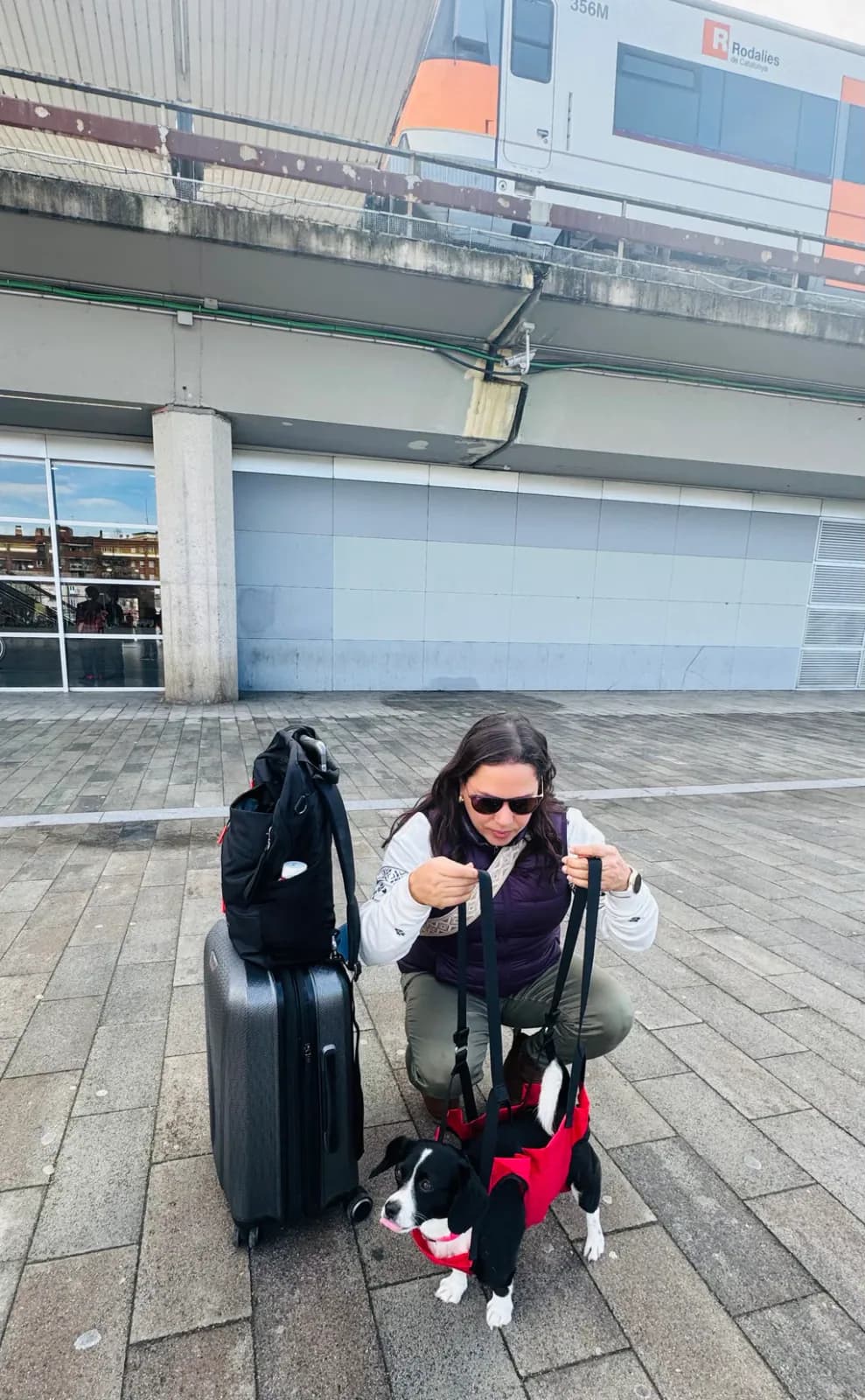
Fido Pro
Airlift Ultra-Lite retains Fido Pro's full-body carry concept in a smaller 5.0-to-7.8-ounce package for dogs from 7 to 60 pounds. The rubber sternum strap also bundles the sling, and the three sizes fit into a pocket or compact trail kit. It is easier to carry every day than the Original V2, but Fido Pro removes shoulder padding to save weight and explicitly positions it for shorter carries, so larger dogs and longer evacuations may require improvised padding or a more robust system.
Choose the shortest stable route to a road, ranger station, or agreed handoff point, even if it is not the route originally planned. Avoid cliff edges, fast water, loose scree, ladders, and technical scrambles. Stand with help when available, use small controlled steps, keep the load close to the carrier's center, and stop before grip, balance, or leg strength fails. Rotate capable carriers and use a two-person configuration for a large dog whenever the equipment permits. A lightweight option such as the Fido Pro Airlift Ultra-Lite may reduce pack bulk, but the manufacturer describes it as intended for shorter carries and it does not reduce the dog's actual weight. Never exceed the product's stated fit range or the carrier's real ability. If the carrier becomes dizzy, overheated, painful, or unsteady, put the dog down carefully in a safe place and request assistance. A delayed controlled evacuation is safer than falling while carrying an immobilized dog on exposed terrain.
Pause often enough to see the dog's face and examine the sling. Watch breathing effort, gum color, alertness, vomiting, seizure activity, renewed bleeding, swelling, and whether an edge is pressing into the abdomen, chest, armpit, or groin. Difficulty breathing, blue or purple gums, uncontrolled bleeding, confusion, collapse, or seizures require immediate veterinary help and may make sling transport unsafe. In hot weather, move into shade and preserve the dog's ability to pant. Cornell lists persistent excessive panting or drooling, breathing difficulty, vomiting, bloody diarrhea, weakness, confusion, seizures, and collapse as heatstroke warning signs requiring immediate hospital care. Texas A&M advises beginning cooling in shade with cool or lukewarm water and airflow while arranging transport, not ice-water immersion. Monitor the people carrying as well: rest, drink, and change the plan before heat or fatigue affects judgment. Do not wrap a hot dog tightly or assume the sling itself provides cooling, monitoring, or medical stabilization.
Check whether dogs are allowed on the route, current closures, weather, terrain, and the nearest emergency veterinary hospital before leaving. Save the hospital, park dispatch, and ranger numbers offline. Download a map, identify road crossings and evacuation points, and leave a trip plan with a trusted person that includes the route, party, dog, vehicle, and overdue time. Cell service may be absent, so consider a satellite communicator or personal locator beacon and know how it works. Carry the correctly sized sling, leash, first-aid supplies, water, a bowl, insulation or shade, food, lighting, and repair items appropriate to the trip. Keep the dog's weight, medications, medical conditions, and veterinarian details accessible. Practice a calm two-person lift with likely hiking partners and decide who calls, navigates, manages the dog, and meets responders. The goal is not to become a wilderness veterinarian; it is to avoid preventable movement, communicate clearly, and reach professional care without adding another injury.
We used these primary or authoritative references when checking this guide. Product instructions and local rules can change, so confirm details that affect your trip.
Yes. It explains the main decision points in plain language and links to relevant product reviews when published options are available.
No. Prices, coupons, stock, and shipping terms can change. Confirm the current offer on the retailer page before checkout.
Related content