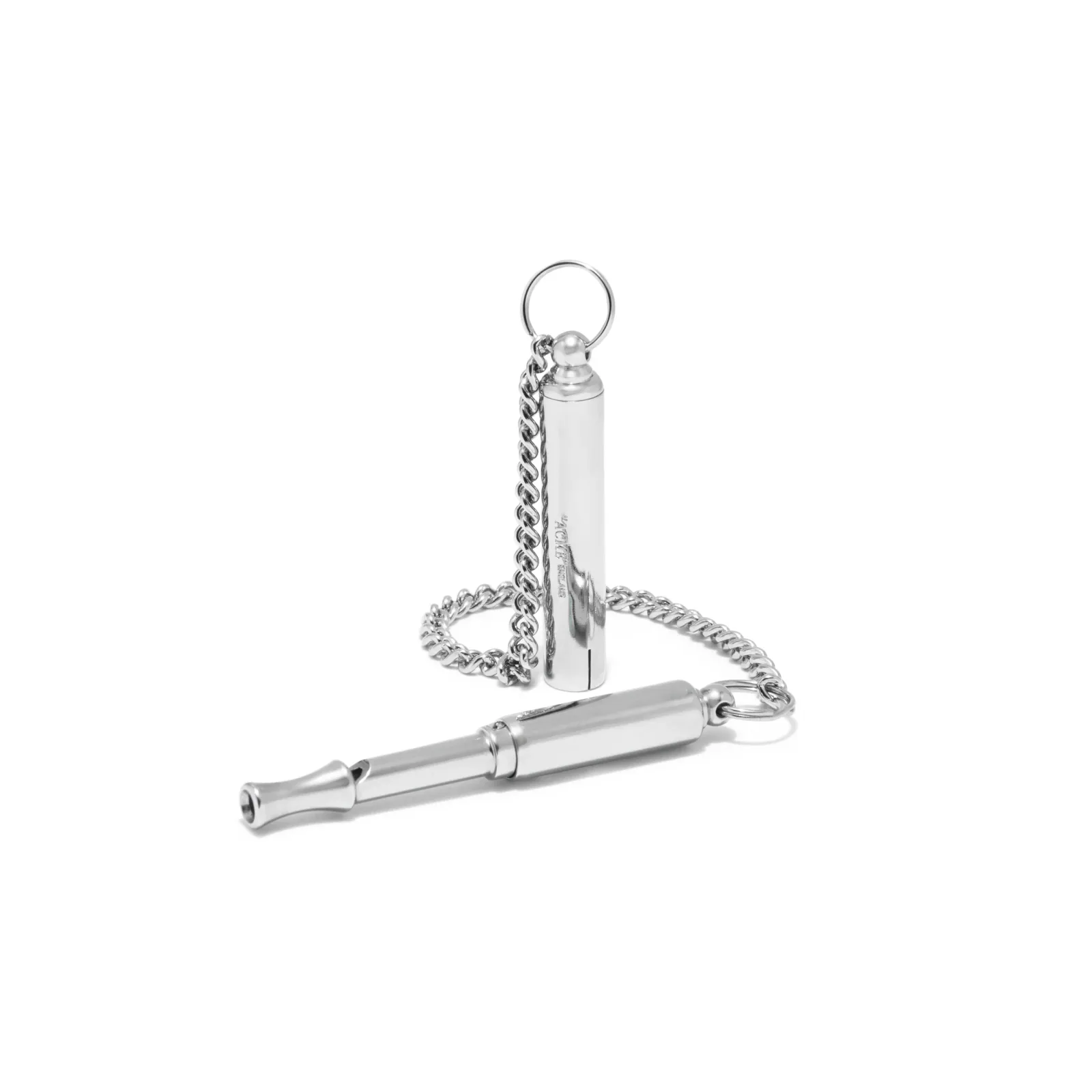
Teach a dog that one consistent whistle pattern predicts a rewarding return, then build the behavior gradually from quiet indoor practice to legal, controlled outdoor sessions without treating any whistle as a guarantee of recall or bark control.
A whistle is a cue, not a remote control. Its sound has no built-in meaning to a dog; recall develops only after that sound has repeatedly predicted an easy return and a worthwhile reward. Choose one short pattern for recall, such as two brief notes, and reserve it for that purpose. Everyone who handles the dog should use the same pattern. Do not test several whistles across a busy park or keep blowing when the dog is already disengaged, because repetition without a successful response teaches that the cue can be ignored. Start when the dog is healthy, comfortable, and able to take food or enjoy another chosen reward. Dogs Trust and the RSPCA both frame recall as a gradually trained behavior. If the dog has a history of bolting, fear, predatory chasing, or aggression, work with a qualified reward-based professional before adding off-property distance.
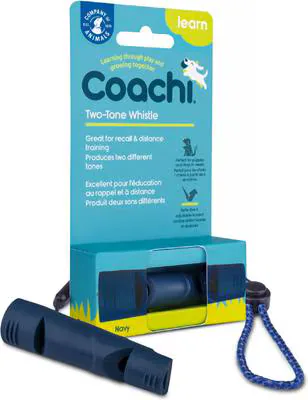
Coachi
Coachi's Two-Tone provides two fixed ends in the documented 3,300-4,200 Hz range, allowing a trainer to condition separate cues or distinguish work with two dogs. It is rated at 100 dB, includes an adjustable reflective lanyard, and is described as dishwasher-proof. Two signals require more careful training than one, the pitch is not adjustable, and both tones remain audible to people.

Prepare ten to fifteen tiny, high-value treats and begin only a few steps from the dog. Blow the chosen pattern once, immediately move backward in an inviting way, and reward generously when the dog reaches you. At first, the food follows the sound whether or not the response looks polished; the lesson is simply that this particular sound is excellent news. Keep sessions to three to five repetitions, then stop while the dog still wants another turn. The Coachi Two-Tone Dog Whistle offers two distinct sounds, but that flexibility is useful only when the handler assigns each sound one stable job. Use one side for recall during the initial program rather than alternating pitches randomly. Never blow beside the dog's ear, and do not use maximum force indoors. AVSAB supports reward-based training and advises against aversive methods, so avoid startling the dog, dragging it toward you, or punishing a slow arrival.
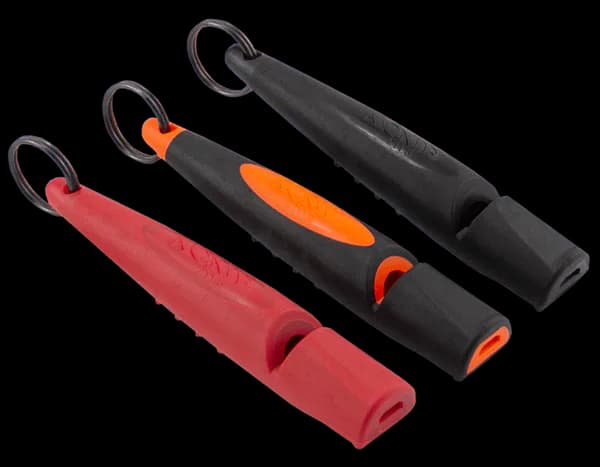
ACME Whistles
The Alpha 211.5A combines ACME's standardized 211.5 fixed pitch with a pealess chamber, an approximately 3-inch body, and a rubberized knobby grip. A fixed tone is easier for multiple handlers to reproduce than an adjustable whistle, and the retailer review sample is the strongest in the top five. It costs more than a basic plastic whistle, only Red was immediately orderable when checked, and it still needs gradual reward-based conditioning before it can function as a recall cue.
Once the dog turns toward you promptly indoors, move to a fenced yard or another genuinely enclosed space. Begin close enough that success is highly likely. Let the dog look away briefly, give the whistle pattern once, step backward, and reward at your legs. Add distance in small increments rather than jumping from a room to the far side of a field. The ACME Alpha 211.5A Dog Training Whistle can serve as a consistent dedicated cue, but owning a named pitch does not make the behavior automatic and does not overcome weak reinforcement. Carry the same rewards used indoors and vary them: several treats in a row, a short game, permission to sniff again, or calm praise if that is valuable to the dog. Occasionally hold the harness gently, deliver the reward, and then release the dog back to exploring. That prevents recall from always predicting the end of freedom.
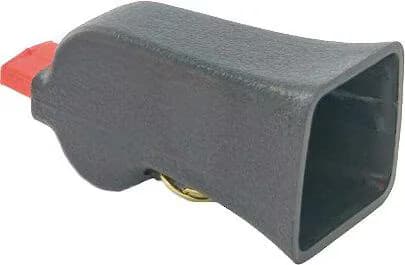
SportDOG
The Roy Gonia Mega uses a pea chamber and a flared body intended to project sound forward rather than back toward the handler. Its listed dimensions are 79.38 by 43.18 by 48.64 mm, making it larger than slim tube whistles, and Chewy showed a small current discount. The larger body needs more storage and breath, while a pea can be less predictable when moisture or severe cold affects movement.
An unfenced outdoor session needs physical backup before it needs greater confidence. Fit a comfortable harness and attach a long line in an open area away from roads, bicycles, wildlife, and other dogs. Wear gloves when appropriate, keep the line organized, and never wrap it around a hand, person, or dog. Allow slack, give the whistle once, move away, and reward the return. If the dog does not respond, use the line only to prevent escape and calmly reduce the distance; do not reel the dog in as punishment. The SportDOG Roy Gonia Mega Whistle is designed to carry as a field cue, yet louder is not automatically clearer. Do not blow at full strength near people or animals, and never place it close to a dog's ears. Practice within the line's safe radius until the dog succeeds in several short sessions on different days. A long line is a safety system, not proof that the recall is ready for off-leash use.
Recall becomes harder when distance, distraction, and duration rise, so change only one of them during a session. Add five or ten feet while the environment stays quiet, or keep the dog close while a mild distraction appears far away. Do not combine a new trail, maximum line length, running wildlife, and an unfamiliar whistle in one test. Reward especially fast turns and enthusiastic arrivals, but still pay a slower correct response. Use a simple log to note location, distance, distraction, and the number of first-cue successes; progress after repeated success rather than after one lucky repetition. If performance falls, shorten the line, move farther from the distraction, improve the reward, or return to the previous location. The goal is a history of clear wins. Blowing repeatedly, raising your voice, or withholding all rewards after a difficult response adds pressure without repairing the missing training step.
A trained whistle recall does not cancel leash laws, park rules, seasonal wildlife restrictions, or trail etiquette. The National Park Service advises visitors to check where pets are allowed and to keep them leashed where required. Research the destination before leaving home, and use the harness and ordinary leash even when practice results are strong. A whistle may be harder for other visitors to interpret than a spoken cue, so avoid repeated blasts near campsites, horses, wildlife, or crowded viewpoints. Step off the trail when appropriate, prevent greetings with unknown dogs unless both handlers agree, and never allow the dog to chase animals. Carry identification, water, waste bags, and a backup leash. If a posted rule requires a six-foot leash, a long line is not an exception. Outdoor reliability means choosing legal, controlled situations—not arranging a dramatic test to see whether the dog returns from danger.
Every missed cue is information. The dog may be too far away, overexcited, worried, tired, uncomfortable, or facing a reward that cannot compete with the environment. Secure the dog without anger, then lower the difficulty. Do not whistle again and again, scold after the dog finally arrives, or end every recall by clipping the leash and leaving. Punishment can make approaching the handler risky and may weaken the response you wanted to strengthen. For the next repetition, move closer, wait for a calmer moment, use the long line, and offer a better payoff. Sudden deterioration also deserves a practical check: pain, hearing changes, medication effects, heat, or stress can alter behavior. Contact a veterinarian about a new or persistent change, and seek a qualified reward-based trainer when fear, chasing, or aggression complicates the plan. Progress is not perfectly linear; protecting the cue matters more than proving the dog can pass a difficult test today.
After the behavior is established, keep rewarding it unpredictably but generously. Mix ordinary food rewards with occasional jackpots, play, praise, and permission to resume sniffing. Practice a handful of easy recalls each week in different legal locations, and refresh the enclosed-area and long-line stages after a long break. Carry the whistle in the same accessible place, clean it according to its maker's instructions, and bring a backup verbal cue in case it is lost or damaged. A whistle cannot guarantee a return, stop barking on command, override panic, or make an unsafe off-leash location acceptable. In an emergency, use the trained cue once, move away from the dog, and make the route back inviting while maintaining any available physical control. The most reliable result comes from reinforcement history, sensible management, and realistic choices. The whistle is only the small, consistent signal that connects those parts of the plan.
We used these primary or authoritative references when checking this guide. Product instructions and local rules can change, so confirm details that affect your trip.
Yes. It explains the main decision points in plain language and links to relevant product reviews when published options are available.
No. Prices, coupons, stock, and shipping terms can change. Confirm the current offer on the retailer page before checkout.
Related content