Plan a safer tent-camping trip with your dog by checking destination rules, packing veterinary and restraint essentials, choosing enough shelter space, controlling food odors, monitoring weather, preventing ticks, and never treating a tent as escape-proof containment or a cooling device.
Start with the dog and the destination, not the tent. Ask your veterinarian whether age, mobility, breathing, anxiety, medication, vaccination status, and local parasite risks make the proposed trip reasonable. The AVMA travel brochure recommends deciding whether travel is right for the individual pet, preparing records, and watching for stress or illness. Then read the campground's current official pet rules: permitted loops and trails, leash limits, seasonal closures, vaccination documents, quiet-hour expectations, and whether dogs may be left at a site. National Park Service guidance says to know where pets can go because access differs by park. Practice one calm backyard night before a remote stay. Postpone the trip if the dog cannot settle, repeatedly paws or bites at fabric, reacts strongly to campsite sounds, or has unresolved vomiting, diarrhea, coughing, pain, or lethargy. A reservation is not evidence that every activity at the destination welcomes dogs.
Build a written checklist around restraint, identification, health, water, sanitation, and recovery. CDC travel guidance recommends current identification, vaccinations, water, food, a bowl, leash, waste bags, grooming supplies, medication, first aid, and relevant documents. Add a well-fitted harness, a backup leash, an updated tag and microchip record, a recent photo, a familiar bed, paw protection when terrain requires it, towels, and more drinking water than the forecast suggests. Save the regular veterinarian, nearest emergency clinic, campground office, and animal-control contacts offline. Ask the veterinarian which tick preventive and first-aid supplies are appropriate for this dog; human medicines and insect products are not automatically pet-safe. Pack food in measured portions and bring a sealable container for waste until it can be disposed of correctly. A kit reduces predictable gaps, but it does not turn a dog with a medical or behavioral problem into a safe camping companion.
The North Face
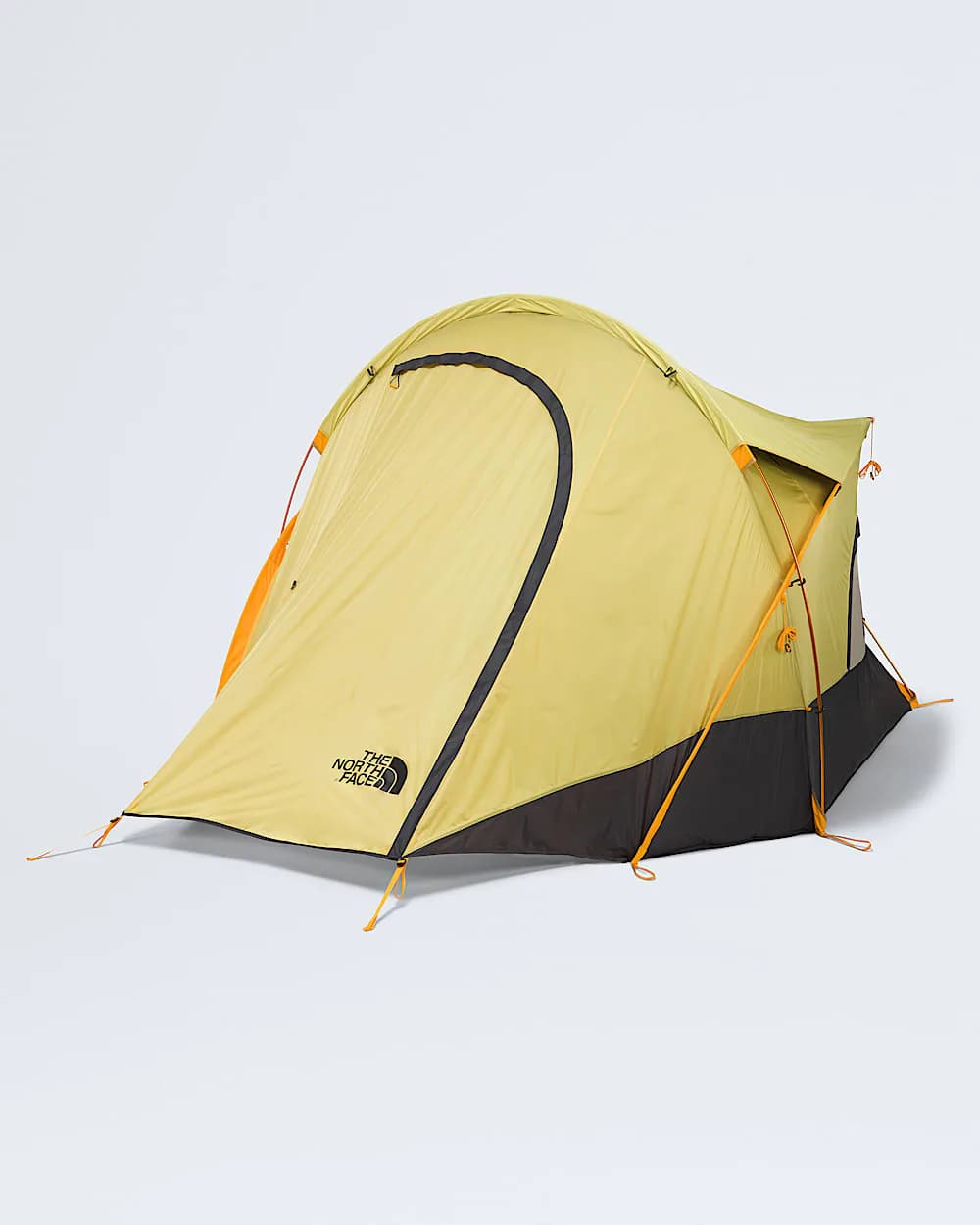
The Universal Wawona 3 is the strongest dog-specific fit in this group because The North Face documents a dog-leash attachment point, a low-threshold entrance, and a heavy-duty entry mat in a roomy 61.9-square-foot shelter. Its durable floor and 33.6-square-foot vestibule suit muddy car-camping arrivals, but the tent has only one door, is heavy for backpacking, and a three-person capacity label does not mean three adults plus a dog will fit comfortably.
Treat the advertised capacity as sleeping-person capacity, not spare room for a dog and equipment. The NPS camping checklist specifically notes that a two-person tent does not mean two people plus their gear or pets. Size up so nobody blocks an exit and the dog can lie on its own washable pad without contacting wet walls. Compare door placement, vestibule storage, mesh ventilation, floor fabric, packed weight, and setup complexity. The North Face Universal Wawona 3 currently lists 61.9 square feet, a low-threshold front entry, a heavy-duty entry mat, a large vestibule, and a rear leash attachment. Those features may simplify an accessible car-camping layout, but the attachment does not make the fabric shelter escape-proof. Keep the dog under direct supervision and use the campsite's required leash practice. A zipped tent is neither a kennel nor a secure substitute for a correctly fitted harness, leash, and attentive handler.
NEMO Equipment
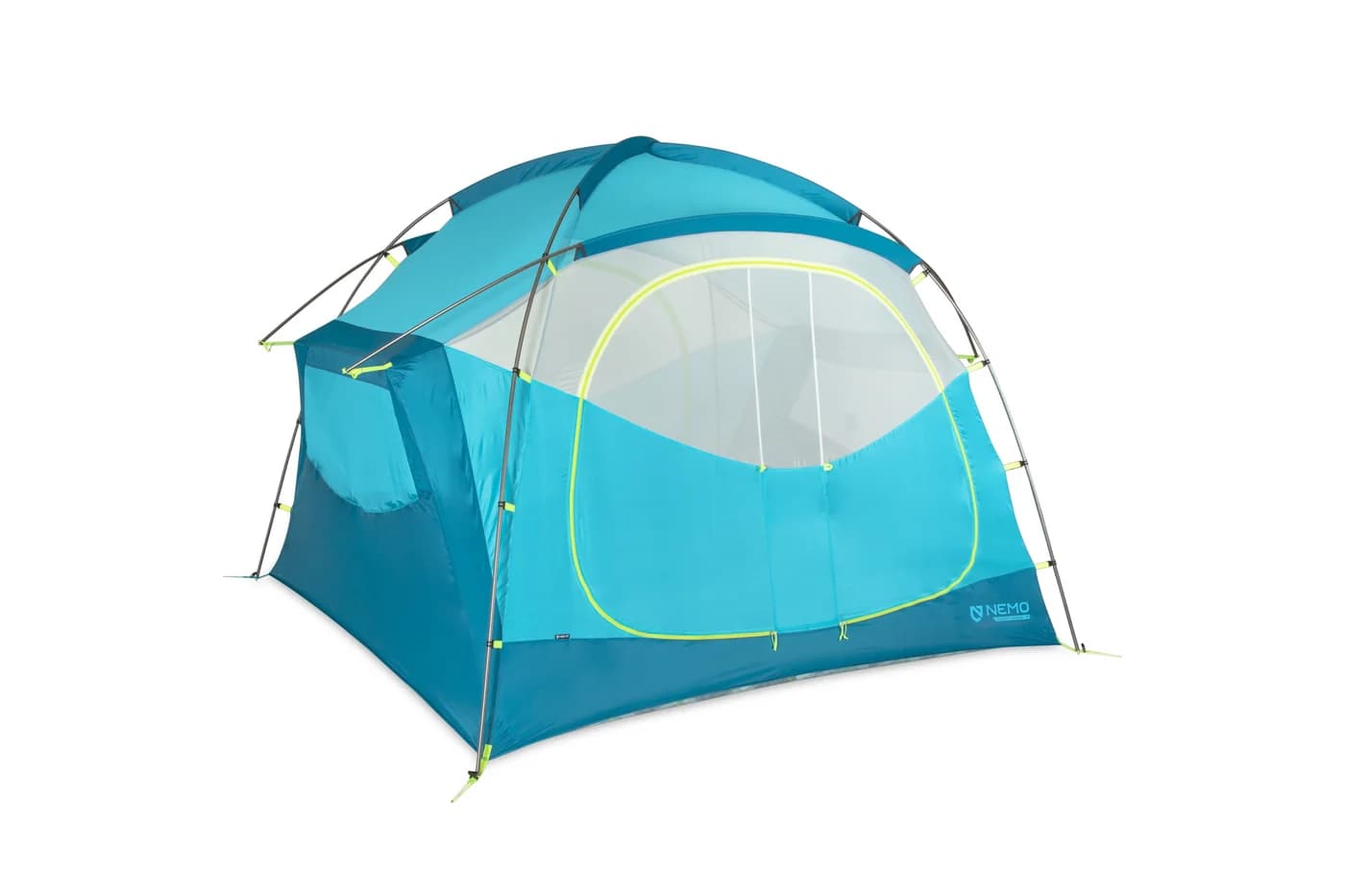
Aurora Highrise 4P provides a nearly vertical 75-inch interior, two doors, two 19.5-square-foot vestibules, and a thick 150D polyester floor. Those features make entry, bed placement, and separation of wet dog gear easier than in lower backpacking tents. The main tradeoffs are a nearly 16-pound packed weight, a separately sold footprint, and no dog-specific durability or escape-proof claim.
Pitch the tent at home before the trip, time the process, and let the dog investigate only after the structure is stable. At camp, keep the dog leashed with another adult while poles, stakes, and guylines are exposed. Inspect the pad for broken glass, hooks, sharp sticks, toxic plants, insects, standing water, and wildlife sign. Orient doors away from the fire and vehicle path, mark guylines, and establish one uncluttered entry routine. NEMO describes the Aurora Highrise 4P as a standing-height car-camping tent with steep walls, two large doors and vestibules, rain-protected windows, and a 150-denier floor. Those documented features can support space and airflow comparisons; they do not prove suitability for every dog or every storm. Protect the floor with the compatible footprint if appropriate and place a trimmed, washable dog mat inside. Never allow claws, chewing, or tether tension to load tent fabric, poles, doors, or zippers.
Use the NPS B.A.R.K. principles as a minimum campsite routine: bag pet waste, always leash the pet, respect wildlife, and know where the pet may go. Pick up promptly, keep the dog from approaching neighboring sites or wildlife, and follow the specific park's leash length and disposal instructions. Treat dog food, treats, chews, bowls, food-scented toys, trash, and used cleanup items as attractants. NPS bear-country guidance lists pet food and bowls among items that must be stored in a bear-resistant locker or hard-sided vehicle where required and says not to store them in a tent. Rules vary by location, so follow the campground's current posted method rather than a generic hanging technique. Feed away from the sleeping area when instructed, clean spills immediately, and store remaining portions as soon as the meal ends. Never use food to lure wildlife away, and never let a dog chase, bark at, or investigate wild animals.
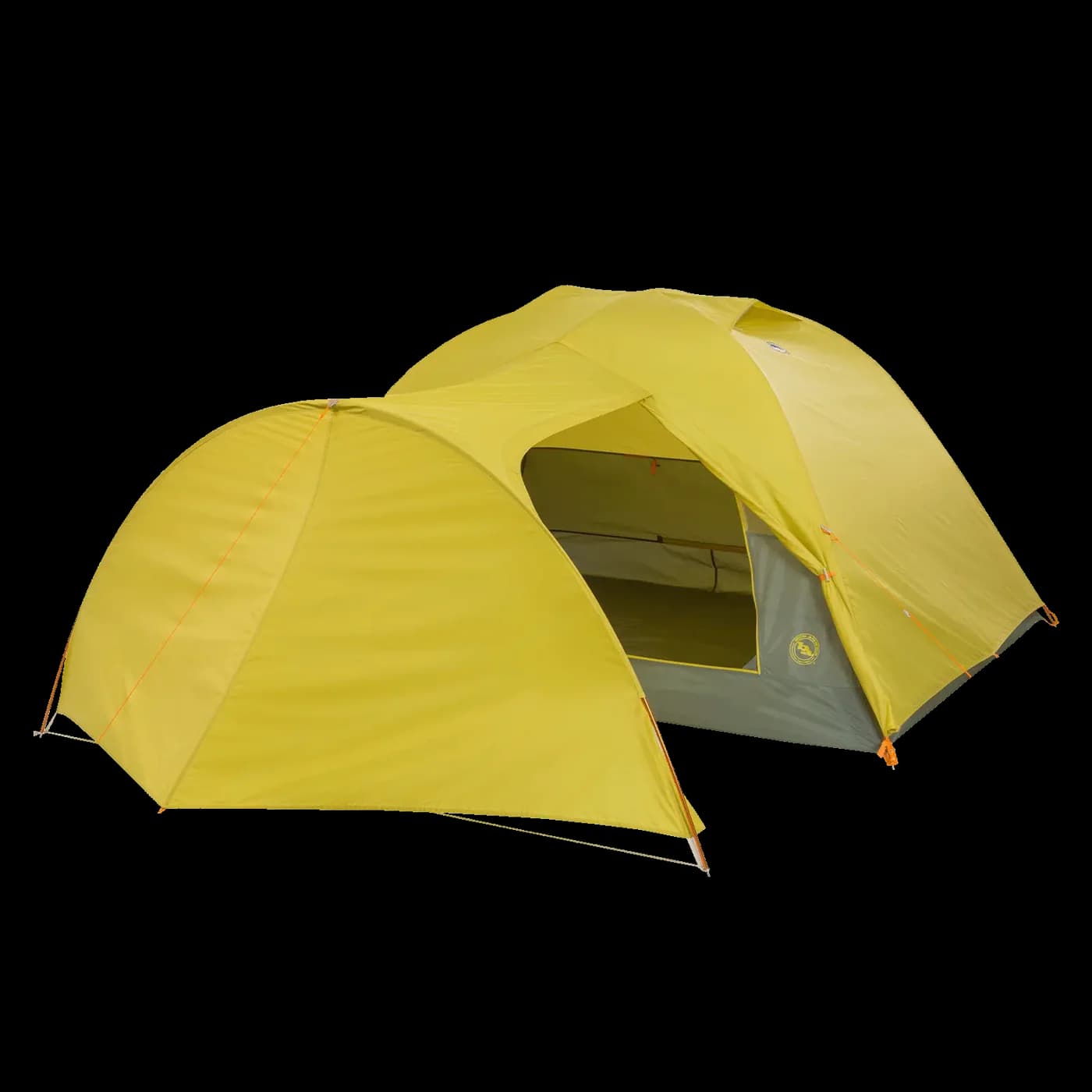
Big Agnes
Big Agnes explicitly describes the Blacktail Hotel 3's oversized pole-supported vestibule as suitable for sheltering four-legged friends. The 28-square-foot main vestibule is the clearest dedicated dog-and-wet-gear zone in this top five, while two doors preserve access to the 44-square-foot sleeping area. It is heavier than an ordinary backpacking tent, requires staking for the extended vestibule, and the footprint is sold separately.
A tent changes shade, airflow, humidity, and radiant heat, but it is not a cooling device. No sun-blocking fabric, mesh panel, or open vestibule makes it safe to leave a dog unattended inside. Check the dog's breathing, gait, gum color, hydration, and willingness to rest throughout the day; move to a safe environment and seek veterinary help when concerning signs appear. Avoid the hottest hours, provide clean water and shade, dry wet coats, and bring insulation suited to the overnight low without placing the dog against a heater or flame. Big Agnes lists the Blacktail Hotel 3 at $399.95 as available now. It is a three-person, three-season freestanding tent with two side-entry doors, one extended pole-supported oversized vestibule, and a second quick-access vestibule; the brand specifically describes the large vestibule as suitable for sheltering four-legged friends. The fly and floor use recycled 75-denier polyester with a 1,500 mm polyurethane waterproof coating. Those specifications help compare space, access, and weather materials; they do not make fabric walls escape-proof or safe for an unattended dog. Keep supervision continuous and leave before conditions exceed the shelter, handler, or dog's limits.
Discuss tick prevention with the veterinarian before departure because products, timing, and regional disease risks differ. CDC guidance says outdoor pets should be checked daily and any attached ticks removed promptly. After each walk, examine in and around the ears, around the eyelids, under the collar or harness, beneath the front legs, between the back legs and toes, and around the tail. Work slowly through long or dark coats under good light, and check people and bedding too because pets can carry crawling ticks into the tent. Use clean fine-tipped tweezers or the veterinarian-recommended method; do not improvise with heat, petroleum jelly, or a product not approved for the dog. Record the date and location of a bite. CDC notes that signs of tickborne illness may take seven to twenty-one days or longer to appear, so contact a veterinarian about changes in appetite, behavior, energy, movement, or other concerning symptoms after the trip.
Before dark, repeat the leash, tag, water, paw, weather, and tick checks; secure all attractants; and place a light where it cannot be chewed or knocked over. Keep the dog within direct adult supervision, including inside the tent. Fabric walls and zippered doors can tear or open, so do not rely on them to contain a dog startled by wildlife, thunder, voices, or another animal. Never leave the dog alone in the tent while hiking, driving, showering, or visiting facilities. Decide in advance who handles the dog and who handles shelter and supplies during fire, flood, severe weather, illness, or an evacuation. Keep keys, shoes, leash, carrier if used, records, medication, and emergency contacts reachable without searching. At departure, pack out waste, inspect the site, check the dog again, and dry equipment before storage. Safe tent camping is an active supervision plan supported by suitable gear; no tent, tether point, preventive product, or checklist can guarantee safety.
We used these primary or authoritative references when checking this guide. Product instructions and local rules can change, so confirm details that affect your trip.
Yes. It explains the main decision points in plain language and links to relevant product reviews when published options are available.
No. Prices, coupons, stock, and shipping terms can change. Confirm the current offer on the retailer page before checkout.
Related content