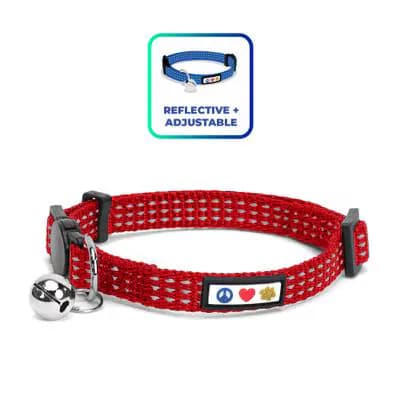
Learn how to fit a cat-specific breakaway collar with a two-finger check, keep attachments light, introduce it indoors, inspect it regularly, and avoid treating reflectivity or a collar as a substitute for a microchip, harness, or controlled outdoor access.
A breakaway collar can carry visible identification and may make a cat easier to notice, but it cannot prevent wandering, traffic injuries, fights, poisoning, or wildlife encounters. It is designed to release under sufficient load so a snag is less likely to trap the cat. That safety tradeoff also means the collar may come off and disappear. Treat it as one layer in a larger plan: current microchip registration, a recent clear photo, secure doors and screens, and controlled outdoor access wherever possible. A microchip provides permanent identification after a scanner is used; it is not GPS and cannot show a cat's live location. Reflective material is another limited layer. It returns some light toward its source when illuminated, but it is not an active lamp, does not work equally from every angle, and does not make a road safe. Begin with those boundaries rather than expecting one accessory to solve outdoor risk.
Red Dingo
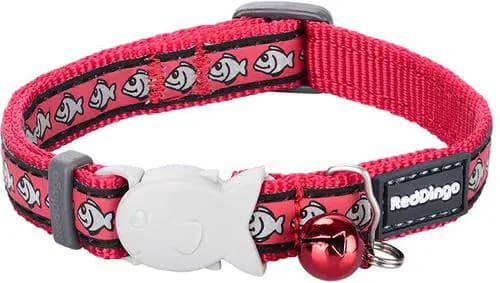
Red Dingo combines an 8-12.5 inch adjustment range, half-inch nylon webbing, reflective ribbon, removable bell, stainless K-ring, and a fish-shaped safety clip whose Chewy Q&A documents a 2-kilogram release point. That published release figure and the strongest balanced review signal in this group make it the clearest overall pick. The half-inch width can feel substantial on a very small cat, release behavior still needs to be checked on the actual collar, and passive reflection only works when outside light strikes the ribbon.

Look for a collar made for cats with a functioning quick-release or breakaway buckle. Avoid substituting a fixed dog collar, choke-style collar, or elastic-only loop; those designs may remain caught when a cat climbs, squeezes through brush, or reaches into a narrow gap. Before putting any new collar on the cat, close and release the buckle several times with your hands, inspect the stitching and edges, and read the maker's current adjustment and care instructions. The Red Dingo Nylon Reflective Breakaway Cat Collar is one cat-specific option to compare, but its name and reflective finish do not replace a hands-on buckle check or correct fit. Breakaway force is not a universal number across brands, sizes, wear conditions, or attachment loads. If the buckle sticks, opens with ordinary movement, has cracked parts, or behaves inconsistently, do not rely on it outdoors. Ask the manufacturer or your veterinarian when the design appears unsuitable for your individual cat.
Adjust the collar while the cat is calm and standing normally, with fur lying as it usually does. Blue Cross and Cats Protection use a two-finger fit as a practical starting point: two fingers should slide between collar and neck without forcing, while the loop should not hang so loosely that the lower jaw or a front leg can enter it. Run the check around more than one point because thick fur can hide uneven pressure or extra space. Watch the cat turn, lower its head, eat, groom, and walk indoors, then check again after several minutes. Remove the collar if it rides into the throat, rotates excessively, catches the mouth, changes movement, or leaves redness, hair loss, swelling, or broken skin. Kittens, growing cats, cats gaining or losing weight, and cats with seasonal coat changes need more frequent refitting. A passed two-finger check is useful, but it is not proof that the collar can never snag or come off.
Travel Cat
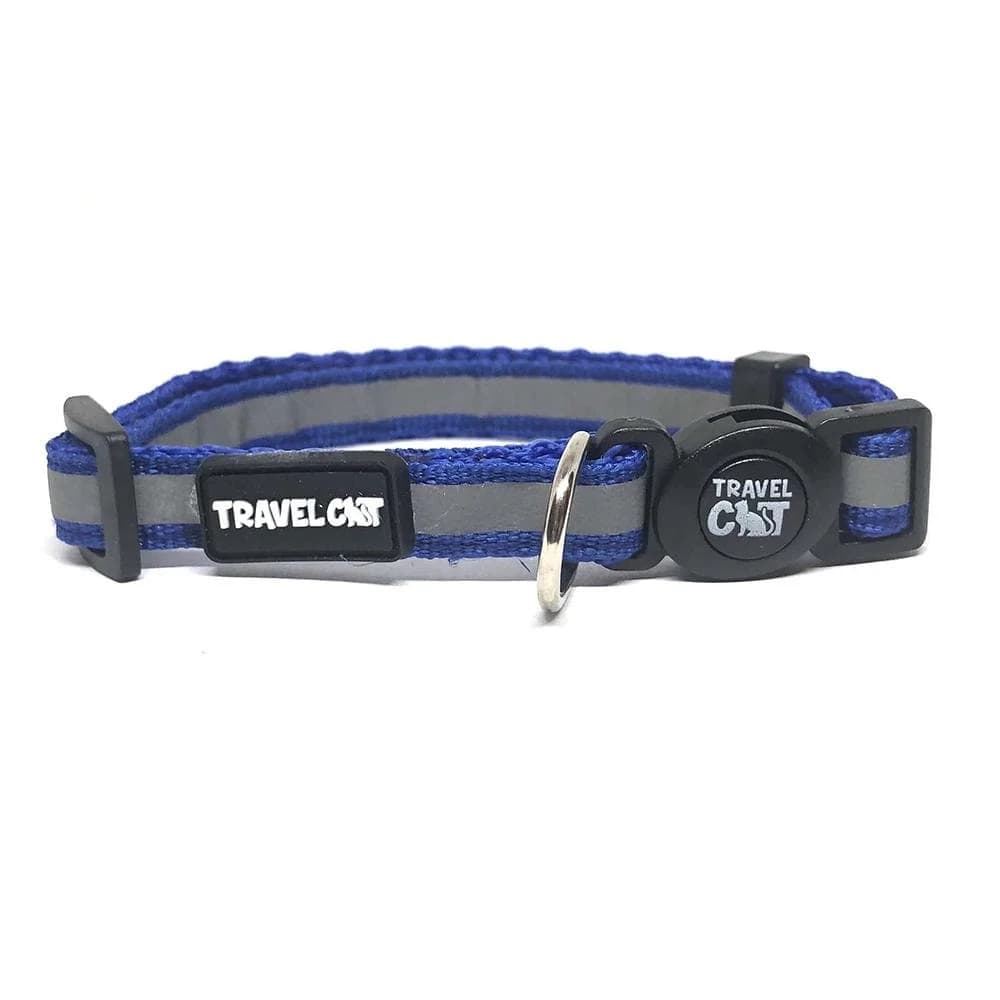
Travel Cat's Blue Reflective option is a narrow 3/8-inch nylon collar with an automatic quick-release buckle and a metal D-ring for lightweight identification. It is a useful bell-free option because the product does not include a bell, a point also reflected in owner questions and reviews. The page's fit table says 8 to 12 inches while marketing copy elsewhere says 8 to 13 inches, so owners should use the more conservative 8-to-12-inch range and measure before buying.

Let the cat investigate the collar in a familiar room, pairing calm interest with a small treat, meal, play, or another reward the cat values. Fasten it for only a short interval at first, supervise, and remove it before irritation builds. Increase wear time gradually over several comfortable sessions. Do not chase, restrain, or punish a cat that freezes, scratches repeatedly, hides, rolls frantically, or refuses food; take the collar off and return to an easier step later. The Travel Cat Blue Reflective Breakaway Cat Collar can be considered when comparing reflective options, yet reflective trim helps only when an outside light reaches it from a useful direction. Check the material in the actual low-light conditions you expect, while keeping the cat safely indoors or contained. Faded, dirty, covered, or poorly oriented reflective areas may be less visible. They never replace direct supervision, secure containment, or avoiding roads after dark.
GoTags
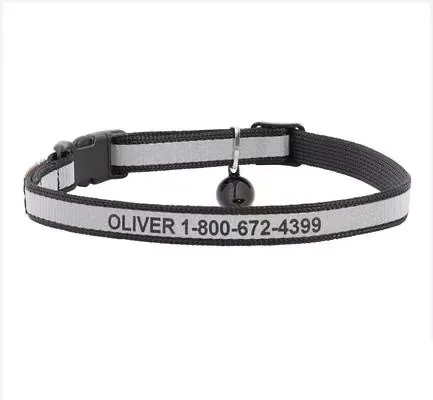
GoTags prints up to 21 characters, including spaces, onto the reflective strip of Chewy's exact 8-13 inch, half-inch-wide Black variant, reducing the need for a separate dangling ID tag. Its 2,074-rating sample and broad fit range provide unusually deep public evidence, and the exact product carried a direct markdown. The printed information and reflective layer can wear, the slider or long fur can obscure text, and the Chewy variant's 8-13 inch, 1/2-inch, 21-character specifications conflict with GoTags' differently specified direct page, so these variants must not be silently merged.
An identification tag is useful only if its details are readable and current, but every item added to a breakaway collar changes the load and creates another place that might catch. Choose the smallest practical tag, smooth its sharp edges, and confirm that it cannot reach the cat's mouth or prevent the buckle from releasing. When assessing a personalized option such as the GoTags Nylon Personalized Reflective Breakaway Cat Collar, verify the finished text, fit, buckle action, and current product instructions rather than assuming personalization guarantees recovery. There is no single attachment-weight limit that is safe for every cat or collar. Bells may bother some cats, can catch on claws or objects, and do not guarantee that wildlife will be protected. A tracker adds bulk and may alter balance or release behavior; follow both makers' compatibility instructions and discuss concerns with a veterinarian. After adding anything, repeat the movement, two-finger, snag, and buckle checks indoors.
Outdoor wear can change a collar faster than its appearance suggests. Every few days, remove it and inspect the cat's neck in good light. Look for redness, scabs, thinning hair, tenderness, odor, swelling, dampness, or debris held against the skin. Then examine the full collar for frayed webbing, stretched holes, loose stitching, rough edges, a bent ring, a clogged buckle, cracks, fading, or reflective material peeling away. Clean and dry it only as the maker directs; a wet or dirty collar should not be fastened back over irritated skin. Recheck fit after grooming, illness, a change in weight, or a long period without wearing it. Test the release buckle by hand before reuse, without pulling hard on the collar while it is on the cat. Replace the collar when a load-bearing or release part is damaged or unreliable. A successful month of wear does not make later inspections optional.
Never clip a leash or tether to a breakaway collar. The buckle may release when the cat pulls, while a collar that does not release can concentrate force on the neck. For supervised walks, use a correctly fitted cat harness designed for leash attachment, introduce it gradually indoors, and keep the identification collar separate. A harness is still not escape-proof, so use a carrier for exposed transitions and follow local leash, park, campground, and wildlife rules. Free roaming carries risks that a reflective collar cannot remove, including vehicles, disease exposure, parasites, toxins, fights, entrapment, and predation. A secure catio, enclosed garden, or closely supervised harness outing can provide outdoor stimulation with more control. Stop an outing if the cat crouches, freezes, pants, struggles, tries to reverse out of the harness, or cannot recover from a disturbance. The collar remains visible identification; the harness and attentive handler provide leash control. Neither item guarantees safety.
Finding a breakaway collar on the floor or losing one outdoors does not automatically mean the product failed. Releasing under a snag is part of its intended safety role, although repeated unexplained losses call for another fit, condition, and environment review. Do not solve the problem by switching to a fixed buckle without veterinary guidance. Keep the cat's microchip registered with current phone, email, and address information, and ask a veterinary clinic or shelter to scan it periodically so the number can be checked against the registry. Save recent photos that show the face, coat pattern, and any distinctive marks. If the cat goes missing, search nearby hiding places promptly, contact local shelters and veterinary clinics, and use the identification and recovery steps recommended in your area. The best plan accepts that a collar can release, a tag can become unreadable, a tracker can lose power or signal, and a microchip must be scanned. Layered identification improves the chance of reunion without promising it.
We used these primary or authoritative references when checking this guide. Product instructions and local rules can change, so confirm details that affect your trip.
Yes. It explains the main decision points in plain language and links to relevant product reviews when published options are available.
No. Prices, coupons, stock, and shipping terms can change. Confirm the current offer on the retailer page before checkout.
Related content