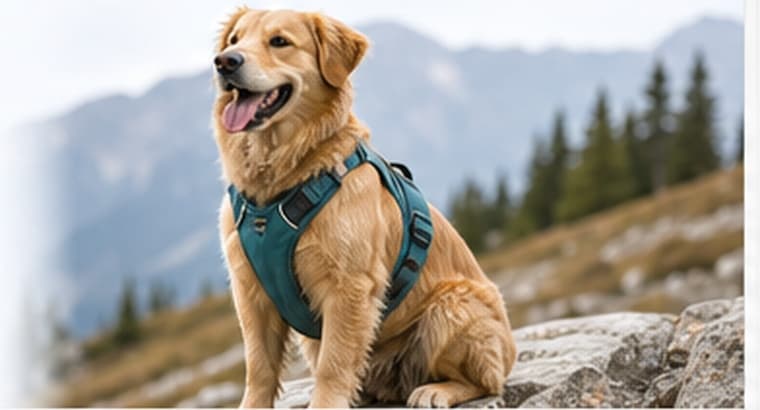
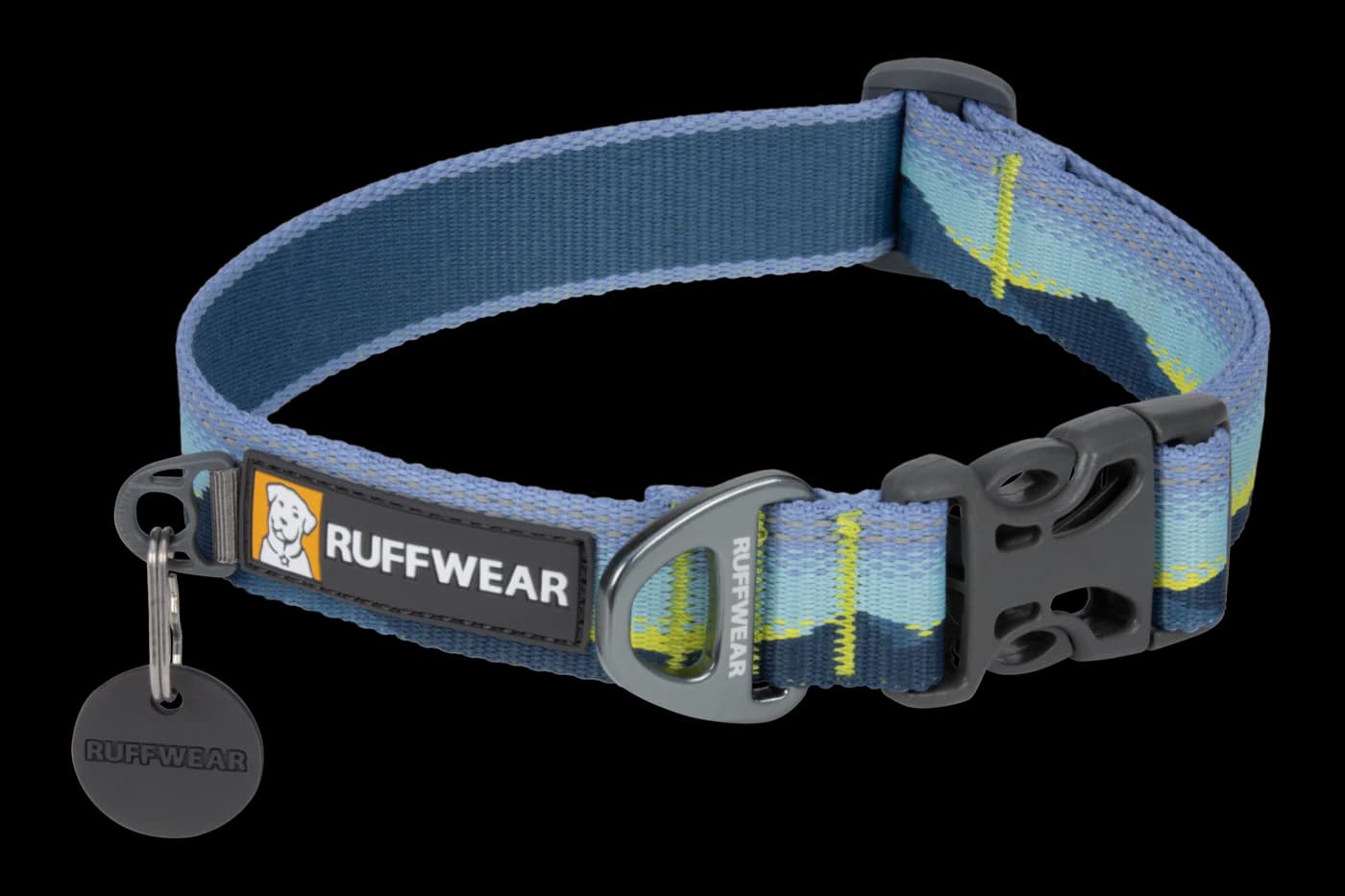
Learn how to check a dog for ticks after hiking, remove an attached tick without mixing tweezer and hook instructions, clean the bite site, save useful details, recognize reasons to call a veterinarian, and prepare for the next trail day.

Move to a bright, quiet place and perform a full-body check as soon as practical after the hike. Part long or dark fur with your fingers or a comb and feel slowly for small bumps instead of relying on sight alone. The CDC highlights several places where ticks are commonly found on dogs: in and around the ears, around the eyelids, under the collar, under the front legs, between the toes, between the back legs, and around the tail. Also inspect the neck, lips, groin, harness contact points, and any skin folds that were exposed to brush. Remove the collar and harness rather than checking only around their edges. Look over the leash, pack, vehicle bedding, towels, and your own clothing for crawling ticks. Finding one tick is a reason to complete the inspection, not a reason to stop; another may still be moving through the coat or attached elsewhere.
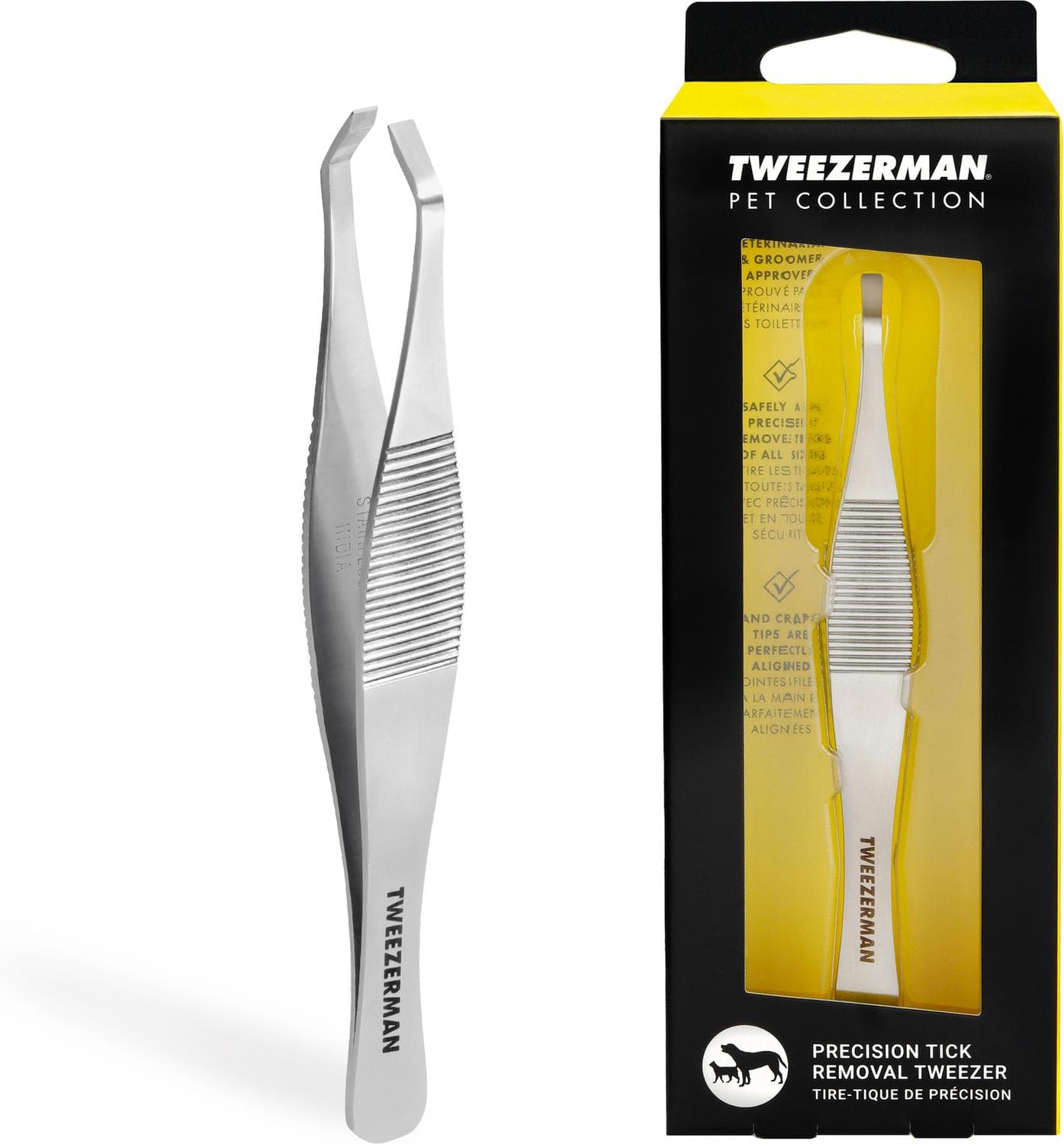
Tweezerman
Tweezerman model 1310-PGC uses tapered, hand-filed and aligned stainless-steel tips on a wider, longer body with a textured grip. The official directions say to grasp the tick as close to the skin as possible and apply steady upward pressure without twisting or squeezing, closely matching current CDC general removal guidance. Its 4.84-inch length gives the hand more distance from the bite site, although it lacks a protective travel case in this standalone version.

For a small number of attached ticks, the core kit is simple: disposable gloves, fine-point tweezers or a clearly instructed tick-removal tool, good light, soap and water or rubbing alcohol, and a sealed container or tape for the removed tick. Fine-point tips provide better access close to the skin than broad household tweezers. Place the dog on a nonslip surface and use treats or a calm helper to limit sudden movement without pinning or frightening the dog. Keep the tool where you can reach it before parting the fur. If the dog is painful, panicking, likely to bite, or cannot be held safely, stop and call a veterinarian rather than turning removal into a struggle. Veterinary help is also sensible for a tick in the eyelid, deep ear canal, mouth, or another location where the tool cannot be positioned without risking injury. This guide is general first-aid information, not a diagnosis or a substitute for individual veterinary care.

O'TOM
Model tt02sbc stores one large and one small silicone-grip hook in a 2 x 3 x 3/8-inch belt clip. The hooks snap into the case, which can attach to a pocket, belt, backpack, or keychain; colors vary. O'TOM directs users to choose the matching size, slide the fork under the tick and rotate until release. As with other twisters, that is a product-specific method and should not be presented as superior to the CDC's general fine-tip tweezer method.
With fine-point tweezers, spread the fur until the attachment point is visible, grasp the tick as close to the skin as possible, and pull straight upward with slow, steady pressure. Hold the grip rather than jerking, rocking, or squeezing the enlarged body. A purpose-made hook uses a different design: it may slide under the tick and may require a controlled rotation specified by its manufacturer. Follow the exact instructions supplied with that hook. Do not combine a hook's rotation directions with the straight-pull tweezer method, and do not improvise when the packaging or instructions are missing. If the tick tears, the tool repeatedly slips, or you cannot distinguish the tick from a skin growth, stop digging and ask a veterinarian for help. Prompt, controlled removal is the goal, but no removal technique can promise that a dog will not develop a tickborne disease. Avoid making decisions from a guessed attachment time, because transmission timing differs among organisms and cannot be known precisely from appearance alone.
After the tick is out, place it directly into the prepared container or tape so it cannot crawl away. Wash your gloved or bare hands after removing the gloves, then gently clean the dog's bite site with soap and water or an appropriate antiseptic such as rubbing alcohol. Clean or disinfect the reusable tool according to its care instructions before returning it to the kit. A tiny irritated spot can remain after an attached tick is removed, but appearance alone cannot show whether disease was transmitted. Do not repeatedly scrub the skin, pour several chemicals onto it, or probe deeply with a needle or tweezers if mouthparts appear to remain. CAPC notes that broken mouthparts can contribute to local inflammation, so contact a veterinarian when material cannot be removed easily, the site is in a delicate area, or redness, swelling, discharge, pain, or persistent licking increases. Take a clear photograph of the site for comparison instead of relying on memory.
A useful record includes the date, trail or travel location, the dog's body area, and a photograph of the tick and bite site. If your veterinarian or local animal-health authority may want the tick for identification, keep it in an escape-proof sealed container or zip bag and label it. Cornell veterinary experts also describe carrying a small empty container in a hiking tick kit. Identification can sometimes clarify which pathogens a tick species is capable of carrying, but a positive commercial tick test does not prove that the dog was infected, and a negative result should not create false reassurance. Veterinary decisions should be based on the dog, exposure history, local risk, examination, and appropriate clinical testing. If the tick will not be saved, CDC disposal options include sealing it in a container, wrapping it tightly in tape, placing it in alcohol, or flushing it. Never crush a live tick with bare fingers, and wash your hands after handling the container.
Write the bite in the dog's health notes and observe normal appetite, energy, movement, behavior, and the local skin site. The CDC advises watching pets closely after a known or suspected tick bite and notes that signs may not appear for 7 to 21 days or longer. Cornell lists fever, reduced appetite, lethargy, and lameness among signs that warrant veterinary discussion, but those findings have many possible causes and should not be used for home diagnosis. Call the veterinarian if the site becomes increasingly swollen, painful, warm, or draining; if removal was incomplete; if many ticks are present; or if the dog develops a meaningful change in eating, energy, gait, comfort, or behavior. Progressive weakness, loss of coordination, a changed voice, trouble swallowing, or breathing difficulty can occur with rare tick paralysis and require urgent veterinary attention. Do not wait for a saved tick's identification or test result when the dog is unwell, and do not give leftover antibiotics or other medication without veterinary direction.
Do not try to make an attached tick release by coating it with petroleum jelly, nail polish, oil, essential oils, or another household substance. Do not touch it with a hot match, flame, or heated object, and never apply gasoline, kerosene, or harsh solvent to the dog's skin. CDC and veterinary guidance warn that irritating or suffocating the tick is not the recommended removal method and can delay clean mechanical removal. Do not squeeze the tick's body with fingers, cut into the skin, jerk it out, or keep switching between several tools after the skin becomes irritated. Do not assume a pale bump is always a tick; nipples, skin tags, scabs, and small growths can be injured by mistaken removal attempts. Finally, avoid claims that a particular tool, a fast removal, or a preventive guarantees freedom from disease. The useful promise is narrower: a prepared owner can find ticks sooner, remove attached ticks with a controlled method, preserve relevant details, and seek qualified care when warning signs or uncertainty remain.
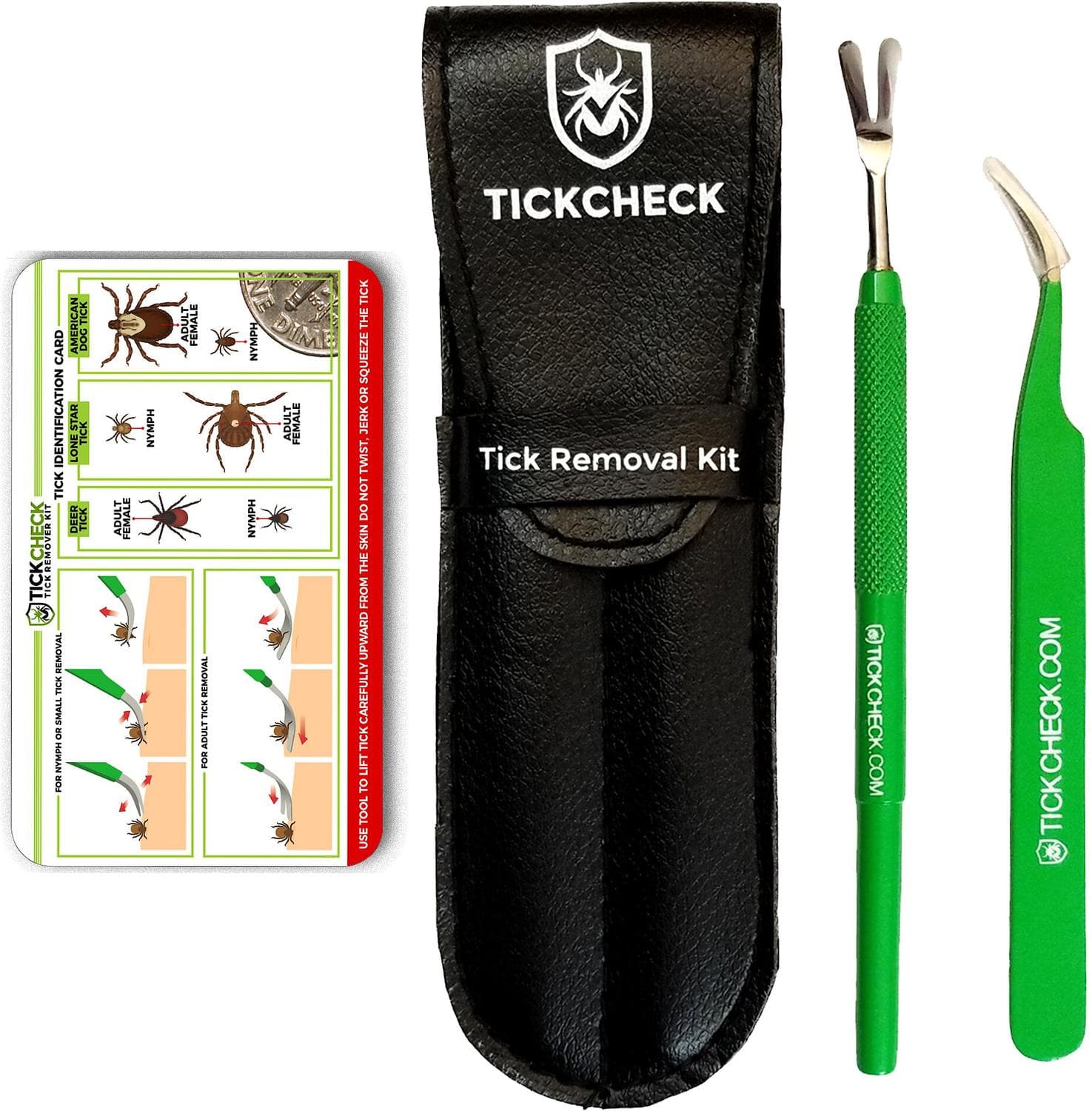
TickCheck
This compact kit pairs a stainless-steel fork for larger attached ticks with super-fine-tip stainless-steel tweezers for small nymphs, then stores both in a leatherette pouch with a tick identification card. TickCheck lists the packed kit at 5.5 x 2.5 x 0.25 inches and 2 ounces, and says the metal tools can be washed or sterilized. The two distinct tip styles make it the most adaptable single pack here for a glove box, backpack, or trail first-aid pouch.
Store gloves, fine-point tweezers, a labeled tick hook with its instructions, alcohol wipes, small sealed containers, a pen, and a compact light in one pouch. Replace opened or damaged supplies and practice identifying which tool uses which motion before a tick is attached. At the trailhead and again at home, check the dog, people, packs, and vehicle textiles; then continue daily checks during periods of outdoor exposure. Keep grass and leaf litter managed around the home where practical. Discuss year-round, dog-specific tick prevention with a veterinarian, who can account for geography, travel, age, health history, and the product label. Never transfer a dog product to a cat, and do not combine preventives unless a veterinarian directs it. Preventive products reduce risk but do not replace physical checks or guarantee that no tick will attach. A written routine—check, remove correctly, clean, record, monitor, and restock—turns a stressful discovery into a consistent response while keeping medical decisions with the veterinary team.
We used these primary or authoritative references when checking this guide. Product instructions and local rules can change, so confirm details that affect your trip.
Yes. It explains the main decision points in plain language and links to relevant product reviews when published options are available.
No. Prices, coupons, stock, and shipping terms can change. Confirm the current offer on the retailer page before checkout.
Related content