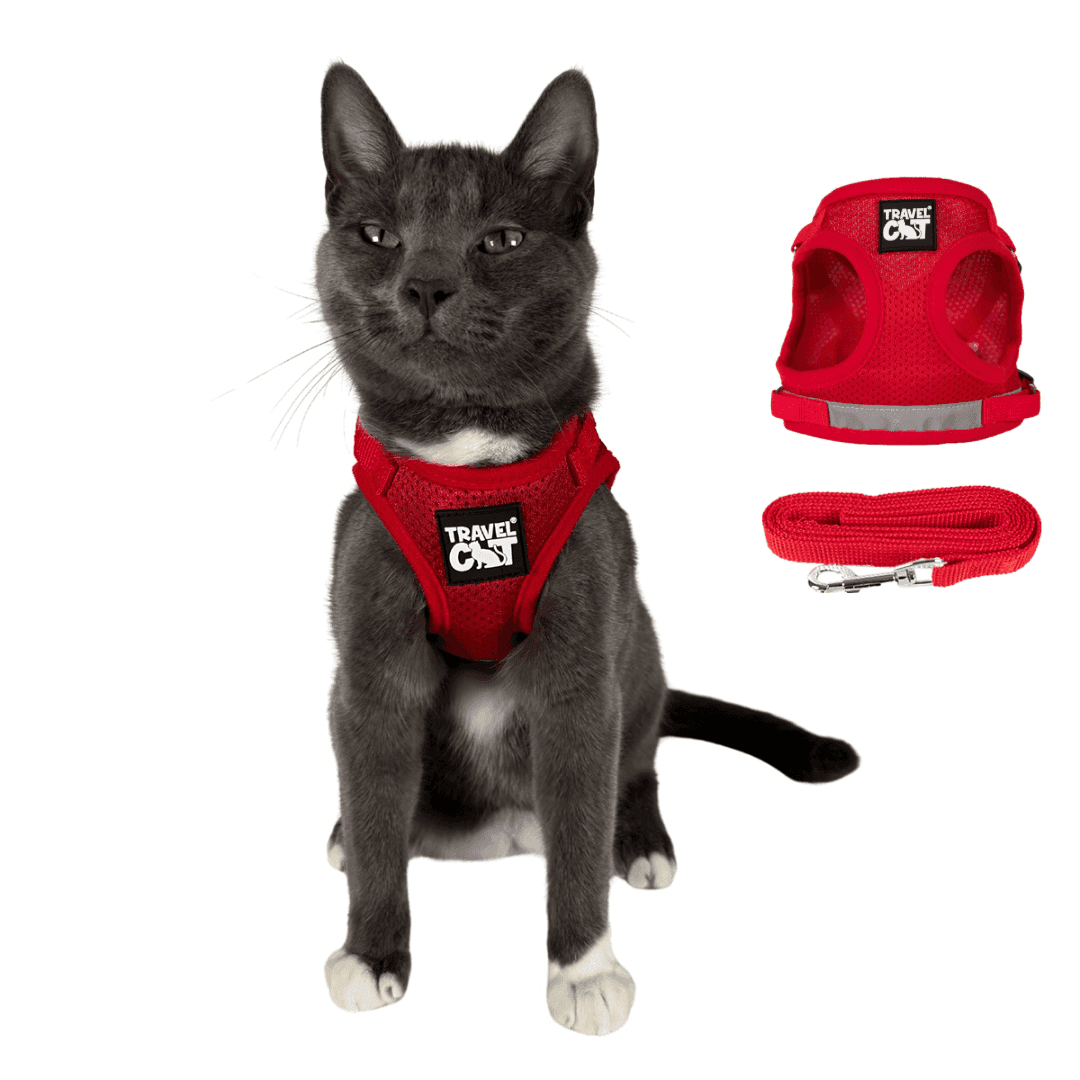
Learn how to decide whether a life jacket suits an adventure cat, compare model-specific sizing, check movement and escape risk, build positive indoor associations, conduct a controlled first water session, and recognize when to stop.
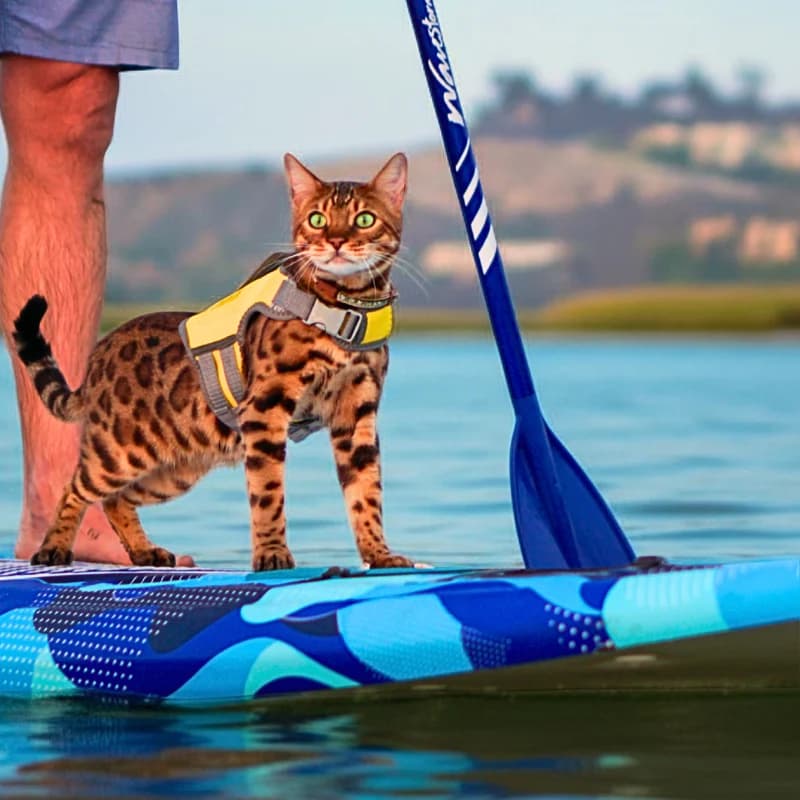
Begin with the cat, not the trip. A flotation vest can add buoyancy and give a handler a recovery point, but it cannot make an unwilling cat enjoy a kayak, dock, or shoreline. Cats Protection notes that many cats find restraint stressful and recommends gradual introduction, positive associations, and careful observation. First confirm that the cat already travels calmly in a secure carrier and tolerates an appropriately fitted cat harness on dry land. Postpone the project if the cat hides when the gear appears, stays crouched, flattens the ears, refuses food, vocalizes unusually, or repeatedly tries to escape. PDSA lists those changes among possible stress signals and advises veterinary help when behavior changes suddenly or persists. At-risk cats need veterinary clearance before water activities. Choosing to leave a cat safely at home is a successful decision, not failed training.
SurferCat
SurferCat is the only model in this comparison built expressly around a cat's body rather than adapted from a dog vest. Its low-profile panels, multiple adjustment points, reflective strip, back D-ring, and easy-lift handle make it the clearest starting point for a willing adventure cat. The tradeoffs are a premium price, a small direct-to-consumer evidence base, and inconsistent chest ranges between current page sections, so buyers must follow the live selector and confirm the latest chart before ordering.
Treat every pet life jacket as one layer of risk reduction rather than a rescue guarantee. BoatUS reports that pet flotation devices have no uniform design or performance standard and are not certified by the U.S. Coast Guard. They generally support an animal in a horizontal swimming position; they should not be assumed to turn an unconscious cat face-up or keep every airway clear. The SurferCat Cat Life Jacket may be purpose-shaped for cats, yet its label, closures, flotation placement, care instructions, and current size chart still need to be read before every purchase and use. Do not describe any pet vest as USCG approved unless the finished pet device itself carries an applicable approval, and do not confuse Coast Guard-approved materials with certification of the product. The cat still needs close supervision, an exit plan, and a secure carrier. A life jacket is not an escape-proof harness and does not authorize unattended access to a pool, dock, boat, or open water.
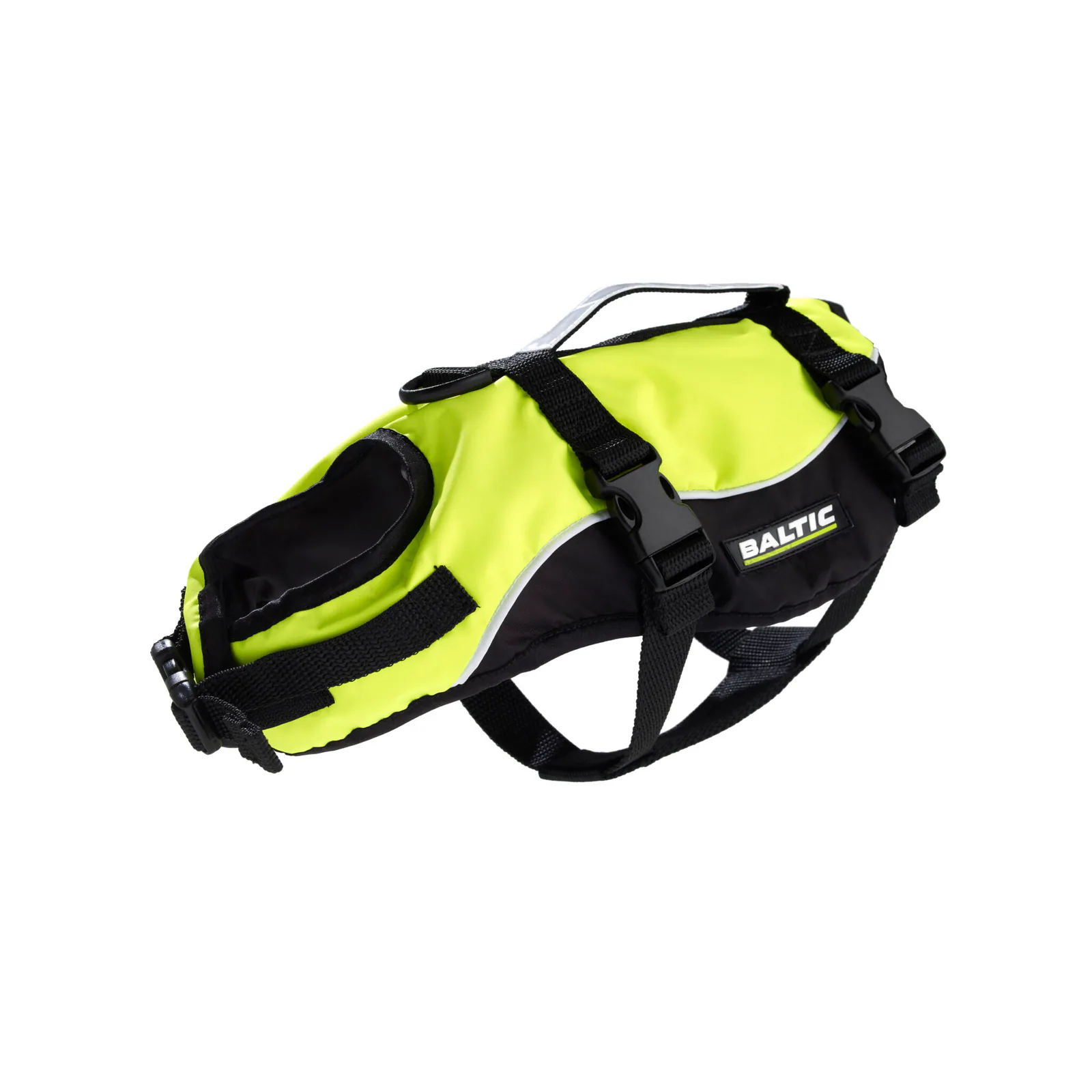
Baltic
Baltic Maja combines a cat-specific neck opening, broad belly strap, D-ring, recovery handle, reflectors, and three weight bands from zero to ten kilograms. It is substantially less expensive than SurferCat, carries a five-year Baltic warranty, and has current European retail stock. The fixed weight bands still do not replace chest and movement checks, the public review sample is only two, and the verified purchase path is European rather than a current US retailer.
Use a flexible sewing tape while the cat stands naturally. Record body weight, lower neck circumference, chest girth around the widest rib-cage point just behind the front legs, and back length from the shoulder area toward the base of the tail. BoatUS found that pet-jacket sizes are inconsistent across brands, which means an XS in one model may not match an XS in another. Compare every number with the current chart for the exact Baltic Maja Cat Life Jacket rather than selecting by breed, age, coat fluff, or a previous harness size. If measurements fall into different size columns or sit on a boundary, follow that model's published rule or contact the manufacturer; there is no universal instruction to size up or down. Do not compress the chest to force a smaller size and do not buy extra room for growth. Re-measure after weight, coat, or body-condition changes and before a new season.
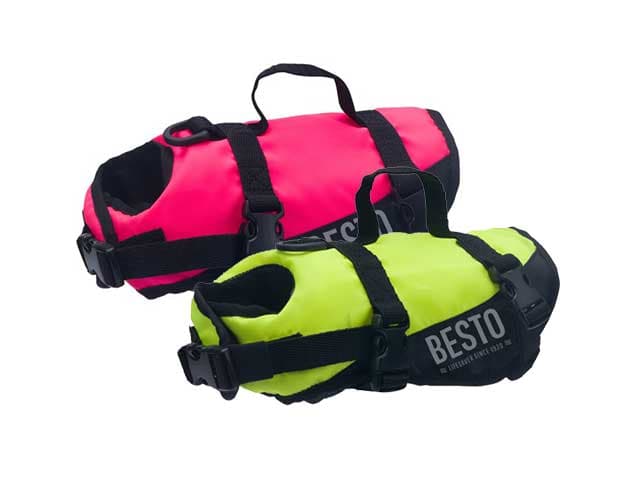
Besto
Besto Deluxe is a lower-cost cat-specific option with 0–3, 3–7, and 7–10 kilogram bands, a lifting handle, D-ring, and three buckle points around the body. The price and clear cat label make it attractive for a cautious first setup, and four full product photos plus a verified alternate rendition document the construction. It lacks meaningful public reviews, has less detailed fit guidance than the first two choices, and the current purchase path is a Dutch marine retailer.
Place the Besto Cat Buoyancy Aid Deluxe on the cat indoors, over a dry coat, and adjust it exactly as its instructions show. The body panel should stay centered while every buckle closes fully and excess webbing is secured. Check the neck opening, chest, armpits, belly, and rear edge for pinching, gaps, rubbing, or a position that could block shoulder movement. The cat must be able to breathe normally, turn the head, walk, sit, lie down, and step over a low obstacle without the vest rotating or riding toward the ears. Slide fingers under the straps only as a comfort check; a generic finger rule never overrides the manufacturer's fit directions. Gently press and release each closure, inspect seams and flotation panels, and make sure claws cannot easily snag dangling straps. Never lift the cat during this first fitting. If the jacket shifts when the cat backs up, restricts a front leg, or allows the shoulders to slip through, remove it and try a different adjustment, size, or shape.
Vibrant Life
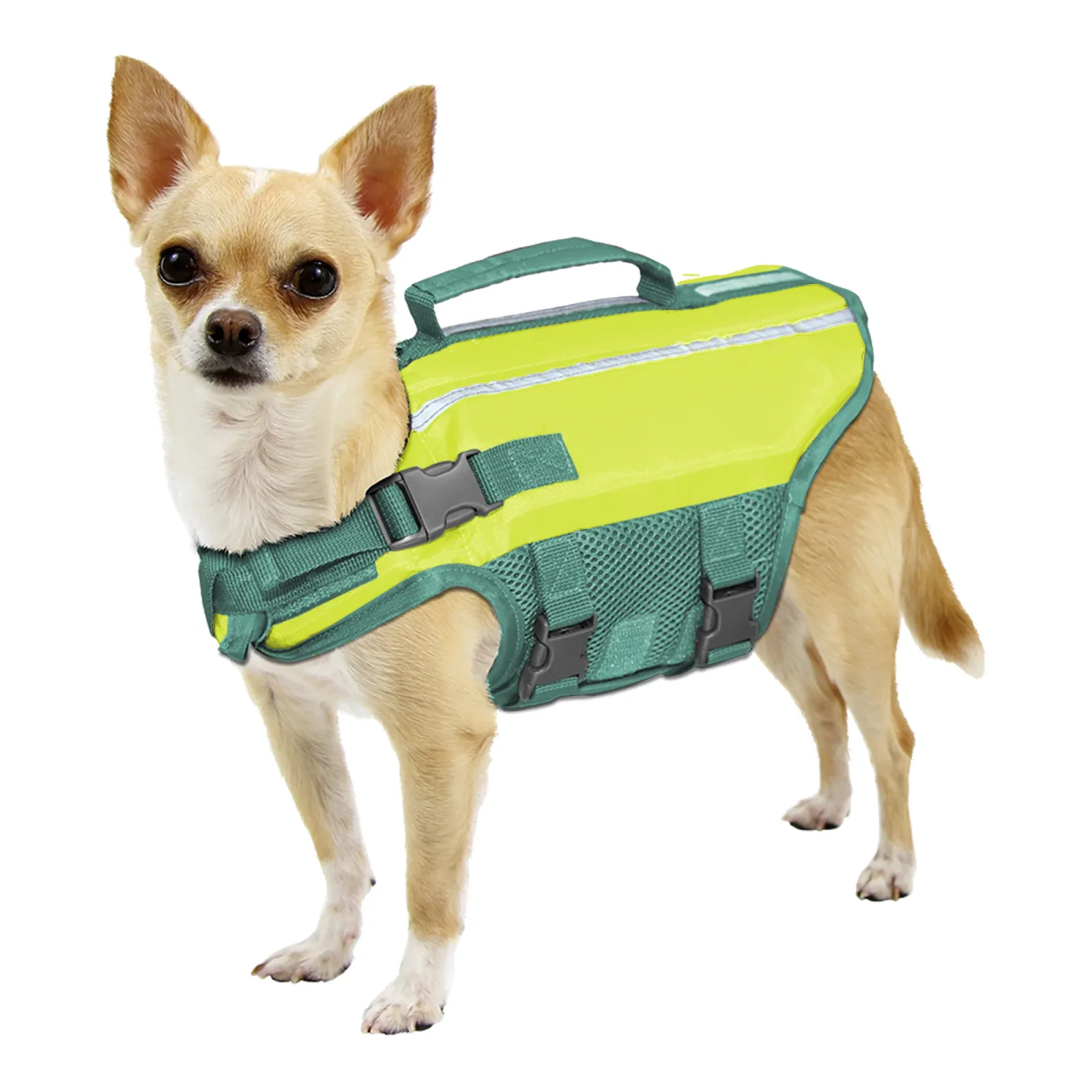
Vibrant Life is the easiest low-cost US checkout in the comparison and explicitly labels the extra-small vest for cats and dogs from five to ten pounds. Adjustable neck and chest straps, reflective trim, breathable mesh, a top handle, and D-ring cover the expected basics, while 56 ratings provide more public evidence than the cat-specific models. The broad mixed-pet shape may not control rotation or shoulder escape on every cat, so dry movement checks matter more than the low price or star score.
Do not make the first full fitting one long session. Leave the Vibrant Life Cat & Dog Flotation Vest on the floor at a comfortable distance and reward voluntary investigation with a small portion of the cat's normal food. In later sessions, briefly touch the jacket to the shoulder, drape it without fastening, close one buckle, and finally secure the complete vest for only a few seconds. Remove it while the cat is still calm, then increase duration gradually across multiple days. Pair each step with a familiar mat, quiet room, gentle handling, and rewards the cat genuinely values. Never chase, corner, pin down, or withhold food to obtain cooperation. If the cat freezes, slinks, hides, rolls frantically, bites at the equipment, stops accepting treats, or shows ears-back body language, end the attempt and return to an easier step another day. A cat that repeatedly remains distressed should not advance to water. Familiarity with a harness does not automatically transfer to a bulkier flotation vest.
LALIZAS
LALIZAS code 20020 is explicitly suitable for dogs and cats under eight kilograms with a published 25–48 centimeter chest range. Foam construction, perimeter straps, and a strong lifting handle create a straightforward marine design, and the Irish retailer had current stock at a moderate price. It provides no cat-specific neck measurement, the retailer review evidence is minimal, and its strap-forward form requires careful checks for rubbing, rotation, and backward escape.
Once the cat can wear the Lalizas Pet Retriever Buoyancy Aid calmly, repeat the dry fit while the cat walks, turns, sits, lies down, enters an open carrier, and steps onto the stable board or platform planned for the outing. Watch the jacket from every angle for twisting, chafing, or a strap migrating toward the throat. Introduce boat noises, paddles, and the stationary craft separately and at low intensity; do not combine several new stressors in one session. Touch the recovery handle and apply only slight upward tension while supporting the cat's chest and hindquarters with your other hand. A handle should be used only as the specific manufacturer permits. It may help with a brief emergency assist from water, but it is not automatically approved for suspending or routinely carrying the cat. Practice moving directly into the carrier after an exercise so there is always a predictable safe destination. Recheck every buckle after movement and replace equipment with torn fabric, damaged foam, loose stitching, cracked hardware, or unreliable closures.
Hurtta
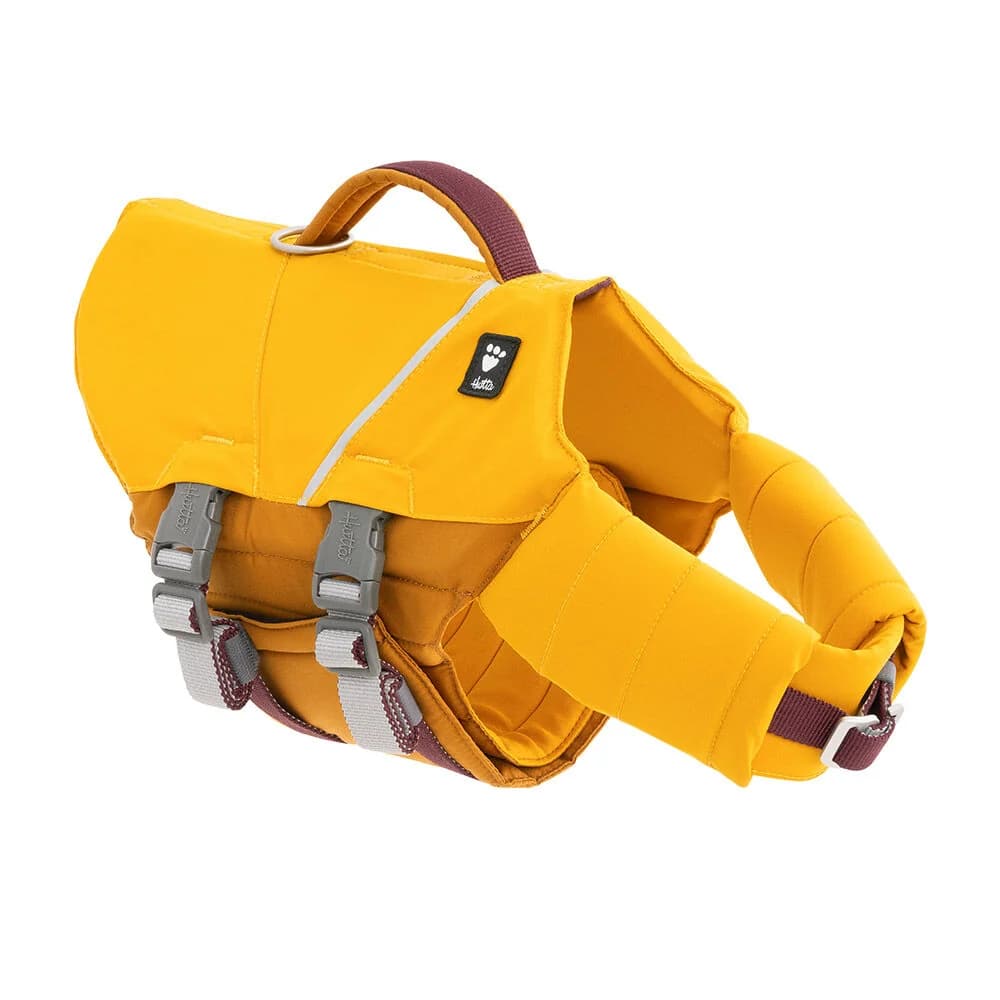
Life Savior ECO has unusually deep technical and image documentation: adjustable body length, chest and neck, a balanced foam layout, sturdy handle, reflectors, two leash points, and five official images. Hurtta states that the product meets buoyancy-aid safety requirements under EN ISO 12402-5:2006, but the manufacturer designs and markets it for dogs, the smallest band begins at five kilograms, and the high price makes it an unsuitable default for cats. Consider it only for an unusually large cat whose full measurements and calm dry movement match the current chart.

A first float test belongs in calm, clean, shallow water with an immediate walk-out exit, not in a river, surf zone, deep lake, moving boat, or crowded marina. Proceed only if the cat is relaxed in the fully fitted Hurtta Life Savior ECO Cat Size on land and the product's current instructions support the cat's weight and measurements. Have one calm adult remain within arm's reach and another manage the exit area, towel, and open carrier. Let the cat approach voluntarily; never throw, drop, dunk, or hold the cat in water to prove the vest works. Keep the first contact brief and stop before fatigue. Check whether the jacket stays centered, provides useful buoyancy, permits coordinated limb movement, and avoids pushing the mouth or nose toward the water. AAHA advises removing a pet immediately for labored breathing, excessive panting, disorientation, or uncoordinated movement. If the vest slips, rotates, restricts swimming, or fails to support the cat as expected, return to land and do not use it for boating.
On every outing, fit the jacket before approaching the water and keep the cat supervised at arm's reach. Provide shade, fresh drinking water, an open escape route, a secured carrier, a towel, and a pet first-aid kit. Avoid currents, cold water, fishing gear, fuel, antifreeze, cleaning chemicals, and water that looks discolored, foamy, scummy, or paint-like; ASPCA and AAHA both warn about harmful contaminants and algal blooms. End the activity for hiding, crouching, flattened ears, repeated escape attempts, abnormal vocalization, breathing difficulty, coughing, vomiting, diarrhea, weakness, confusion, or poorly coordinated movement. After any water contact, rinse the coat and jacket with fresh water as directed, towel the cat thoroughly, inspect the neck, armpits, chest, and belly for rubbing, and dry the equipment completely before storage. Monitor for delayed coughing, lethargy, breathing changes, skin irritation, head shaking, or ear discomfort, and contact a veterinarian if any concerning sign appears. Recheck fit and hardware before the next trip rather than assuming yesterday's adjustment remains safe.
We used these primary or authoritative references when checking this guide. Product instructions and local rules can change, so confirm details that affect your trip.
Yes. It explains the main decision points in plain language and links to relevant product reviews when published options are available.
No. Prices, coupons, stock, and shipping terms can change. Confirm the current offer on the retailer page before checkout.
Related content