Learn how to check local pet-waste rules, assemble a leak-resistant carry kit, protect water and wildlife, and pack dog waste out when a trail or campsite has no approved trash service.
Pogi's Pet Supplies
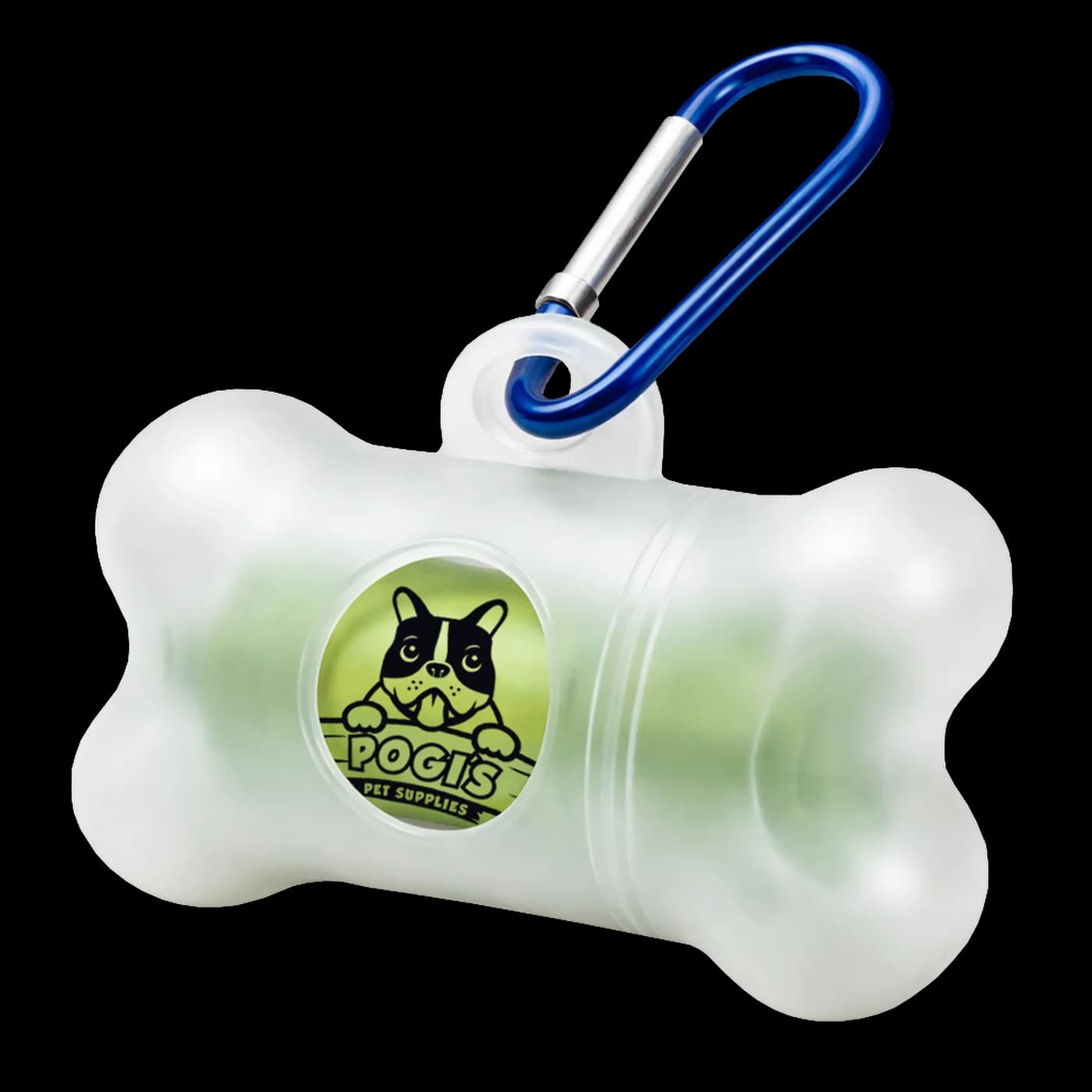
Pogi's keeps the familiar plastic format simple: a metal carabiner, screw-top refill cap, one-at-a-time opening, and compatibility with standard rolls up to a listed 1.4 inches. A 15-bag starter roll is included and both scented and unscented versions are offered. It has the broadest direct review sample here, but its single hanging clip can bounce during faster movement.
Check the current page, map, permit, entrance board, or ranger guidance for the specific trail and campsite before leaving home. A general Leave No Trace habit—pick it up and pack it out—is the safest default, but the enforceable details can differ by property. The National Park Service tells visitors to bag pet waste and carry it to a trash can, yet individual parks may restrict pets to certain roads, trails, or developed areas. A national forest, wildlife refuge, Bureau of Land Management river corridor, and private campground can each publish a different disposal rule. Save the relevant page offline and note whether bins are seasonal or only at the trailhead. A Pogi's Poop Bag Dispenser can keep bags attached to the leash, but carrying a dispenser does not answer where the sealed waste may go. If the local instruction is unclear, plan to carry every filled bag back to an approved trash receptacle rather than improvising burial or leaving a bag beside the trail.
Earth Rated
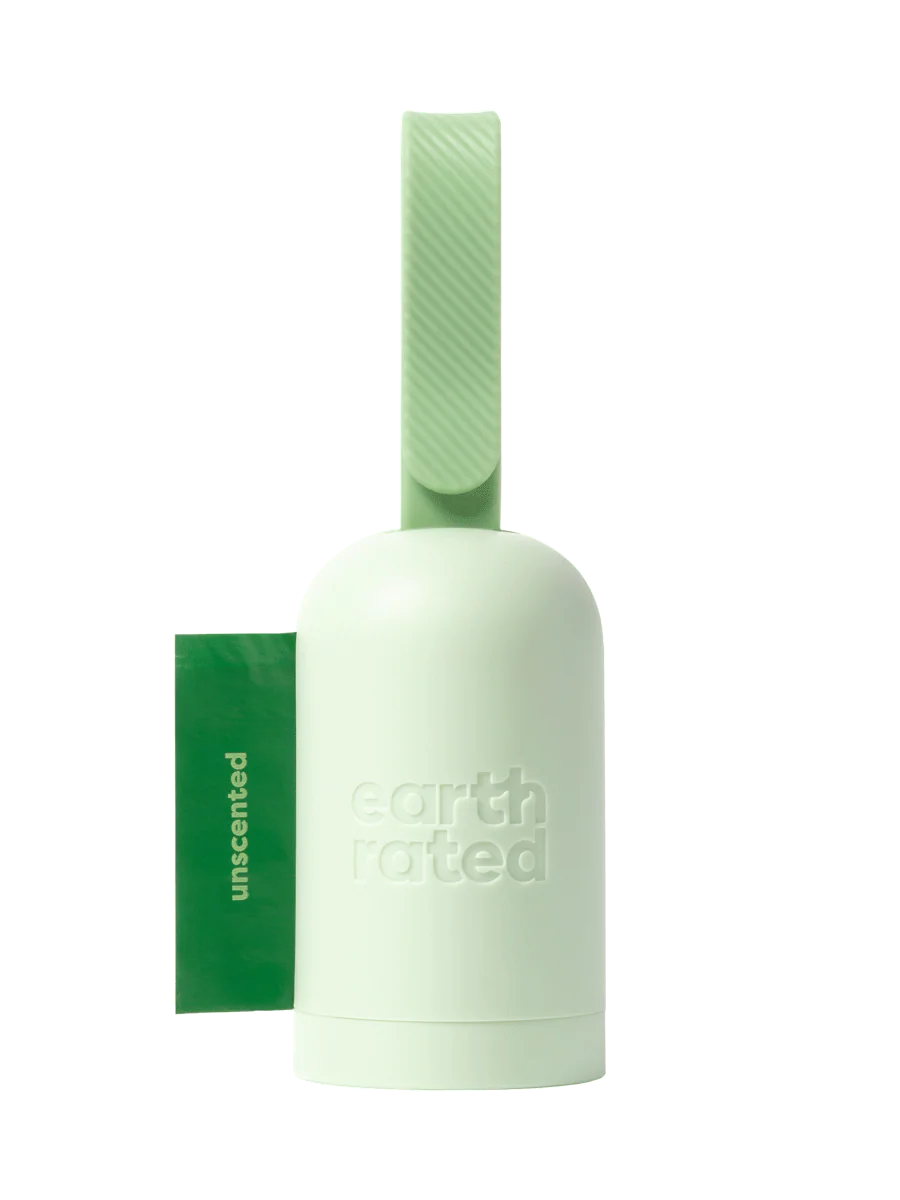
Earth Rated pairs a double-walled rigid shell with a click-lock closure and a flexible silicone strap designed to limit swinging on different leash shapes. The rear hook can temporarily carry a knotted bag while a standard 15-bag roll is included. It is compact and inexpensive, although the silicone strap offers less fixed positioning than a two-point fabric mount.
Pack more pickup bags than the number of outings you expect, because thin bags can tear and a dog may defecate more than once. Add a separate, washable outer carrier with a secure closure; this keeps filled bags upright and separated from food, water bottles, first-aid supplies, and clean gear. Include hand sanitizer, but remember that the Centers for Disease Control and Prevention prefers soap and running water whenever they are available. A small amount of water and a few paper towels can handle contamination on a leash or shoe until proper washing is possible. Test the roll size and dispensing slot at home. The Earth Rated Poop Bag Dispenser is one compact way to keep a standard roll ready, yet the complete system still needs spare bags and a dedicated container for used ones. Before every trip, inspect seams, clips, zippers, and bag stock; replace brittle bags and any carrier that cannot close or be cleaned thoroughly.
Wild One
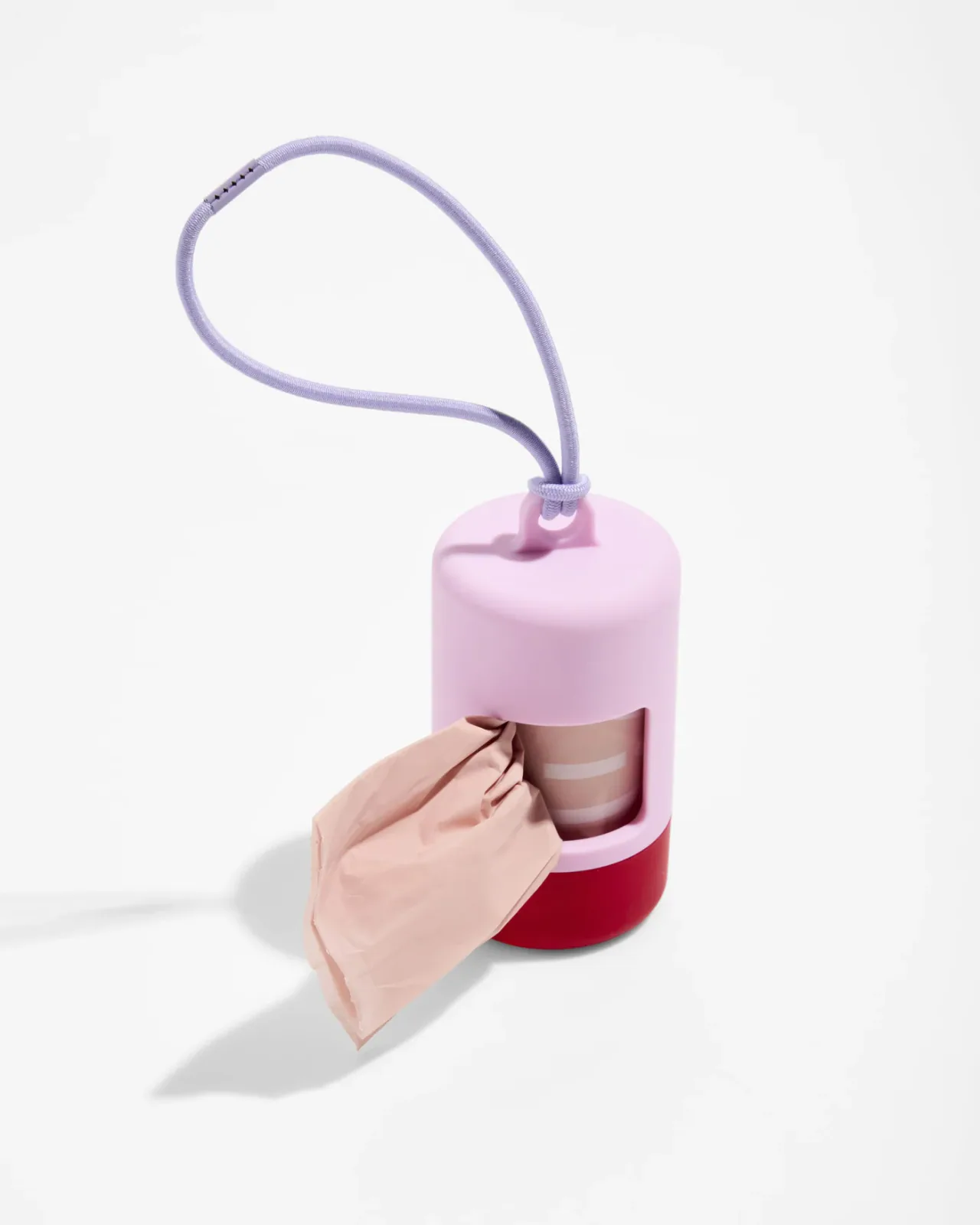
Wild One combines a soft-touch shell, elastic leash band, iron clasp, twist-off top, and internal stabilizer that keeps a bag roll centered. Many currently available colors make it easy to coordinate with a leash, and one roll is included. The elastic-and-clasp connection is tidy but does not create a fully rigid two-point mount.
Stop as soon as the dog finishes so nobody steps in the waste and rain cannot spread it across soil or pavement. Put a hand inside an intact bag, collect the entire deposit, turn the bag outward without touching the exterior to the waste, and tie a firm knot while leaving as little trapped air as practical. Pick up visible residue with a second bag rather than scraping vegetation or washing feces into the ground. If the first bag is punctured or its knot leaks, place it inside a fresh bag. Move the sealed bundle immediately into the used-waste carrier instead of setting it beside a sign, rock, or trail junction to collect later. A Wild One Poop Bag Carrier can keep the fresh bag roll on the leash, but the filled bag should go into the dedicated closed outer container. The essential sequence is simple: collect, inspect, seal, contain, and carry—without an unattended-bag stage.
Wilderdog
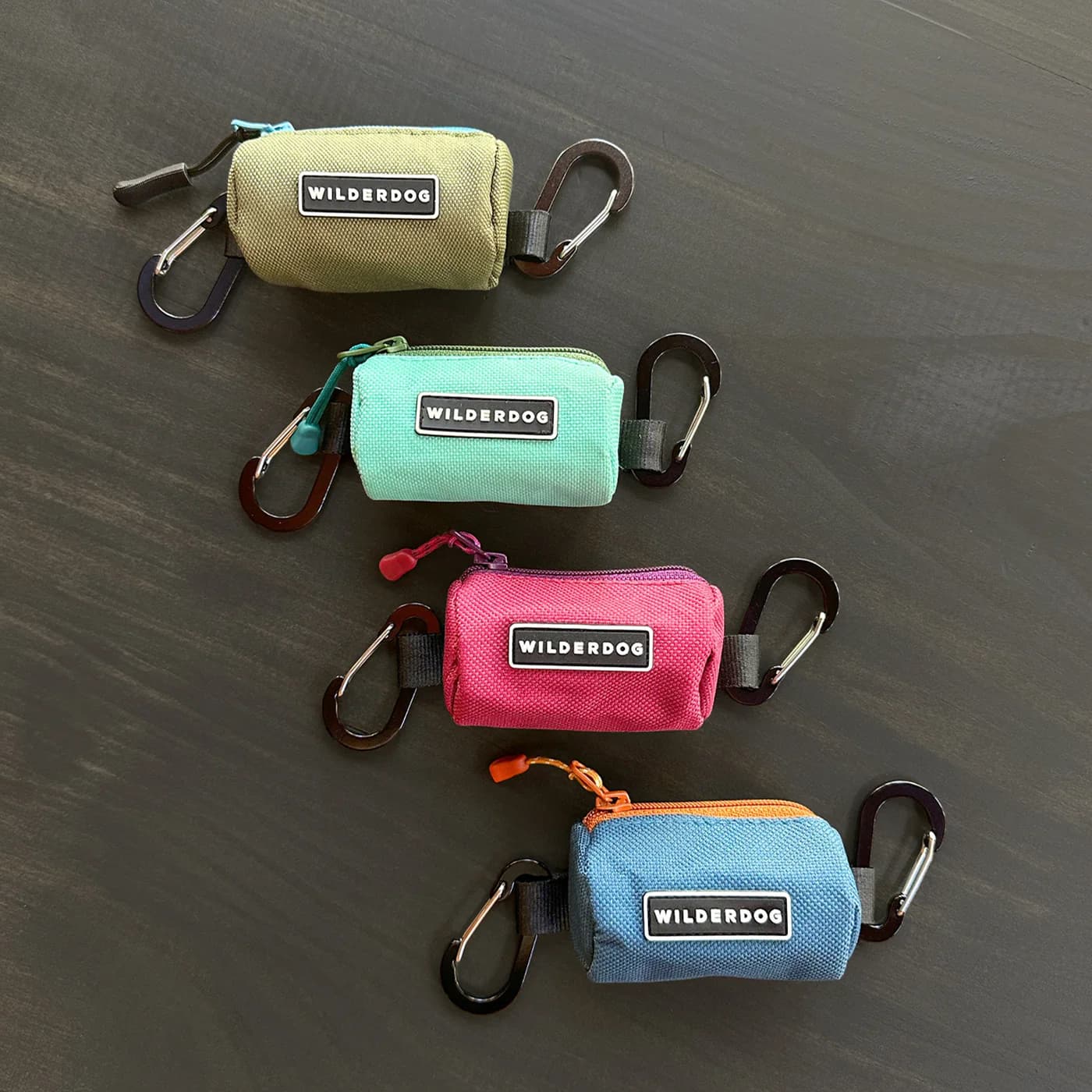
Wilderdog uses two mini carabiners to hold the pouch against a leash instead of letting it swing from one clip. A rubber-reinforced dispensing opening, water-resistant poly-cotton shell, and 0.9-ounce listed weight make it the most trail-focused clean-bag carrier here. It holds one standard roll and does not provide a sealed compartment for filled waste.

At a developed campground, trailhead, or picnic area, use a clearly designated trash or pet-waste bin if it is open and accepting ordinary refuse. Do not put dog waste in a recycling container, fire ring, vault toilet, compost pile, food-storage locker, dishwashing drain, or campsite gray-water system. Never burn a plastic pickup bag. Camp hosts may consolidate waste differently, so follow posted instructions instead of assuming every container is suitable. Keep the sealed bag with you until you reach the correct bin, even when that means carrying it around a campground loop. A Wilderdog Dog Poop Bag Holder can keep unused bags accessible during repeated walks, while a separate closed pouch remains the better place for filled bags. Before leaving the site, check the tent pad, parking spur, and route to the bin; retrieving one missed deposit prevents nuisance, contamination, and conflict with future pet access.
Fable
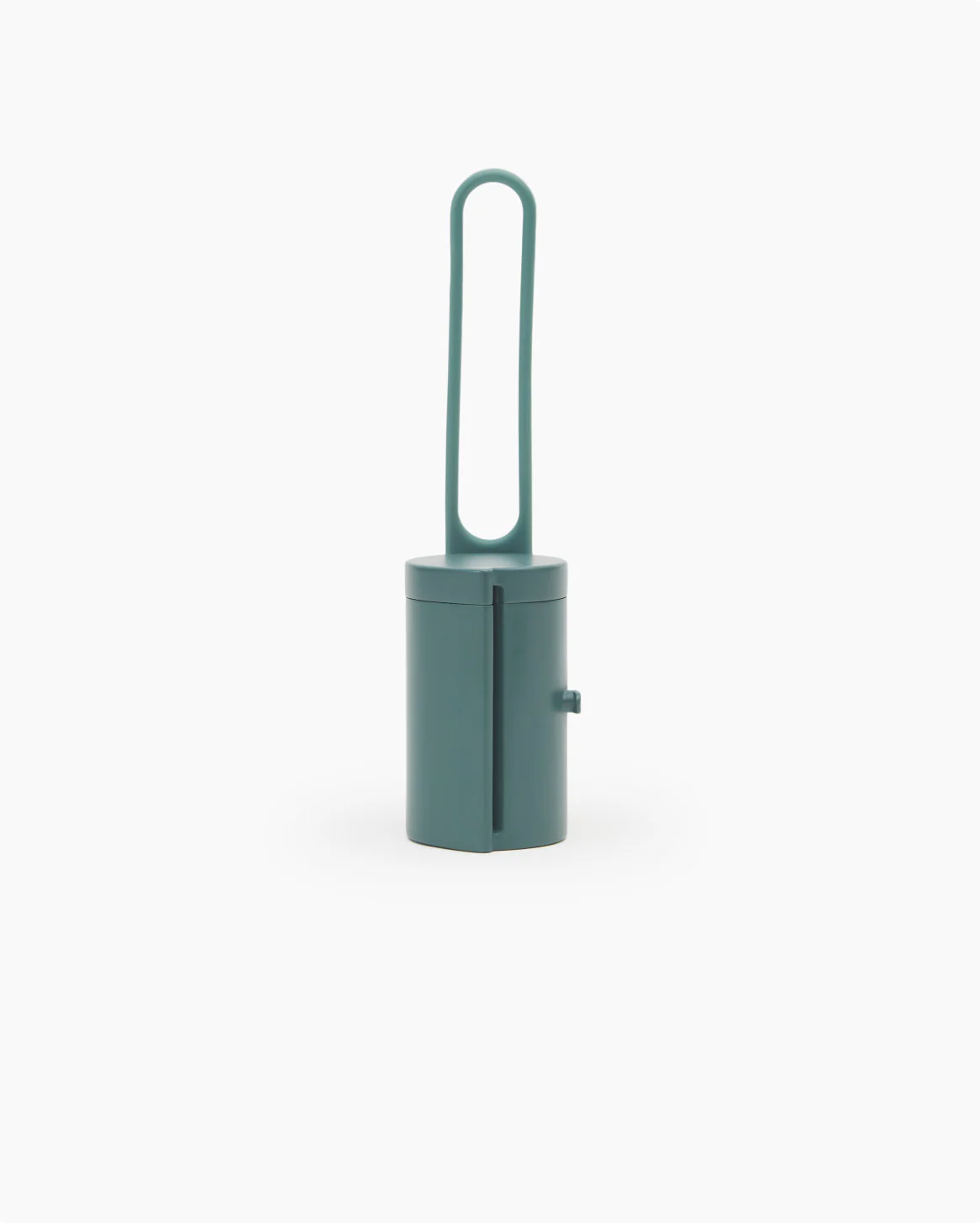
Fable's ABS-and-silicone holder uses an anti-spin interior, lockable twist cap, dual attachment points, and a perforation tab intended to separate the brand's bags with one hand. Three rolls totaling 45 bags are included. Standard rolls fit, but the one-hand separation feature is specifically designed around Fable's own bag perforations.
A full trailhead bin, a removed seasonal can, or a remote campsite does not make the bag disposable on site. Knot it, double-bag it if needed, place it in the washable outer carrier, and take it back to an approved trash receptacle at home or another staffed facility. Do not cache filled bags for the return trip: people forget them, animals move them, and an unexpected route change can leave them behind. Keep the carrier outside any bear-resistant food container unless the local land manager specifically instructs otherwise, and never store waste beside cooking gear or drinking water. Position it where it will not be crushed by a pack hip belt or pierced by sharp equipment. A Fable Waste Bag Holder may supply bags close at hand, but a small rigid or structured secondary container is useful for long carries. At each break, confirm that the closure remains shut and the exterior is clean before touching other equipment.
Kurgo
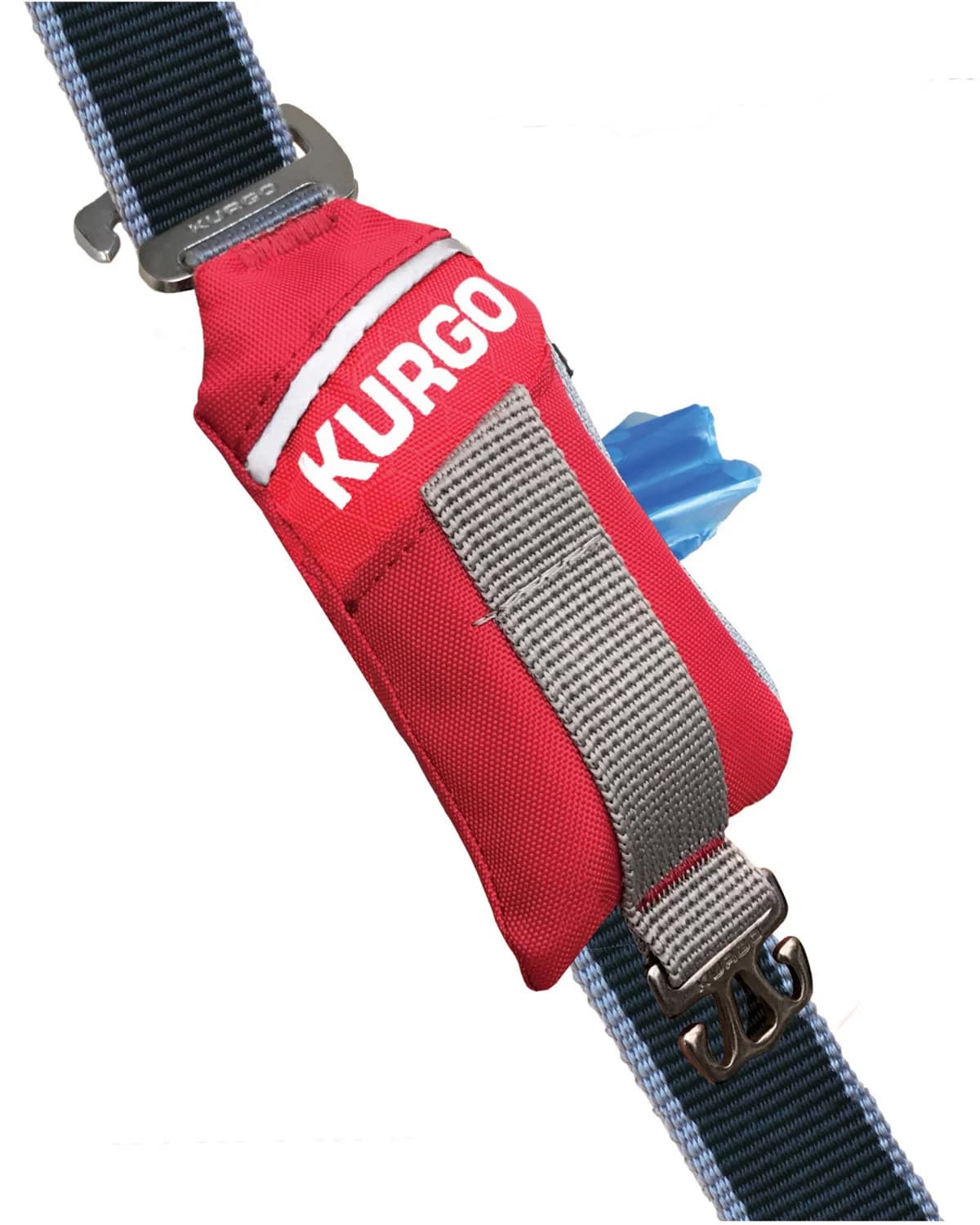
Kurgo's zippered fabric pouch can attach to flat leashes, rope leashes, or a backpack strap and lies closer to the strap than a dangling hard shell. It fits listed 32-by-22-centimeter standard rolls, includes 15 plant-based bags, and adds a small hook for a knotted used bag. Some public reviews report wear at the hook-and-loop attachment, so inspect that connection before longer trips.

Advice to bury human feces six to eight inches deep and far from water is not automatic permission to bury dog waste. Pet-waste rules are site-specific, and many heavily used or sensitive places require removal. For example, the Bureau of Land Management's John Day River guidance says to pack out all dog waste. Other properties publish narrowly different instructions: Mark Twain National Forest says to pack it out or bury it at least 100 feet from water and trails, while Boundary Waters Canoe Area Wilderness information directs visitors to keep pet waste 200 feet from water, campsites, and portages or use a permitted latrine. Big Thicket distinguishes developed areas, where waste must be removed and binned, from certain undeveloped settings where removal or burial at least six inches deep is allowed. These are examples, not transferable formulas. A Kurgo Duty Bag helps keep spare bags available while checking the applicable rule. Unless the authority responsible for the exact location expressly permits another method, seal the waste and pack it out.
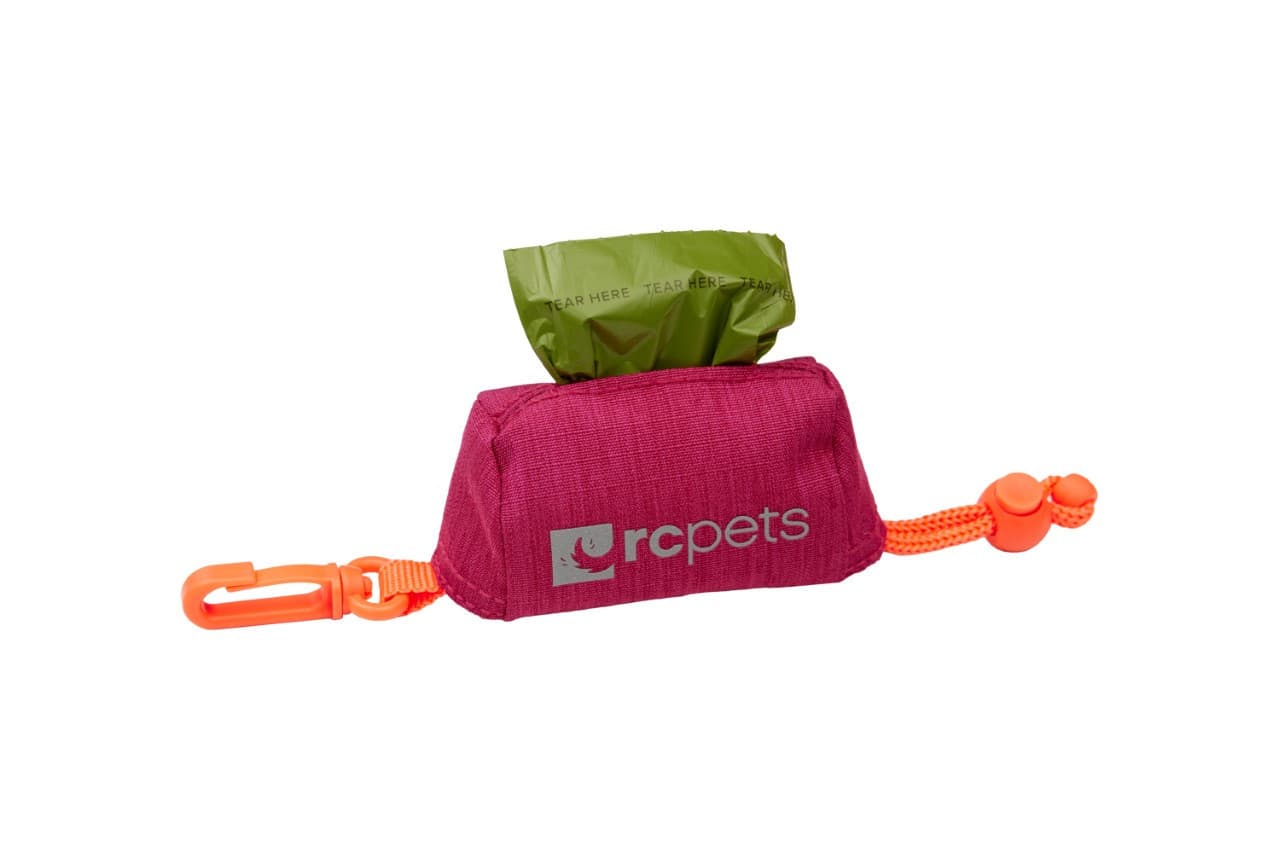
RC Pets
The P.U.P. Bag uses hook-and-loop around the leash plus a swivel hook at the D-ring so the fabric pouch stays flatter and avoids a swinging single clip. A top slit feeds clean bags, while a separate cord can temporarily hold a knotted used bag. It includes a roll made with 65% certified post-consumer recycled plastic, but its direct review sample is only one customer.
Dog feces is not a harmless natural addition to a trail ecosystem. National Park Service monitoring has linked pet waste with fecal bacteria concerns, while EPA guidance treats pet waste as a source of nutrients and pathogens that stormwater can carry into waterways. Keep the dog away from springs, shorelines, drainage channels, gardens, and wildlife feeding areas when possible, and pick up waste even when it lies off the tread. Do not rinse a deposit into a stream or scatter it with a stick. Prevent the dog from investigating or eating feces, carcasses, or wildlife droppings, because the CDC notes that animals can carry germs even when they appear healthy. An RC Pets P.U.P. Bag can make an unused roll easy to reach, which matters when quick pickup limits contact and runoff. On narrow trails, step to a durable edge, keep control of the leash, and complete the pickup without trampling vegetation or blocking other users.
Put sealed dog-waste bags into an approved ordinary-trash or pet-waste receptacle; do not flush the plastic bag, and do not place it in recycling or home compost unless a local program explicitly accepts that exact material and waste. At home, empty the outer carrier without touching its interior, then clean it according to its material and maker's instructions. Wash hands with soap and running water after handling animals, their waste, or contaminated gear. If soap and water are unavailable on the trail, CDC guidance allows a hand sanitizer containing at least 60 percent alcohol until proper washing is possible. Clean visible fecal contamination first, because sanitizer is not a substitute for removing dirt. Disinfect only with a product appropriate for the surface, keep chemicals away from the dog, and let equipment dry completely. Finally, replenish the bag roll, add two emergency bags, inspect the carrier closure, and recheck the next destination's rules before packing the kit away.
We used these primary or authoritative references when checking this guide. Product instructions and local rules can change, so confirm details that affect your trip.
Yes. It explains the main decision points in plain language and links to relevant product reviews when published options are available.
No. Prices, coupons, stock, and shipping terms can change. Confirm the current offer on the retailer page before checkout.
Related content