Learn when a dog drying coat is useful, how to size and introduce one without force, and when a towel, thorough grooming, or prompt veterinary care is the safer choice.
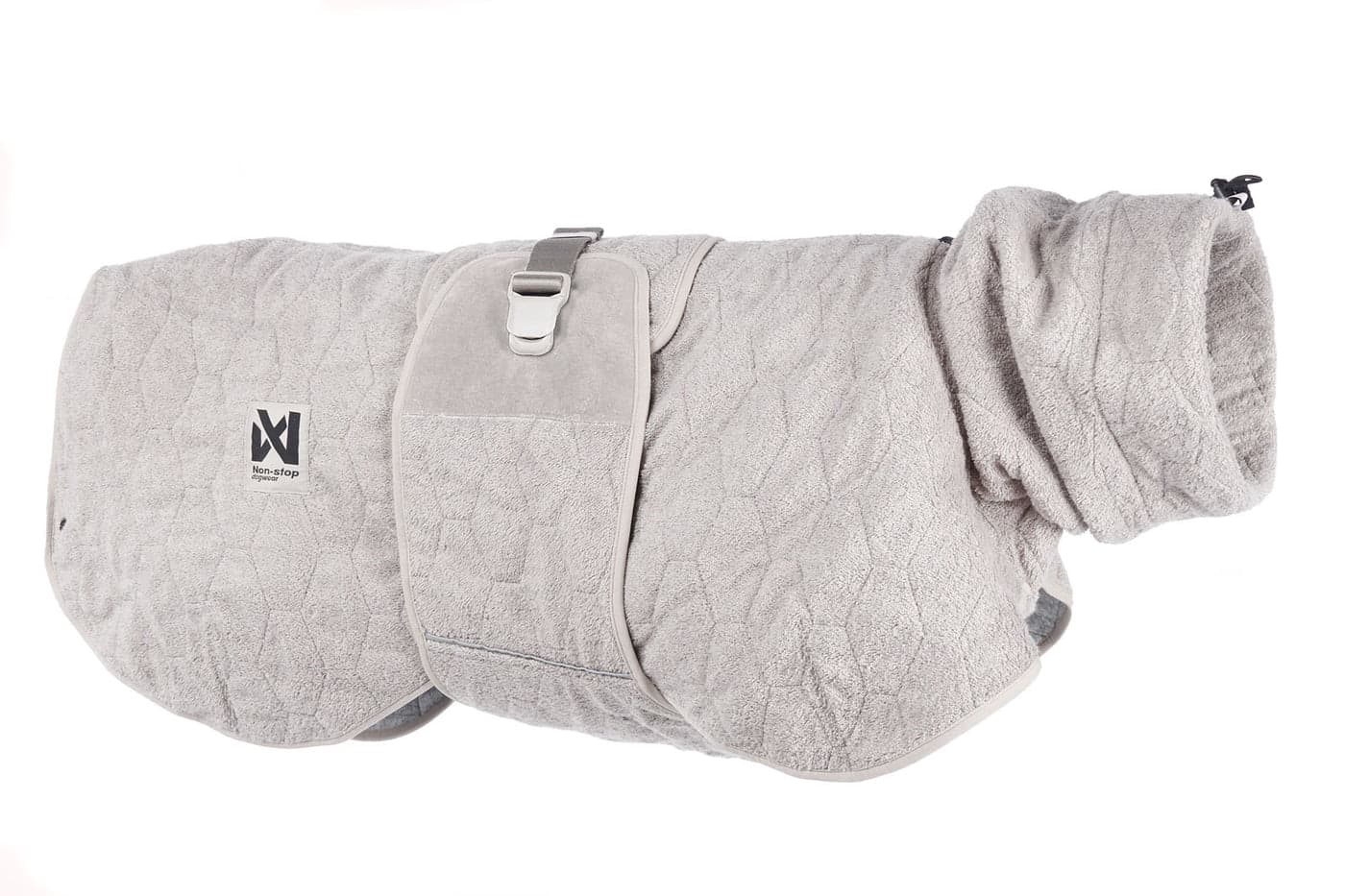
Non-stop Dogwear
Non-stop Dogwear combines a soft inner layer rated by the maker to absorb four liters per square meter with a towel-textured outer layer that spreads moisture over more surface area. An extended neck, rear attachment, adjustable leg straps, wraparound chest panel, and one-handed magnetic buckle provide more coverage and adjustment than simple cape-style robes. The brand instructs owners to use it without gear underneath for the intended drying effect, so it is a supervised post-activity layer rather than a walking harness or rain shell.

Stand the dog squarely on a level floor and use a soft tape without compressing the coat. Record the measurements requested by the current manufacturer, because drying-coat systems do not all size the same way. Ruffwear bases its Dirtbag sizing on chest girth around the widest part of the rib cage, while Non-stop dogwear directs shoppers to measure back length for its size finder. Recheck the relevant neck, chest, and back dimensions against the exact product chart rather than choosing from breed, age, or weight alone. Repeat the measurement over the dog's natural coat, not over another jacket. If a number falls between sizes, follow that maker's written direction instead of applying a universal rule. Before ordering the Non-stop dogwear Drying Coat, also compare the stated back coverage with where the dog's tail begins; excessive length can foul the tail, while a short coat may leave the hindquarters wet.
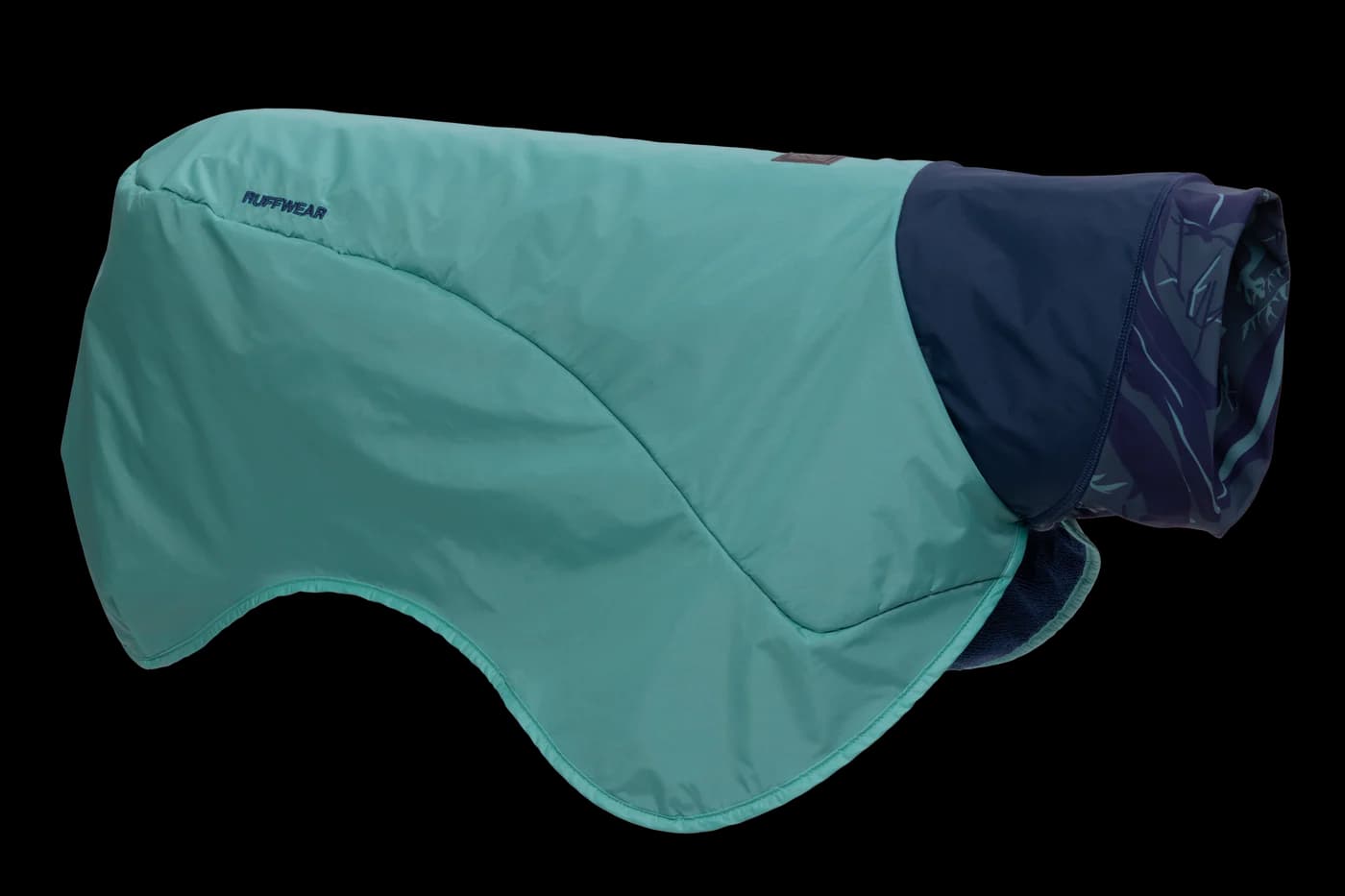
Ruffwear
The Dirtbag uses an absorbent microfiber lining and belly panel under a 210-denier nylon shell with a published 4,000 mm waterproof rating, helping contain wet grit before a dog enters a vehicle or home. A stretch neck gaiter, side-release buckles, six girth-based sizes, and an included mesh stow bag make it unusually travel-ready. The shell contains mess rather than proving the fur underneath is dry, and some public feedback asks for more underbelly coverage.

A drying coat should move water away from fur while covering the areas that stay wet longest, but no textile dries every coat type at the same rate. Short coats may need only brief contact; dense double coats, long furnishings, and skin folds need more hands-on checking. First press a separate towel into very wet fur so the wearable layer is not immediately saturated. Then compare lining, belly coverage, fasteners, and the maker's care instructions. Ruffwear describes the Dirtbag Dog Towel as having an absorbent microfiber lining and belly panel plus a waterproof shell that contains moisture and grime. That construction may suit a wet ride home, but the shell is not proof that the skin underneath is dry. Slide fingers beneath the garment at intervals and feel the undercoat, armpits, belly, and neck. Replace or remove any coat that becomes saturated, shifts, or leaves damp folds against the skin.
Ruff & Tumble
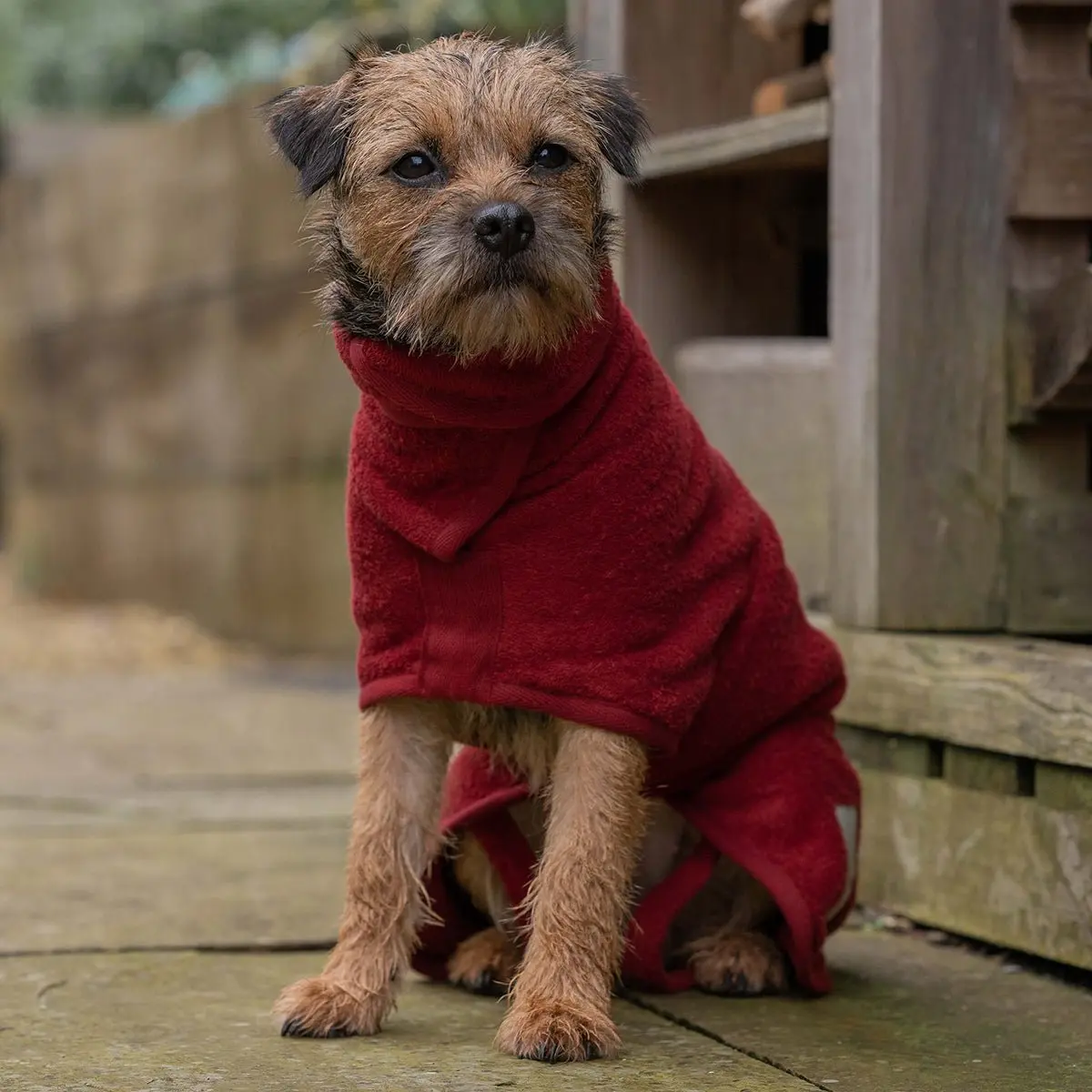
Ruff & Tumble uses two layers of natural cotton toweling, an extra-wide belly flap, and an unusually deep adjustable collar that can be folded up around the head and ears. The official US page spans standard, giant-breed, Dachshund, Corgi, and Basset sizes and ships worldwide, making it the broadest shape-oriented range here. Cotton is soft and substantial but bulkier to pack than thin microfiber, while hook-and-loop panels should be closed for washing and cleaned of hair.
Do not make the first fitting happen beside a cold lake or inside a busy parking lot. Begin at home when the dog is dry and relaxed. Let the dog inspect the garment, reward voluntary approaches, touch it briefly to the shoulder, and then lift it away. Progress to placing it over the back, guiding one fastening at a time, and removing it after a few seconds. AKC's drying guidance uses the same gradual principle when introducing a towel: start where the dog is comfortable being touched and pair each step with praise or food. When practicing with a Ruff & Tumble Classic Dog Drying Coat, keep sessions short enough that the dog can still choose to move away before fastening. Never chase, pin, or force a head through a tight opening. If the dog freezes, hides, mouths the fabric, repeatedly scratches, or refuses food, back up to an easier step or use an ordinary towel instead.
Rukka Pets
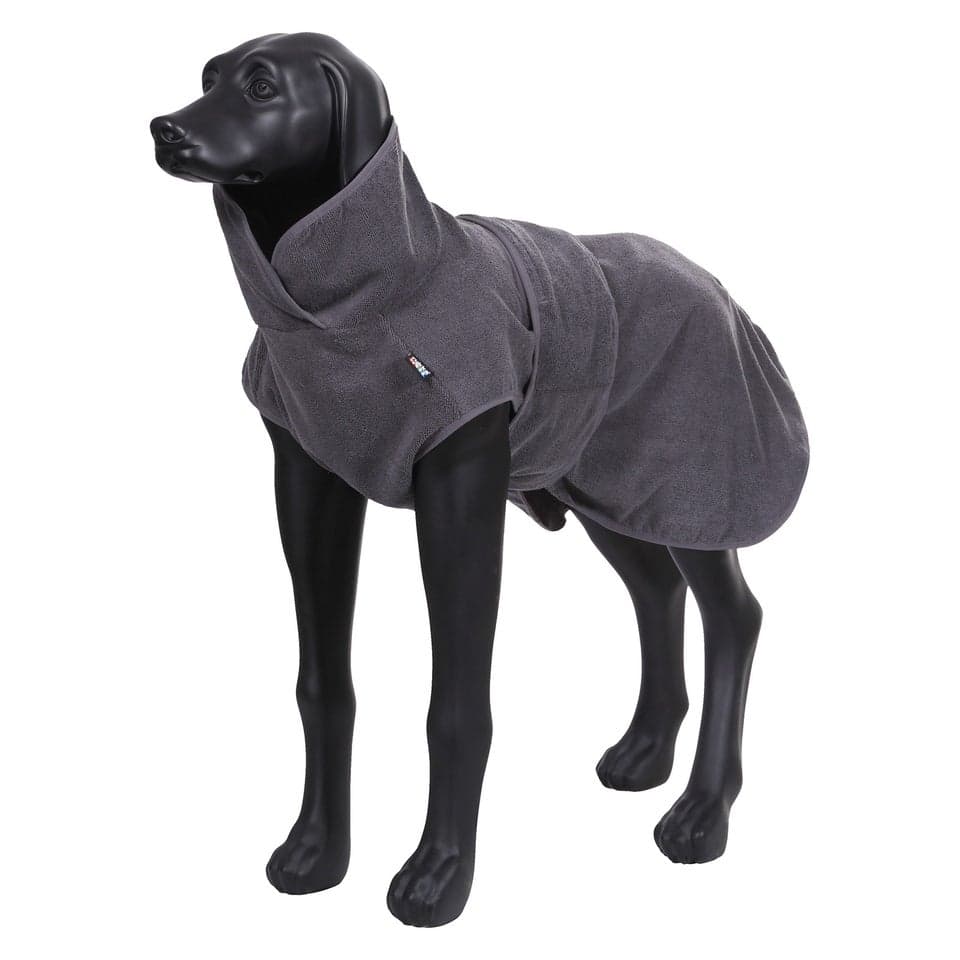
Rukka's Micro Light Bathrobe uses 88% polyester and 12% polyamide microfiber in a soft, low-bulk cut with a wide touch-fastening waistband. It is marketed for baths, swims, and rainy walks and can be rinsed in cold water for supervised evaporative cooling. Direct US stock and eight official images make it easy to verify, but the page showed only XS and XL options and no product-review history.
Fasten the coat according to its instructions, then watch the dog walk, turn, sit, lie down, and lower the head. The neckline should not press the throat, closures should not rub the armpits or genitals, and the dog should be able to take a full stride. Recheck after several minutes because wet fabric can stretch, gain weight, or migrate. A Rukka Pets Micro Light Bathrobe or any other drying layer should be used under direct supervision, not left on a dog in a crate, unattended vehicle, or overnight. Remove it promptly for persistent panting, unusual warmth, agitation, weakness, repeated attempts to escape, skin redness, or restricted movement. VCA notes that clothing must allow free movement without discomfort or overheating, while PDSA warns that a pet that stays wet and cold can develop hypothermia. Those risks point in opposite directions: assess the dog and environment repeatedly rather than assuming that longer wear always produces a better result.
Stylish Hound
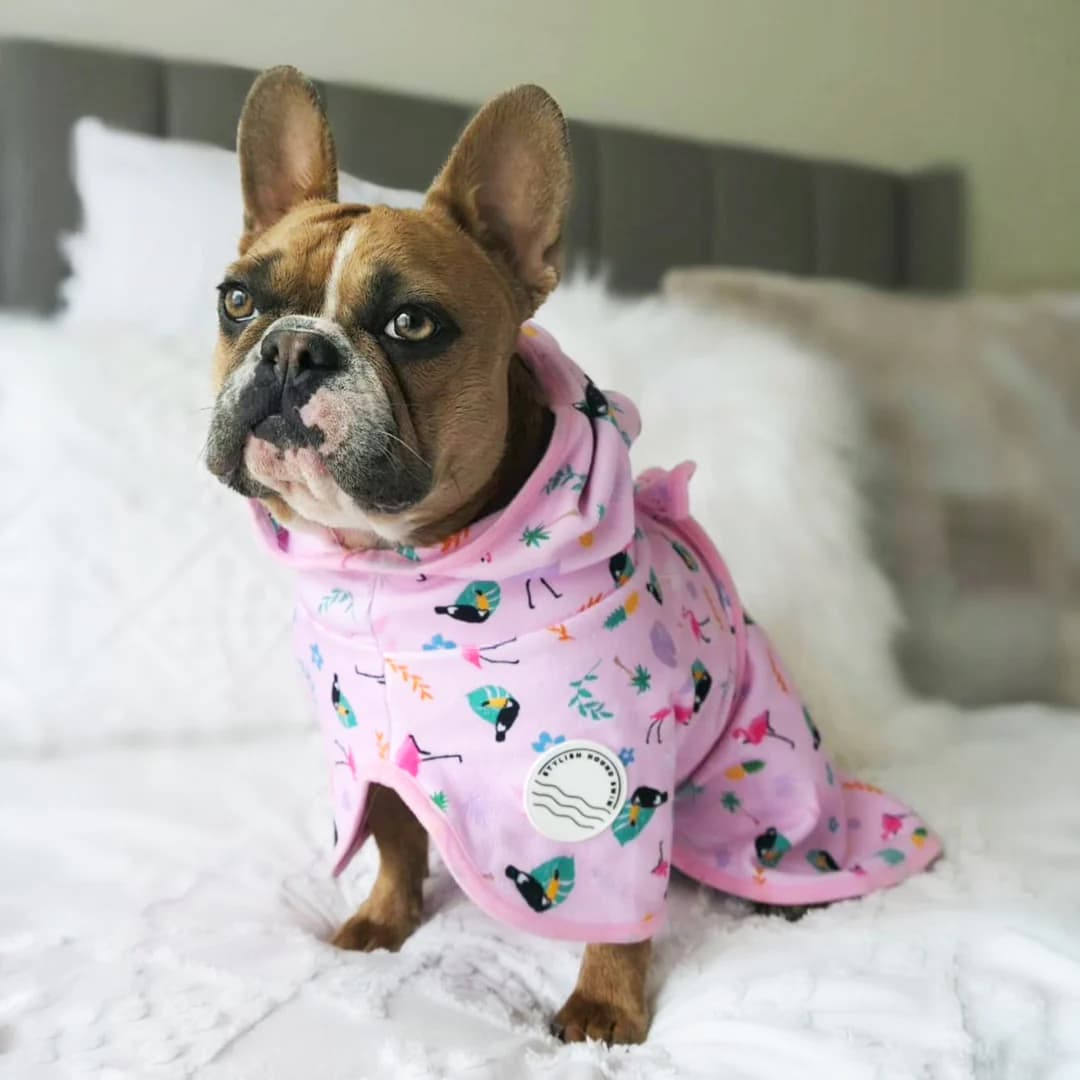
Stylish Hound's wraparound hooded robe uses fast-drying, absorbent microfiber polyester and comes in multiple patterns across XS through XL. Its 119-review brand-site sample and broad first-party gallery are stronger than most mid-price robes. The company dispatches from Australia and ships internationally, so US buyers should account for delivery time, return friction, and variant-level stock before ordering.
At the beach, Purina advises washing a dog with fresh water after exposure to salt and sand. After any swim, first move to stable footing, offer fresh water, and check the paws, skin, eyes, ears, and gear for debris or irritation. Rinse when the water or shoreline may leave salt, sand, chlorine, or ordinary grime, then press rather than vigorously rub with a towel. Put the Stylish Hound Drying Robe on only after excess surface water is removed and the dog is calm. During travel, use a washable mat, protect the seat, maintain comfortable ventilation, and stop to check whether the lining is saturated or the dog is becoming too warm or cold. Never leave the dog alone in a parked vehicle to finish drying. At the destination, remove the robe, feel down to the skin, and continue drying or grooming any damp undercoat instead of treating the end of the drive as proof that drying is complete.
Plush Paws
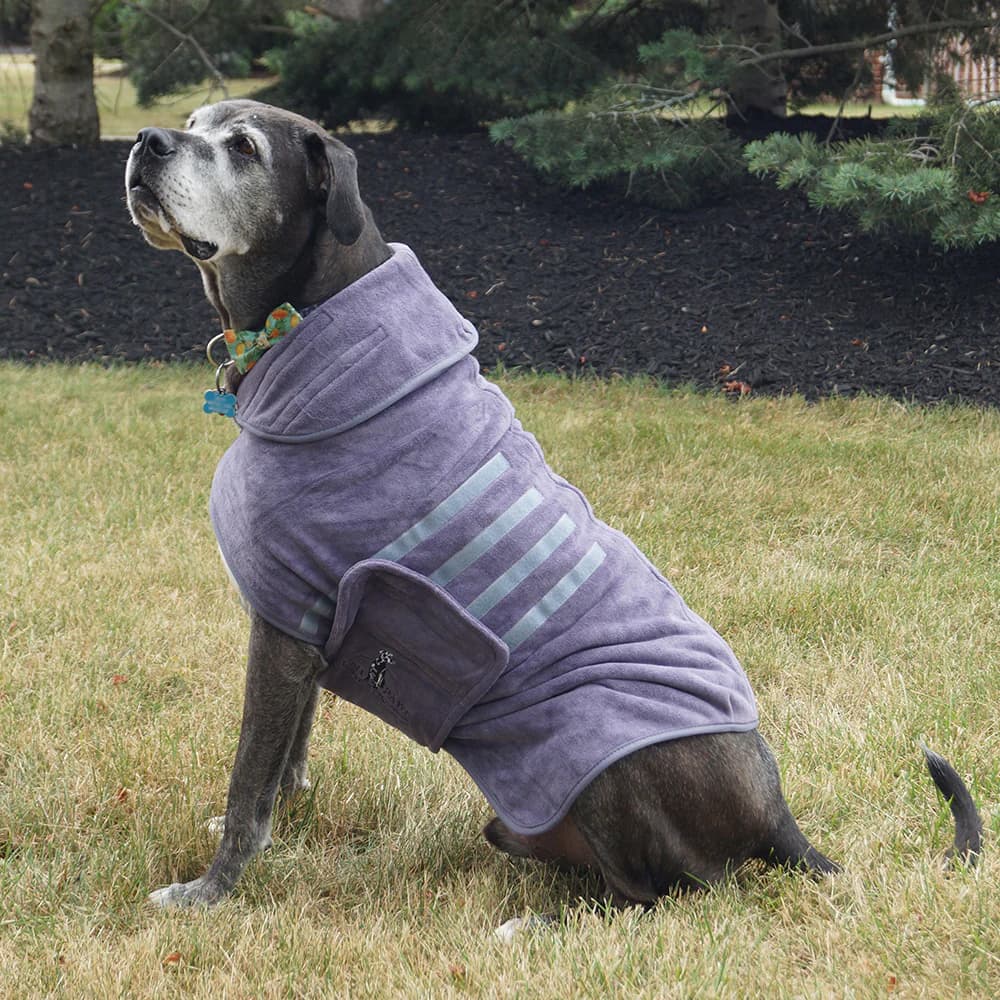
Plush Paws offers a soft microfiber robe with an adjustable hook-and-loop body closure, elastic leg straps, and an extended collar for the head and ears. The US-based brand listed all four sizes and three colors at one price, and the official gallery supplies six distinct usable images. Its six-review sample is small, and four broad sizes provide less precise fitting than the leaders.
Read the sewn-in label and current manufacturer instructions before the first wash; fabrics, waterproof layers, hook-and-loop closures, and permitted detergents differ. As one concrete example, Ruffwear tells owners to secure fasteners, wash the Dirtbag in cold water on a gentle cycle with mild detergent, air-dry it, and avoid bleach, ironing, and dry cleaning. Do not transfer those instructions automatically to a Plush Paws Multi-Purpose Drying Robe or another brand: follow that product's own label. After use, empty trapped sand and hair, open every panel, and hang the garment where air reaches both faces. Do not roll a damp coat into a travel bag or sealed bin. Before storage, confirm that the lining, seams, straps, and buckles are fully dry. Inspect for odor, stiffness, frayed edges, loose hardware, residue, or reduced absorbency; clean again or retire the garment if damage could create rubbing, entanglement, or unreliable fastening.
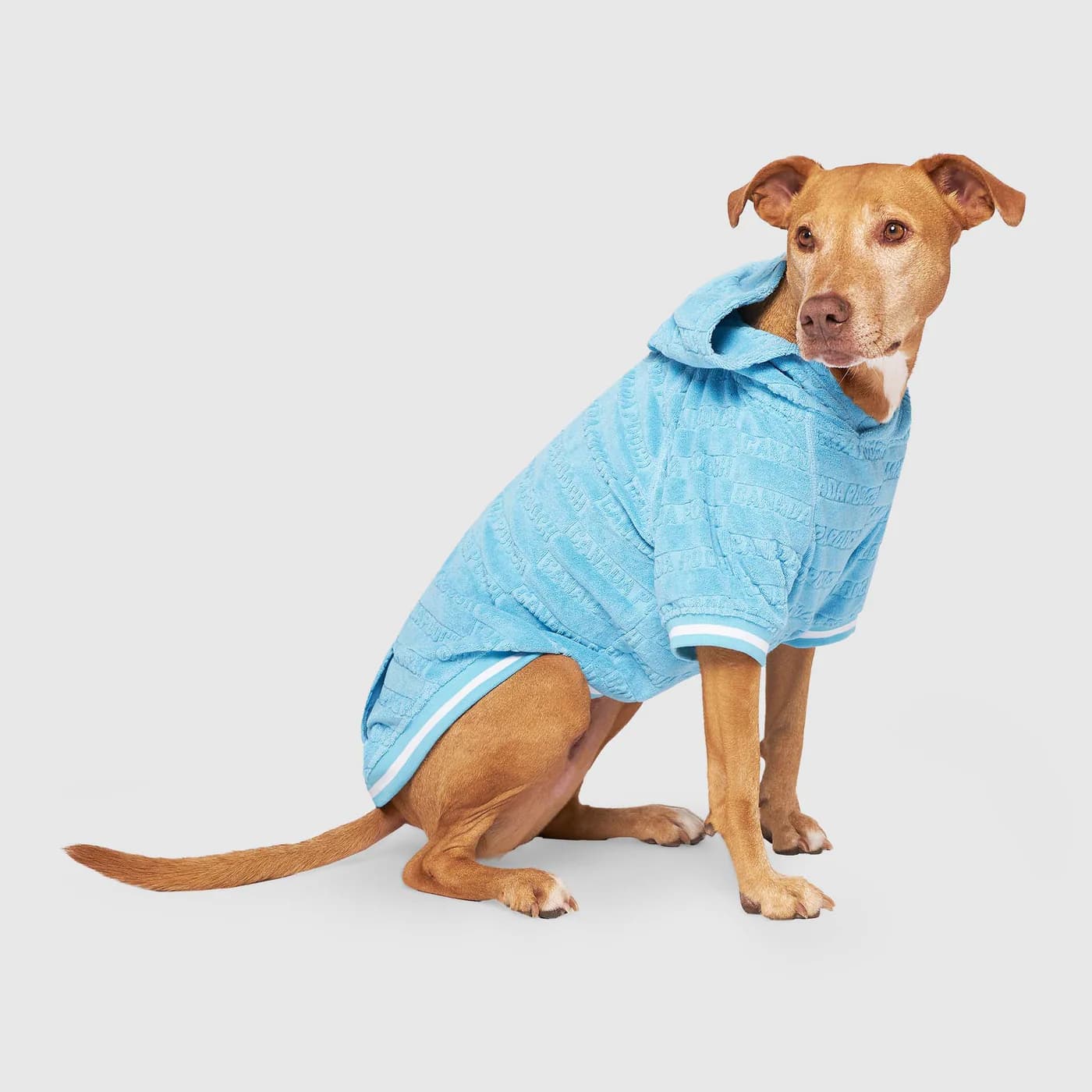
Canada Pooch
Beach Bum is a fitted 70% cotton and 30% polyester terry hoodie with a lined hood, ribbed hem, and cuffs, offering more garment-like coverage than open-backed robes. The 112-review sample is strong and the numbered size run is broad, but it is a final-sale product with several unavailable sizes. Public reviews include fit praise alongside repeated warnings that some dogs needed a larger size, so careful measurement matters.

A wearable coat is optional, not the default answer for every wet dog. A towel is usually simpler when only the paws and belly are damp, the dog dislikes clothing, a wound needs to remain visible, or the garment would interfere with a harness or medical device. AKC recommends pressing a towel into fur rather than rubbing vigorously, which can create tangles and mats. It also notes that long or thick coats may need towel drying followed by a dog-specific dryer; airflow, not high heat, should do the work, and a human hair dryer can burn sensitive skin. Even if a Canada Pooch Beach Bum Towel Hoodie feels dry on the outside, separate dense fur and check the skin underneath. Corded, heavily matted, chronically irritated, or difficult-to-dry coats may require advice from a veterinarian or qualified groomer. Stop and choose another method whenever wearing the coat increases fear, hides a skin problem, or prevents complete drying.
A drying coat is not treatment for hypothermia, heatstroke, injury, poisoning, or skin disease. PDSA lists shivering, drowsiness, confusion, clumsiness, pale gums, and collapse among hypothermia signs and advises immediate veterinary contact; gently towel-dry a wet pet and warm the surroundings gradually while following professional instructions. At the other extreme, VCA identifies rapid breathing, dry or sticky gums, abnormal gum color, lethargy, disorientation, and seizures as heatstroke signs. Remove the garment, move the dog out of heat, start the veterinarian-directed cooling steps, and seek emergency care rather than wrapping an overheated dog in wet fabric. Contact a veterinarian promptly for breathing difficulty, collapse, inability to stand, repeated vomiting, severe pain, deep wounds, chemical exposure, persistent shivering, or worsening confusion. Continuing odor, discharge, hot spots, swelling, or painful skin after ordinary drying also needs assessment. When the dog is not returning toward normal behavior, delaying care to complete a drying routine is the wrong tradeoff.
We used these primary or authoritative references when checking this guide. Product instructions and local rules can change, so confirm details that affect your trip.
Yes. It explains the main decision points in plain language and links to relevant product reviews when published options are available.
No. Prices, coupons, stock, and shipping terms can change. Confirm the current offer on the retailer page before checkout.
Related content