Learn what a dog sun shirt can and cannot do, how to measure girth, neck, and back length, how to spot rubbing or trapped heat, and when skin changes or heat concerns need veterinary advice.
A dog sun shirt creates a fabric barrier only where it covers the body. Start with the exact garment page: look for a stated UPF rating, the areas the cut actually covers, and care directions that preserve the fabric. Do not transfer one brand’s UPF claim to another. Even a UPF-rated shirt leaves the nose, ears, paws, lower legs, and sometimes much of the belly exposed. It does not replace shade, fresh water, cooler activity times, a pet-safe sunscreen recommended for exposed areas, or veterinary care. It is also not proof that a dog cannot overheat. Our companion ranking, Best Dog Sun Shirts for UV Protection and Hot-Weather Outings, is a model-by-model shortlist; use the fit checks below before choosing from it. Dogs with sparse coats, recent clipping, scars, photosensitivity, recurring skin disease, or medications that may affect sun tolerance should have a veterinarian guide the plan rather than relying on clothing alone.
Measure while the dog is standing squarely on a level surface, relaxed but not slouching. Use a flexible cloth tape and keep it flat against the coat without pulling it tight. Chest girth is usually taken around the widest part of the rib cage just behind the front legs. Measure the neck where the garment opening will sit, not automatically where a loose collar hangs. For back length, follow the maker’s diagram—many brands measure from the base of the neck to the base of the tail, but the start point can differ. Record every number in both inches and centimeters, then compare them with the chart for the exact style and size currently sold. Weight and breed are secondary clues, not substitutes for body measurements. When a dog falls between sizes, follow that manufacturer’s instruction rather than a universal size-up rule. Recheck after a major haircut, weight change, growth spurt, or coat change.
Try the clean shirt indoors before planning a long outing. Smooth the fabric so seams and openings sit where the design intends, then inspect the neck, armpits, chest, belly, and groin. The shirt should not pull across the throat, pinch behind the elbows, roll into a cord, or bunch so heavily that it changes the dog’s stride. Ask the dog to walk, turn both ways, sit, lie down, step over a low object, and climb a few safe stairs. Confirm that male and female dogs can urinate and defecate without soiling the garment. If a harness will be worn, test the exact combination for rubbing and make sure the leash connects only to a purpose-built harness or collar, never to ordinary shirt fabric. Remove or exchange the shirt if motion becomes shortened, the dog repeatedly scratches or bites at one spot, breathing appears restricted, or an opening leaves a pressure mark.
A correct size can still feel unfamiliar. Let the dog sniff the shirt, reward calm investigation, and practice putting it on and taking it off without rushing. Begin with a minute or two indoors, then remove it while the dog is still relaxed. Increase time gradually across several sessions and pair the garment with ordinary activities such as walking to the water bowl, following a food scatter, or taking a brief leash walk. Do not chase, pin, scold, or leave the shirt on until the dog gives up resisting. Freezing, crouching, frantic rolling, persistent chewing, hiding, or refusing to move are reasons to pause and reassess the handling, size, texture, and openings. A dog that settles after a short introduction may progress, but tolerance on the living-room floor does not prove comfort during heat, running, swimming, or a full trail day. Keep early outdoor trials short and supervised.
Ruffwear
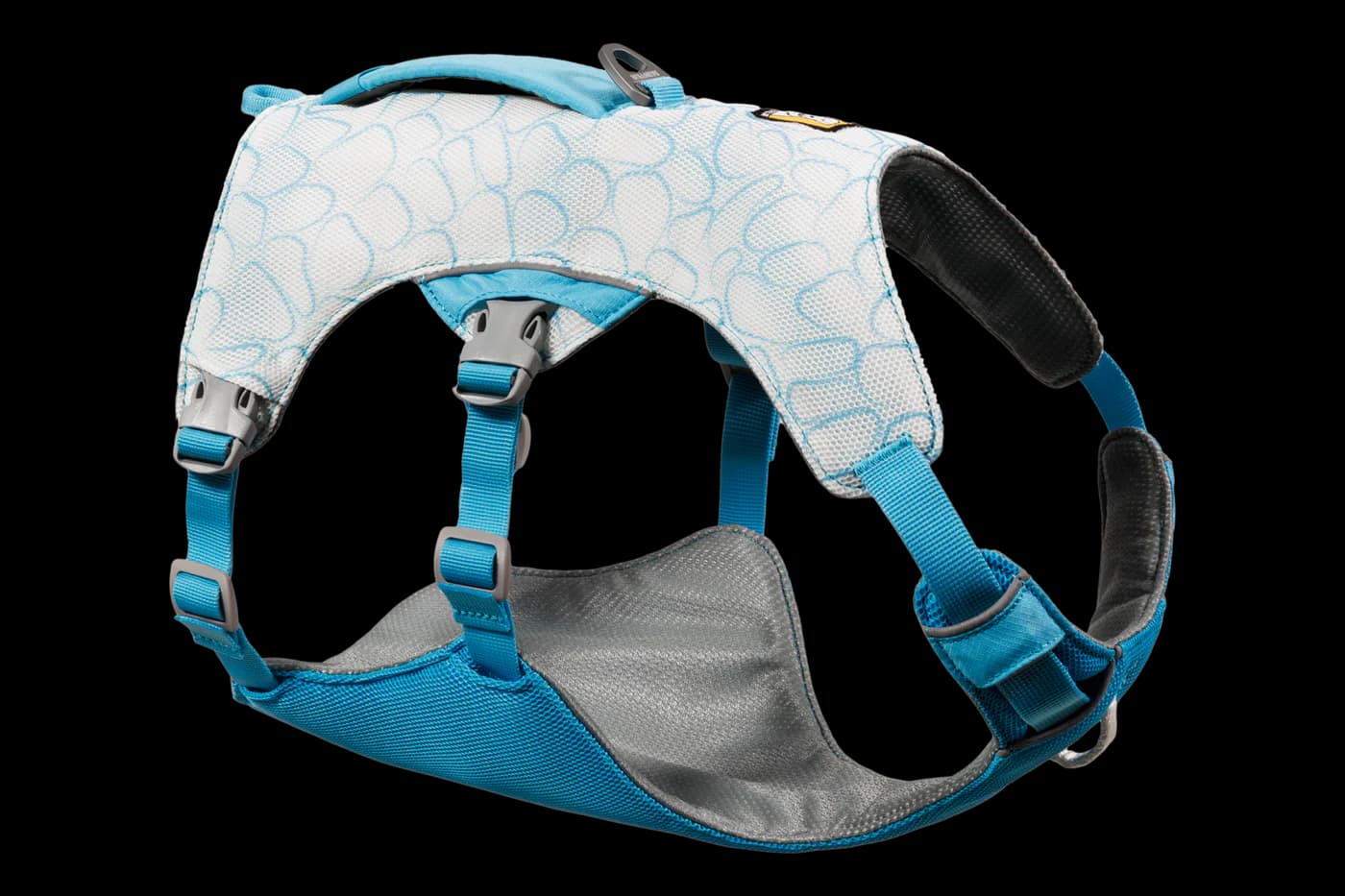
Ruffwear's highest-coverage cooling option uses a light-colored wicking outer layer, absorbent middle layer, and dry-feel mesh lining. UPF 50+, side-release buckles, reflective trim, and a harness-compatible leash portal make it the most complete hot-trail package in this comparison.

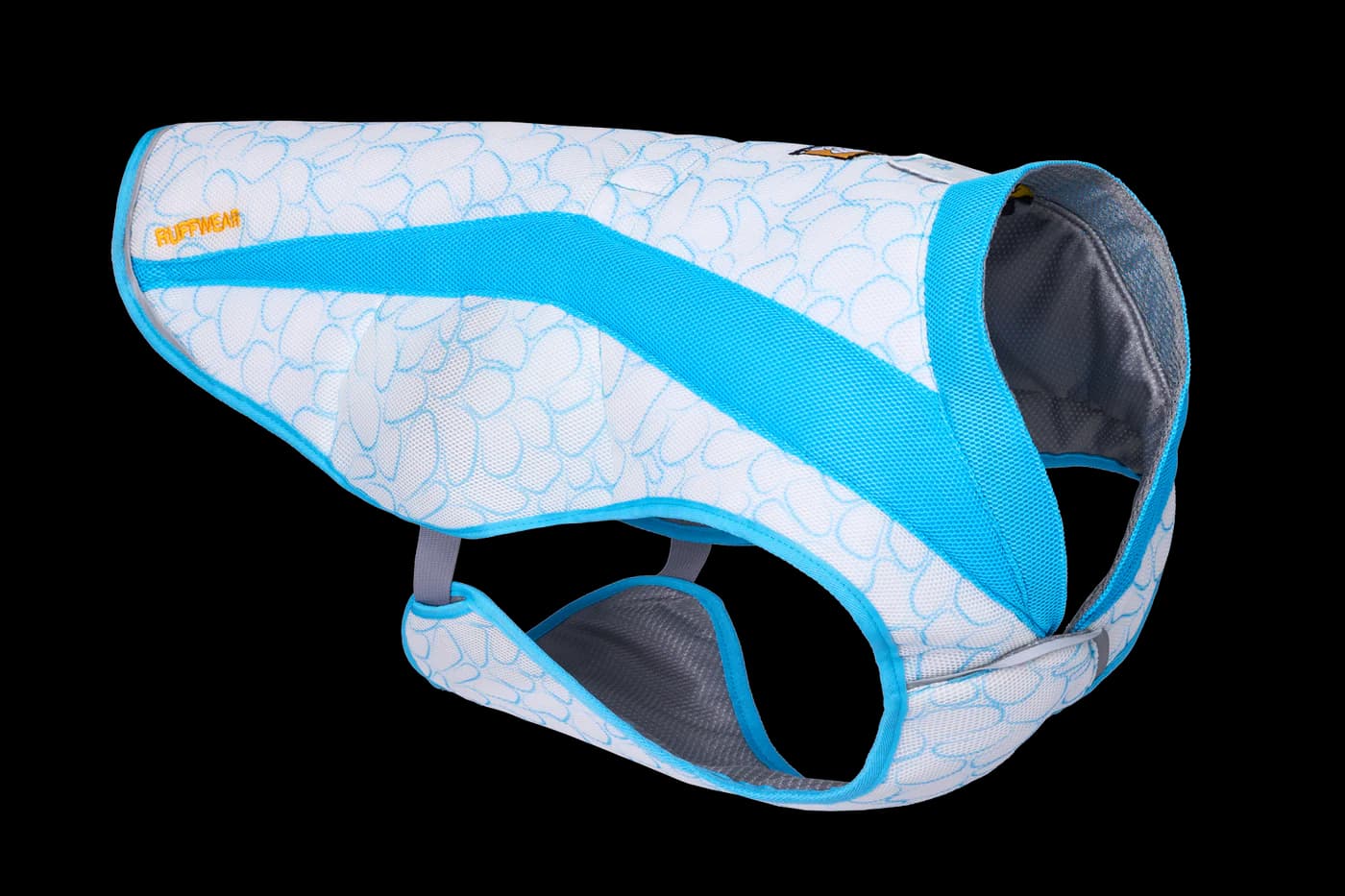
Check temperature, humidity, shade, wind, route exposure, and surface heat before leaving. Schedule activity for cooler hours, offer frequent water and rest breaks, and shorten or cancel the outing when conditions exceed the dog’s normal tolerance. A dry sun shirt and an evaporative cooling vest are not the same tool. The Ruffwear Swamp Cooler Cooling Dog Vest, shown here as a related product, is designed to be soaked and re-wetted according to its instructions; its outer layer carries the brand’s UPF 50+ claim. That does not mean every sun shirt should be soaked, or that either garment prevents heat illness. Follow the exact label for wet or dry use and never cover the apparel with another layer unless both makers support the combination. Short-nosed, overweight, senior, very young, thick-coated, or medically fragile dogs may need stricter limits and veterinary guidance. Keep checking the dog, not just the forecast or product badge. Excessive panting, heavy drooling, difficulty breathing, weakness, stumbling, vomiting, diarrhea, collapse, or seizures require immediate cooling action and urgent veterinary contact.
Beach and trail use add friction, moisture, and debris that an indoor fitting cannot reveal. Sand can collect at the armpits, neck, belly edge, and under a harness; salt water and chlorinated water can leave residue; twigs and burrs can snag a close-fitting knit. Check those areas during every break. A wet shirt may stretch, sag, cling, or change how it moves, so rely only on the maker’s statement about swimming and wet use. K9 Top Coat, for example, says its Supra Bodysuit can lengthen while wet and provides a model-specific adjustment; that rule does not apply to every shirt. A sun shirt is not a canine life jacket and should never replace flotation gear or close supervision around water. After salt water, pool water, mud, or heavy sweat, remove the garment, rinse the dog and shirt as appropriate, dry the skin, and inspect for redness. On narrow or brushy trails, confirm that loose fabric cannot catch and that any harness remains stable after the shirt shifts.
Stop periodically in shade and remove or lift the shirt enough to inspect the skin and coat. Look at the neck edge, armpits, elbows, chest, belly, groin, and every place crossed by a harness strap. Redness, swelling, broken hair, damp patches, odor, abrasions, hives, or repeated attention to one area means the setup needs to come off and the skin needs assessment. Do not put the shirt back over wet, irritated, infected, recently treated, or healing skin unless a veterinarian has advised that exact use. Fabric can also hide changes, so continued panting, restlessness, slowing, seeking shade, or refusing to continue matters even when the exterior feels cool. Move the dog to a cooler area and follow veterinary heat-safety guidance when overheating is suspected. Contact a veterinarian promptly for persistent irritation, open sores, blistering, discharge, pain, a spreading rash, or unusual sun sensitivity. A retail sun shirt is not automatically a wound cover, post-operative suit, allergy treatment, or substitute for an Elizabethan collar; those medical uses require professional direction.
Read the sewn label and the current product-care page before the first wash. Fasten closures as directed, separate the shirt from snagging hardware, and use the stated water temperature, cycle, detergent, and drying method. Do not assume bleach, fabric softener, stain treatment, a dryer, or direct high heat is safe for UV-rated stretch fabric. Rinse promptly after salt, chlorine, sunscreen transfer, mud, or heavy dirt, and let the garment dry fully before storage so moisture and odor are not sealed into a travel bag. After washing, hold it under good light and inspect thinning patches, stretched openings, loose seams, rough labels, tears, embedded sand, and damaged fasteners. Put it back on briefly because a garment can change shape after laundering. Retire or replace it when it no longer stays in position, creates friction, loses needed coverage, or has damage that the maker cannot safely repair. Recheck the fit at the start of each warm season; a familiar shirt is not automatically a still-correct shirt.
We used these primary or authoritative references when checking this guide. Product instructions and local rules can change, so confirm details that affect your trip.
Yes. It explains the main decision points in plain language and links to relevant product reviews when published options are available.
No. Prices, coupons, stock, and shipping terms can change. Confirm the current offer on the retailer page before checkout.
Related content