Learn how to improve a dog's visibility from multiple directions without treating visibility gear as a guarantee, plus a 60-second check before every dark walk.
SafetyPUP XD
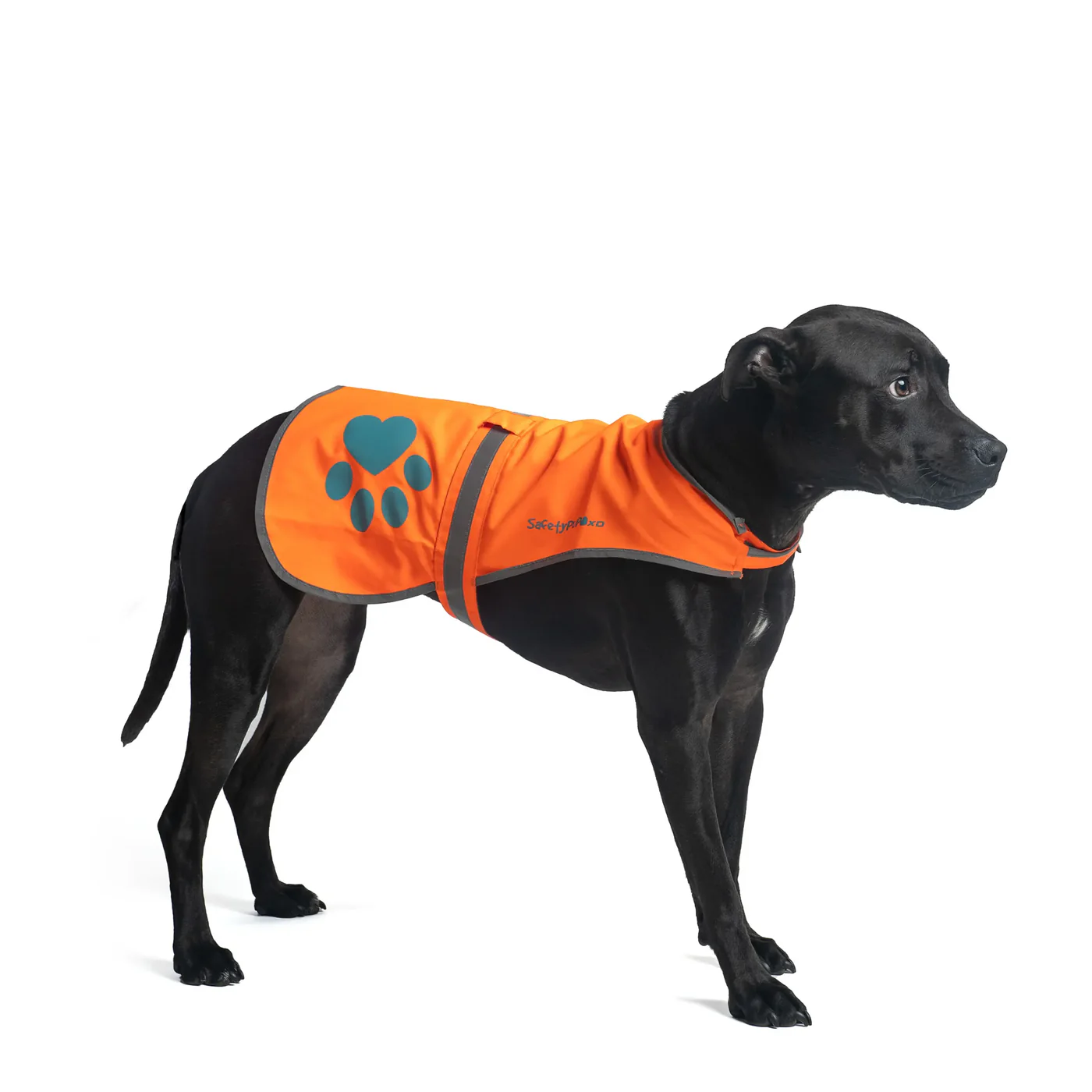
SafetyPUP's standard vest combines blaze-orange 300D Oxford fabric, reflective trim, and extended hook-and-loop adjustment in a lightweight outer layer. Its 611-rating Chewy history is far larger than the evidence behind most specialist visibility vests, and sizes XS through XL were orderable when checked. The vest has no dedicated leash opening, and long hair can collect in the hook-and-loop closures.

Reflective gear and lights may help another road user notice a dog-and-handler team, but they cannot stop a vehicle, prevent a leash failure, or make a poor crossing safe. NHTSA warns that pedestrians can overestimate how visible they are and notes that human visibility-aid research does not establish a reduction in crashes. That evidence should not be converted into a guaranteed detection distance or safety outcome for dogs. Start with the controls that do not depend on being noticed: use a sidewalk when available, keep the dog physically connected, stay attentive, and select a route with fewer conflict points. A SafetyPUP XD Reflective Dog Vest can be considered as a bright outer layer, but check its actual condition and reflection yourself. The handler also needs reflective material and a light. Better visibility supports safer decisions; it never replaces them.
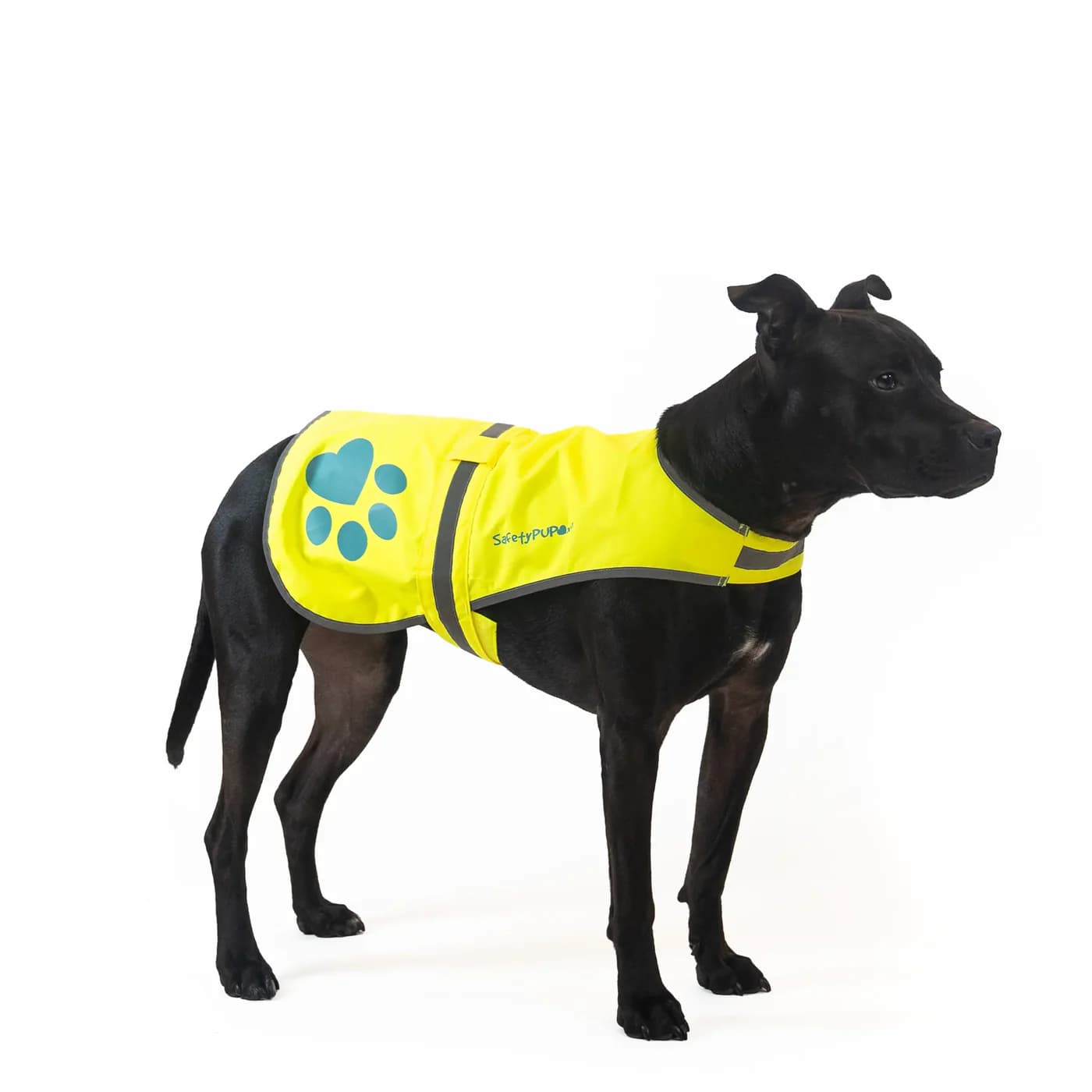
SafetyPUP XD
The Urban version uses neon yellow and other bright colorways with broad reflective trim and the same simple adjustable cape concept as SafetyPUP's standard vest. Its 280-rating history is strong, and XS through XL were available when checked. Because its construction substantially overlaps the top-ranked SafetyPUP, it earns a lower position as a color-focused alternative rather than a separate performance leader.
Passive reflective material needs an outside light source and a useful angle before it sends light back, while an active lamp produces its own light. That makes them complementary rather than interchangeable. NHTSA discusses both retroreflective materials and flashing or self-lit devices for human pedestrian conspicuity, and Cornell advises people walking dogs in darkness to wear reflective gear and carry a flashlight. For a dog, use that as a layering principle rather than as a quantified promise: pair a reflective outer layer, such as the SafetyPUP XD Urban Reflective Dog Vest, with a securely mounted dog light, and equip the handler too. Place the light where fur, a raincoat, or the dog's body will not hide it, but keep it out of the dog's eyes and away from swinging hardware. Charge or replace batteries before they are low, carry a separate path light, and never assume one glowing point communicates the dog's full position or direction.
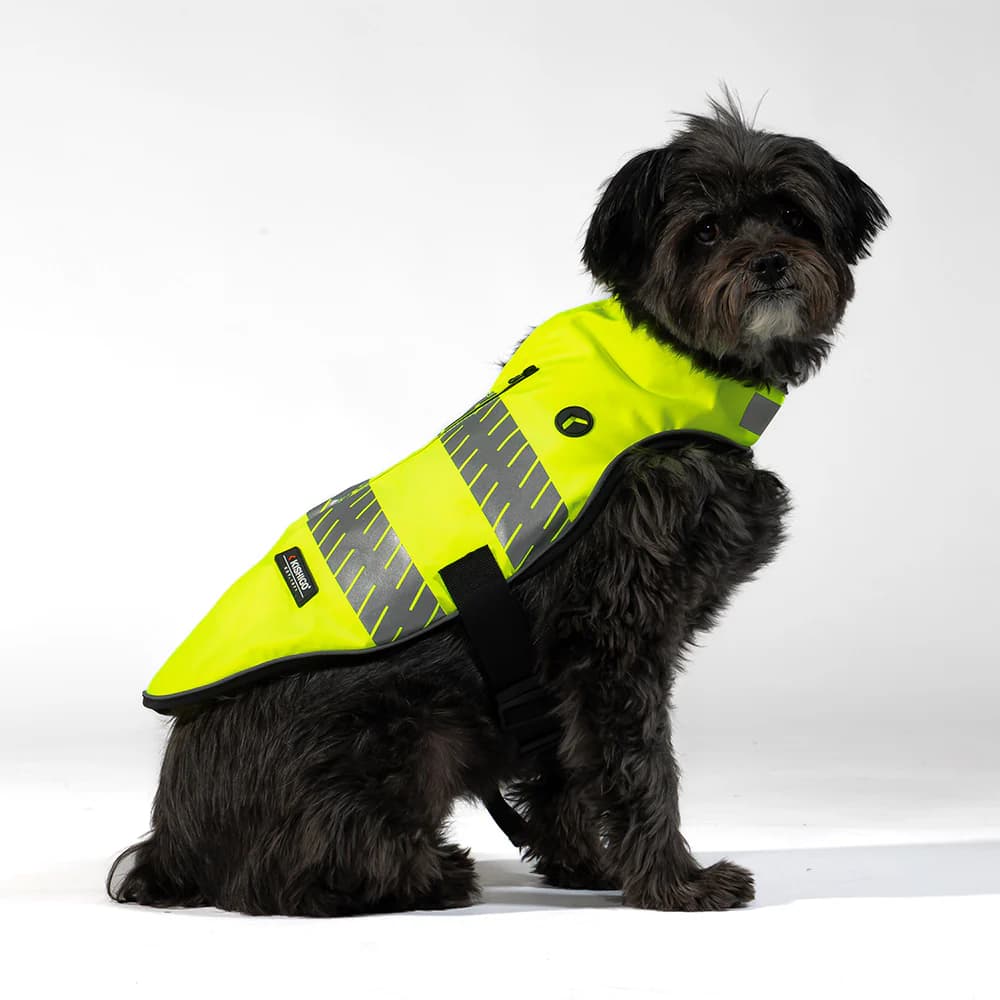
Kishigo4Pets
Kishigo applies its workwear background to a fluorescent, water-repellent dog vest with reflective piping and bands, adjustable neck and chest sections, a leash opening, two waterproof-zip pockets, and a waste-bag dispenser. That unusually complete feature set is useful on organized hikes, but pockets should remain lightly loaded and the lack of a public rating aggregate limits long-term evidence.
A dog can be approached from behind, seen side-on by a turning driver, or briefly hidden by a parked vehicle. One reflective patch on the chest does not address all of those views, especially on a low, dark-coated, or long-haired dog. When assessing the Kishigo4PETS High Visibility Dog Vest or another visibility layer, look for exposed material across the front, both flanks, and rear instead of judging it only from above. Indoors or in a safe enclosed area, have the dog stand, sit, turn, and lower the head while another person shines a flashlight from several directions. Check whether fur, folds, a winter coat, or a harness covers the visible areas. Keep the correct leash attachment point accessible, and make the leash itself easy to see so observers can read the space between dog and handler. This is a practical coverage check, not proof that every driver will notice the team.
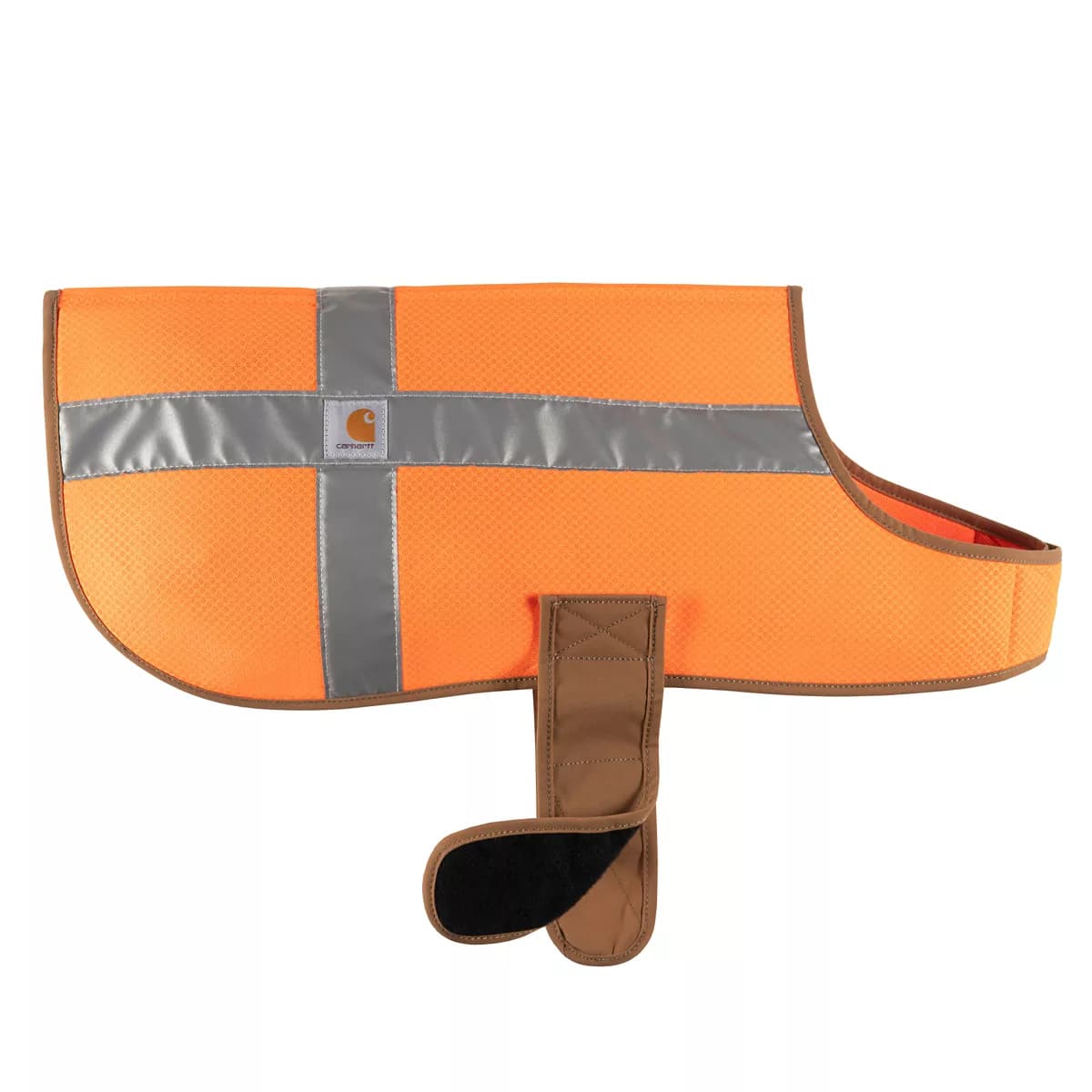
Carhartt
Carhartt uses high-visibility spacer mesh, wide silver 3M reflective tape, cotton-duck binding, and triple-needle stitching for a sturdier feel than thin emergency-style vests. Two hook-and-loop tabs provide chest and waist adjustment, and the bright orange-brown design suits daily walks or field use. It still does not provide impact, puncture, or predator protection, while Tractor Supply offered a stronger current public-review sample than the smaller retailer listing initially checked.
Take measurements before choosing a size: AKC harness guidance identifies the base of the neck where it meets the shoulders and the widest part of the chest, usually behind the front legs, as the two key locations. Compare those numbers with the current maker's chart rather than relying on breed or weight alone. After fitting a Carhartt Dog Safety Vest, check that it is snug without restricting breathing or shoulder movement. Walk, trot, sit, turn, reach toward the ground, and gently pull the garment in different directions to look for escape gaps. Recheck the armpits, sternum, neck, and buckle edges for rubbing. A fit that works over a short coat may change over winter layers or dense seasonal fur. Do not clip a leash to reflective trim, a light loop, or any point that the manufacturer does not identify as load-bearing. If the visibility vest interferes with a properly fitted harness or hides its attachment ring, use a different combination.
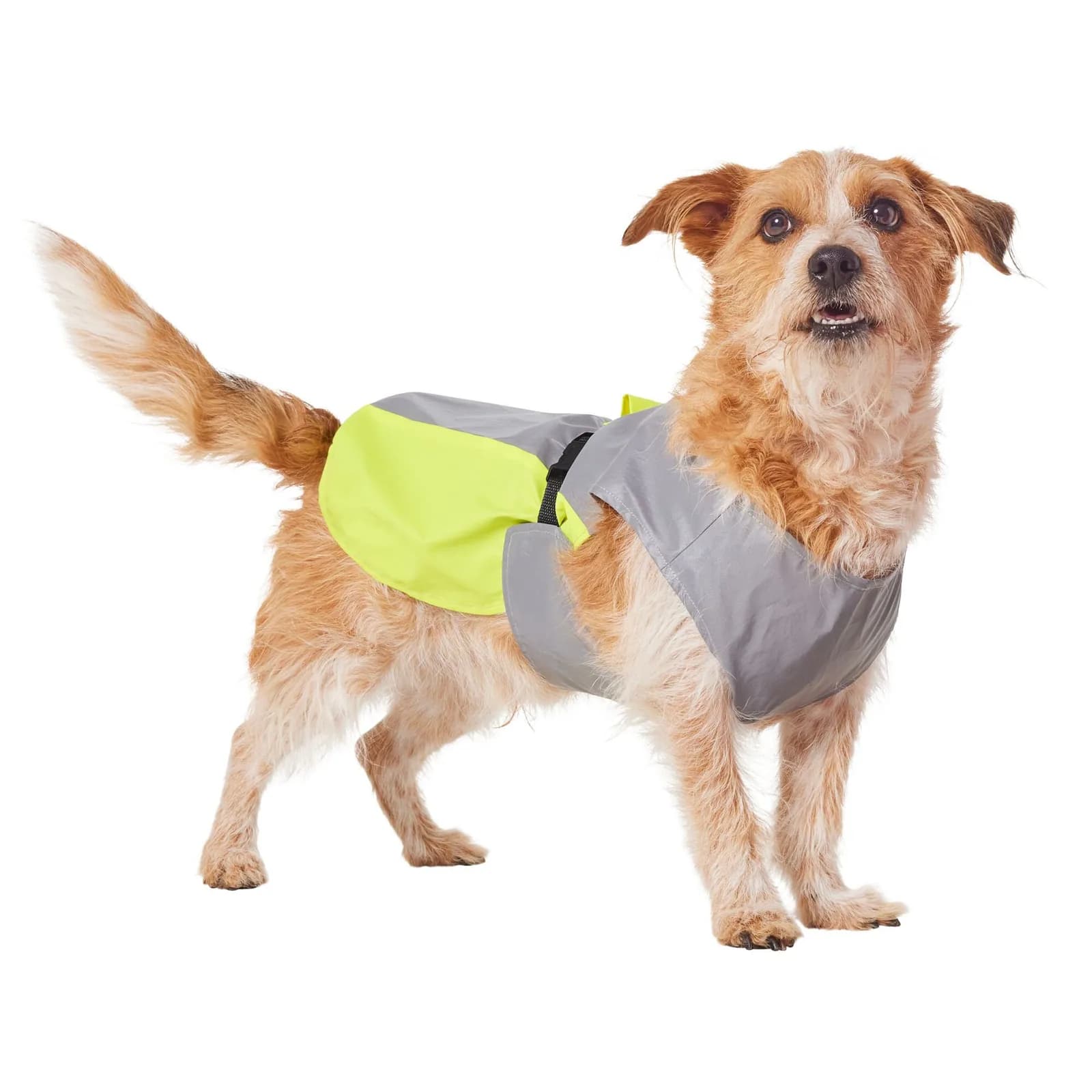
Frisco
Frisco turns nearly the entire lightweight shell into a reflective surface and offers sizes from S through XXXL at the lowest entry price in this list. Hook-and-loop neck and belly closures make it quick to add over other walking gear. The single belly strap provides less anti-rotation support than multi-point designs, and reviewers describe shifting in wind or vigorous movement.
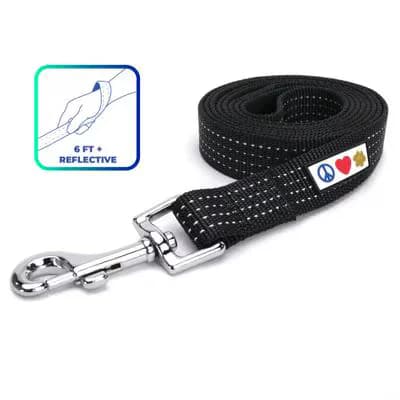
Near traffic, a fixed-length leash keeps the working distance predictable. AKC reports a 4–6-foot nylon leash as a common starting point for leash training and specifically notes that reflective material is useful near roads at night because thin retractable cords are difficult to see. VCA advises avoiding retractable leashes. Choose a width and strength appropriate for the dog, with a bright or reflective surface, then inspect the clasp, stitching, handle, and attachment point before leaving. The Frisco Reflective Dog Safety Vest can make the dog's body more conspicuous, but it does not reveal an almost invisible leash stretched across a path, so treat the leash as part of the visibility system. Keep the dog on the side away from moving traffic and gather slack before driveways or crossings without maintaining painful tension. Never wrap the leash around a hand. If the dog lunges, create distance and turn away; repeated reactions call for a qualified reward-based trainer or veterinary behavior professional.
FINNERO
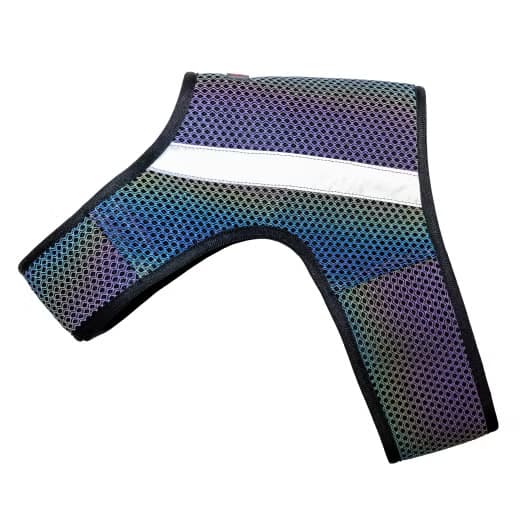
FINNERO's GLOW uses lightweight reflective polyester mesh that appears dark in ordinary light and produces a multicolor response when illuminated, plus a separate back strip and hook-and-loop neck and chest adjustment. It offers broad reflective surface area at a low current price. Evidence is limited to one official verified review, and it provides neither active lighting nor weather protection.
Route design usually matters more than adding one more reflective panel. Follow local rules, use sidewalks where available, and favor familiar, well-lit streets with fewer fast entrances, blind bends, parking-lot exits, and uncontrolled crossings. NHTSA advises pedestrians to cross at crosswalks or intersections, watch for turning and backing vehicles, and wait for a clear stop rather than relying on others to protect them. Where no sidewalk exists, its general pedestrian guidance says to face traffic and stay as far from it as possible; local law and the actual road layout still govern. Before each crossing, stop back from the curb, shorten the leash, position the dog away from traffic, and scan again for vehicles emerging from driveways or between parked cars. A FINNERO GLOW Reflective Dog Vest remains a visibility layer, not compensation for a risky route. Skip headphones and phone use, and change course early if darkness, weather, loose dogs, wildlife, or the dog's arousal makes the planned segment hard to manage.
KONG
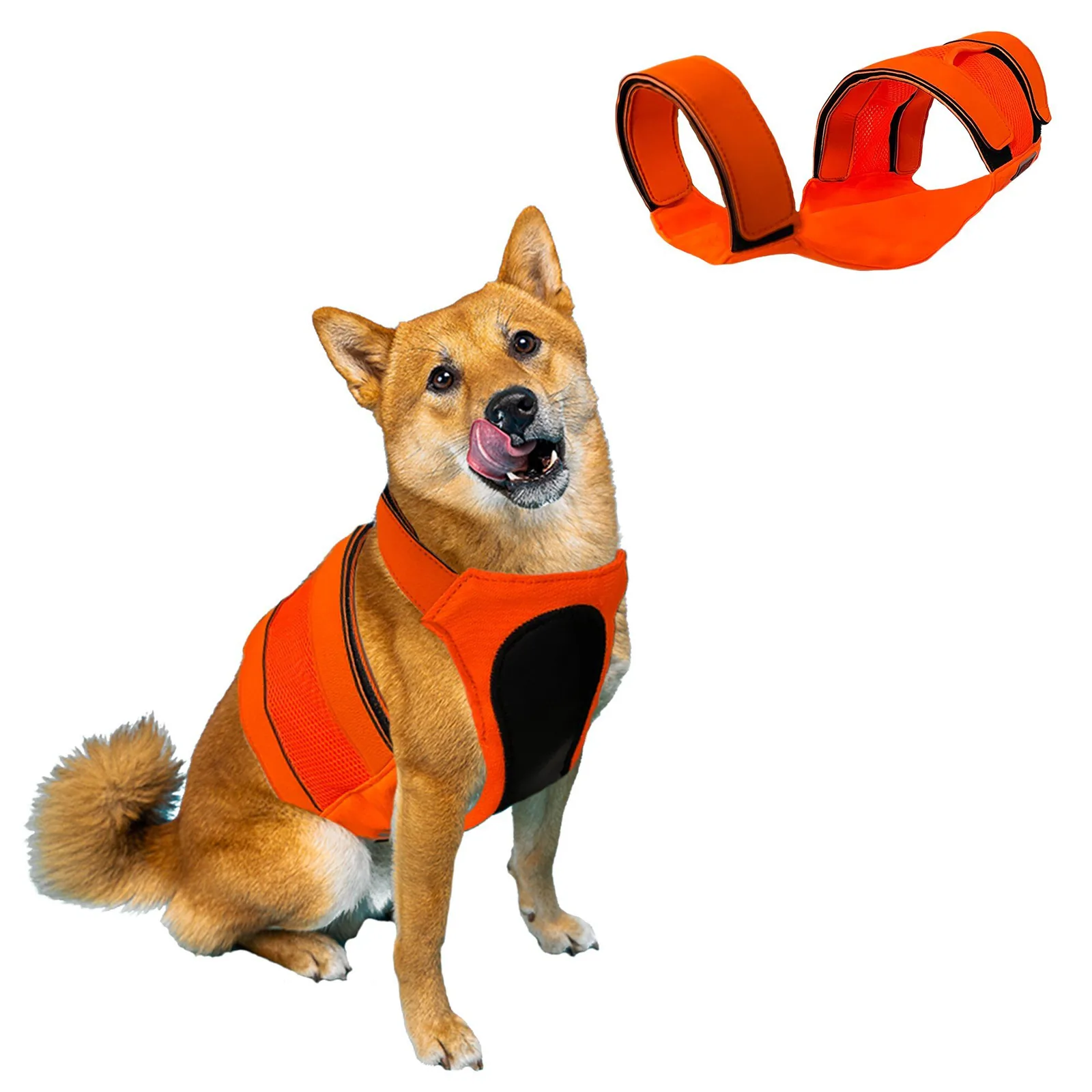
KONG Sport Trigger adds a padded, polyurethane-coated belly panel, neoprene straps, a blaze-orange shell, mesh ventilation, and reflective details for dogs moving through field cover. It is available only in Medium and Large. Chewy describes 840D polyester while another brand listing has used 600D wording, so shoppers should treat the exact denier as unresolved and confirm the current label before buying.
Use one minute as a repeatable checklist, not as a tested safety rating. In the first 15 seconds, close every buckle, confirm a snug dynamic fit, and expose the intended leash ring. In the next 15, clip the leash, tug-test the connection, inspect the handle, and confirm identification is secure. During seconds 30–45, switch on the active light, verify its battery state, and view the dog from the front, rear, and both sides with a flashlight; include the leash and the handler's outer layer. Use this same check when considering the KONG Sport Trigger Dog Safety Vest, rather than assuming a product name guarantees nighttime performance. In the final 15 seconds, confirm the low-risk route, weather, phone charge, waste bags, and a separate handheld light. If a buckle, leash, or lamp fails, replace it or choose a safer daylight outing. Starting indoors keeps the dog contained while corrections are made and turns a good idea into a routine that is easier to repeat.
Turn back immediately if gear slips, reflective areas become covered, the light fails, the leash connection is questionable, or the dog becomes too frightened or reactive to stay under control. Also stop for limping, repeated paw lifting, sudden reluctance to walk, persistent pulling toward home, or any new pain. In cold conditions, Cornell lists shivering, whining or barking, a tucked tail or hunched posture, lifting the paws, reluctance to walk, and sudden anxiety as signs that a dog may not be tolerating the temperature; move the dog to a warm, dry place. Suspected frostbite or hypothermia warrants immediate veterinary care. Contact a veterinarian urgently after a vehicle impact or for collapse, breathing difficulty, disorientation, seizure, inability to stand, severe pain, or a limb that cannot bear weight. New swelling, broken skin, or continuing chafing under visibility gear also deserves assessment. Recurring lunging or panic is a reason to switch to quieter daylight routes and seek qualified behavioral help, not to depend on brighter equipment.
We used these primary or authoritative references when checking this guide. Product instructions and local rules can change, so confirm details that affect your trip.
Yes. It explains the main decision points in plain language and links to relevant product reviews when published options are available.
No. Prices, coupons, stock, and shipping terms can change. Confirm the current offer on the retailer page before checkout.
Related content