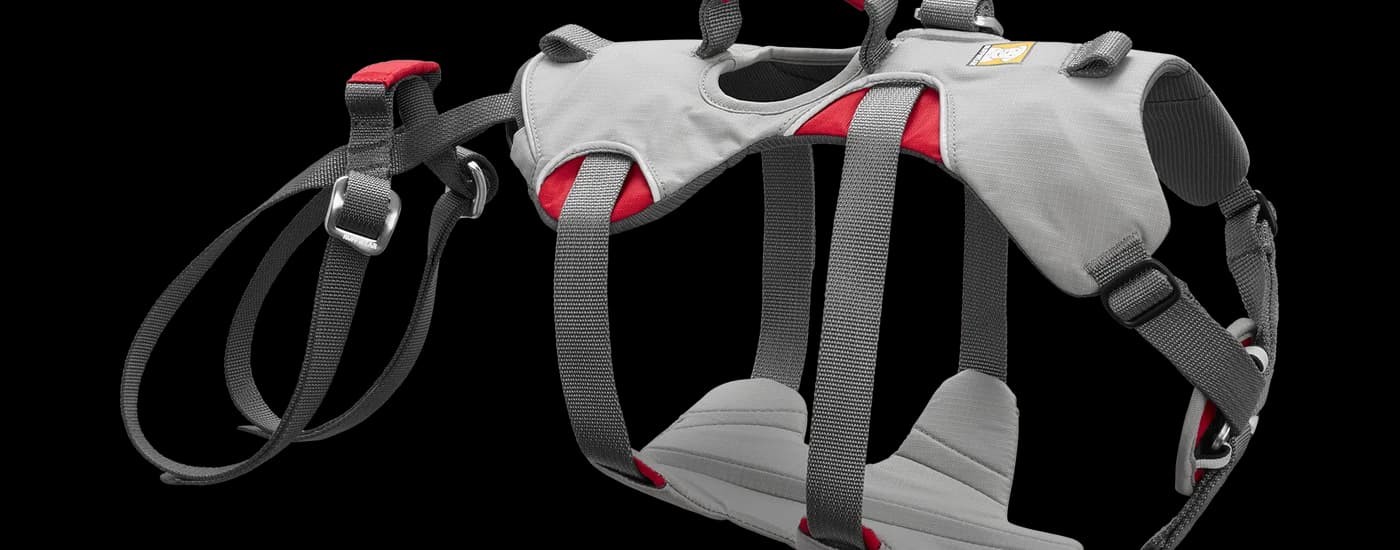
Doubleback is a 2,000-lbf or 8.9-kN strength-rated full-body belay harness for lifting and lowering a dog in exposed climbing or canyoneering terrain. Padded belly support, stowable leg loops, metal buckles, and seven adjustment points stabilize the dog during a rope-assisted maneuver, and the official page has the deepest review sample in this comparison. It is not a shoulder-carry sling and must not be presented as a normal walk-out solution: use belongs to trained handlers with appropriate rope systems, inspection practice, anchors, and rescue judgment.
LALIZAS code 20020 is explicitly suitable for dogs and cats under eight kilograms with a published 25–48 centimeter chest range. Foam construction, perimeter straps, and a strong lifting handle create a straightforward marine design, and the Irish retailer had current stock at a moderate price. It provides no cat-specific neck measurement, the retailer review evidence is minimal, and its strap-forward form requires careful checks for rubbing, rotation, and backward escape.
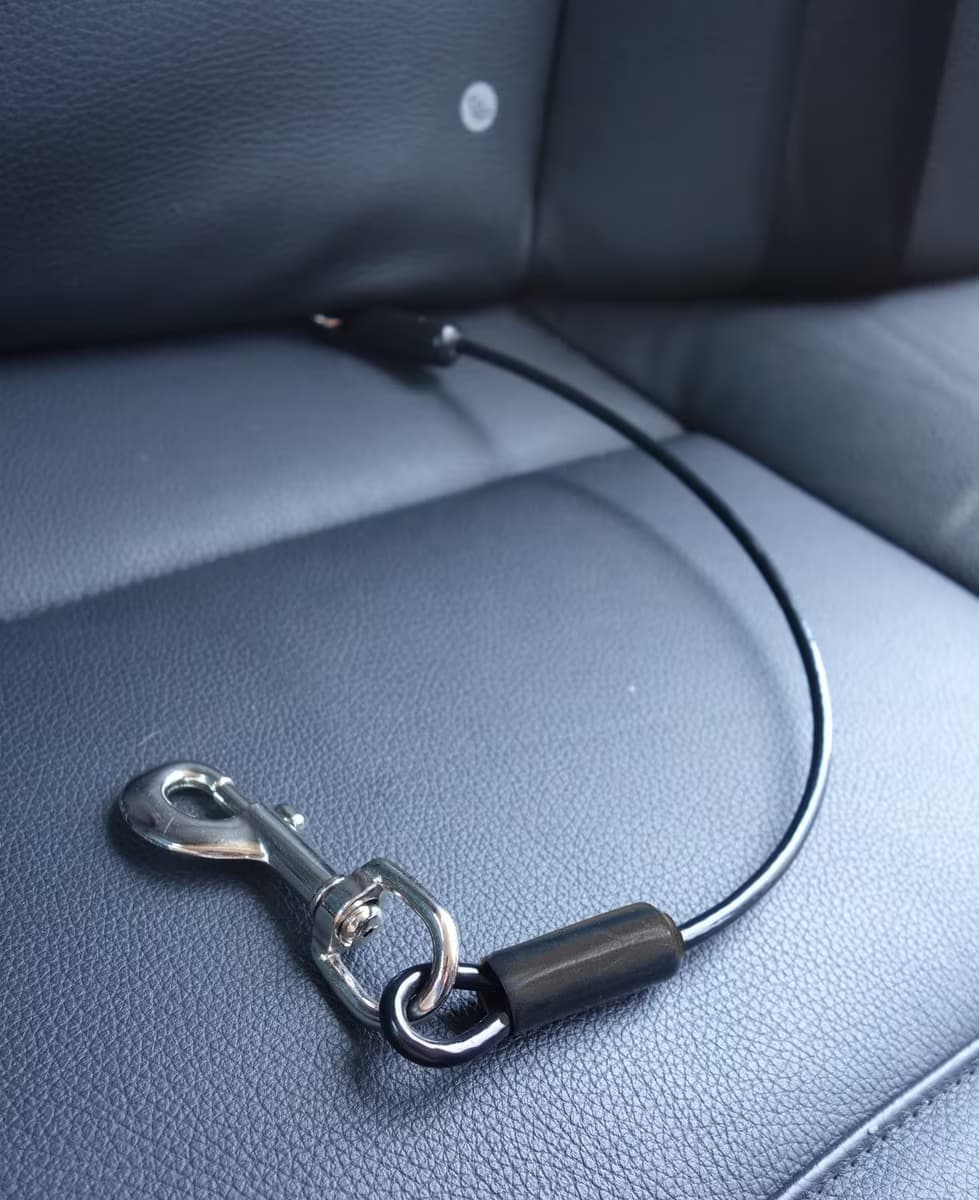
Leash Boss replaces exposed webbing with a nylon-coated steel cable and clips to a rear-seat LATCH bar, making it the strongest fit here for dogs that quickly chew ordinary fabric tethers. Multiple lengths and a simple anchor clip make setup straightforward. It still only limits movement: it has no independently verified crash-protection claim and must connect to a well-fitted harness rather than a collar.
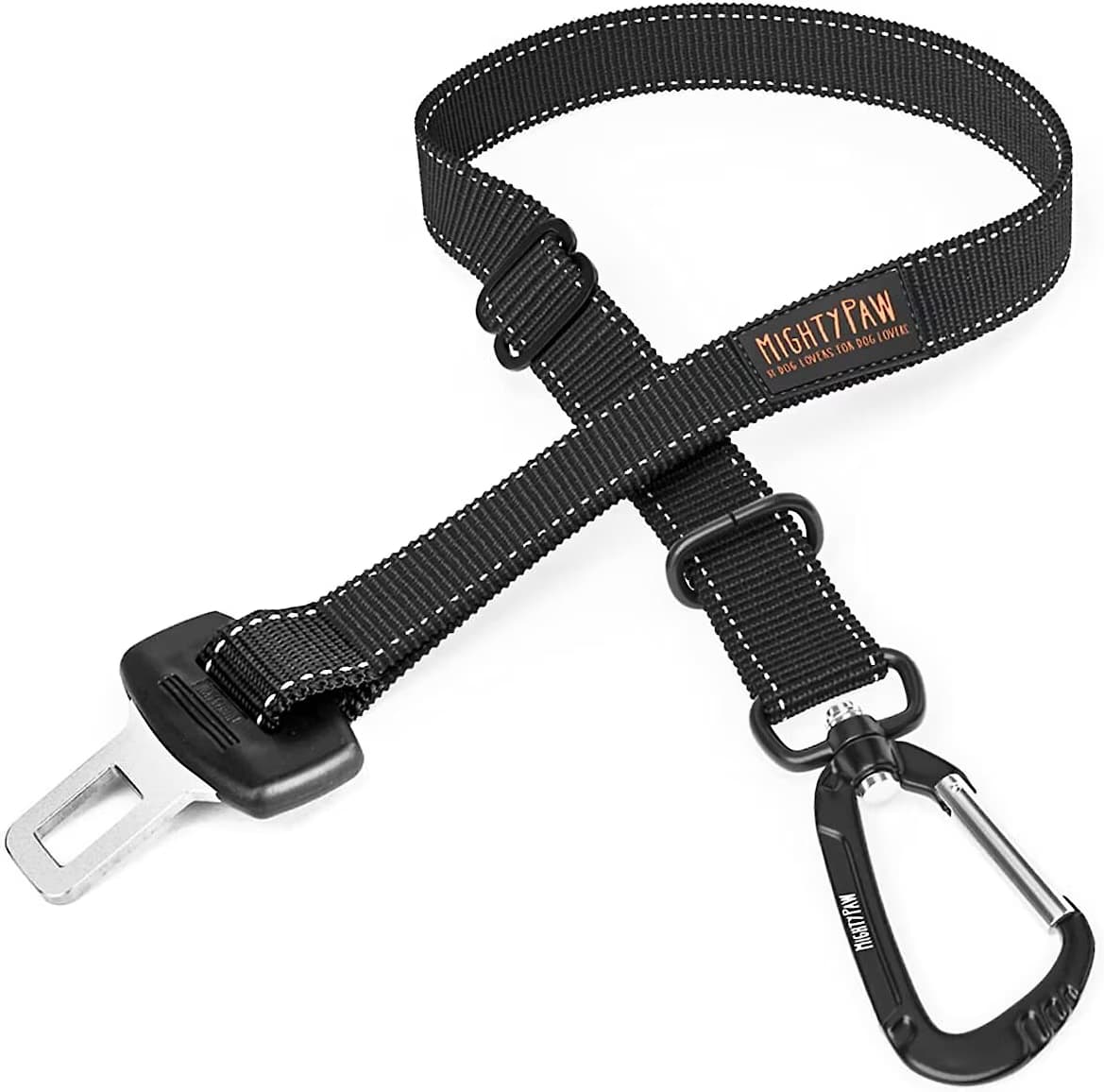
This Mighty Paw model uses a familiar human-style buckle tongue, adjusts from 16 to 26 inches, and adds a swivel at the harness end. That makes it simple to move between compatible cars without reaching for a LATCH bar. Owners still need to check the buckle dimensions and keep the clip on a harness; published hardware-strength figures are not evidence of complete crash protection.
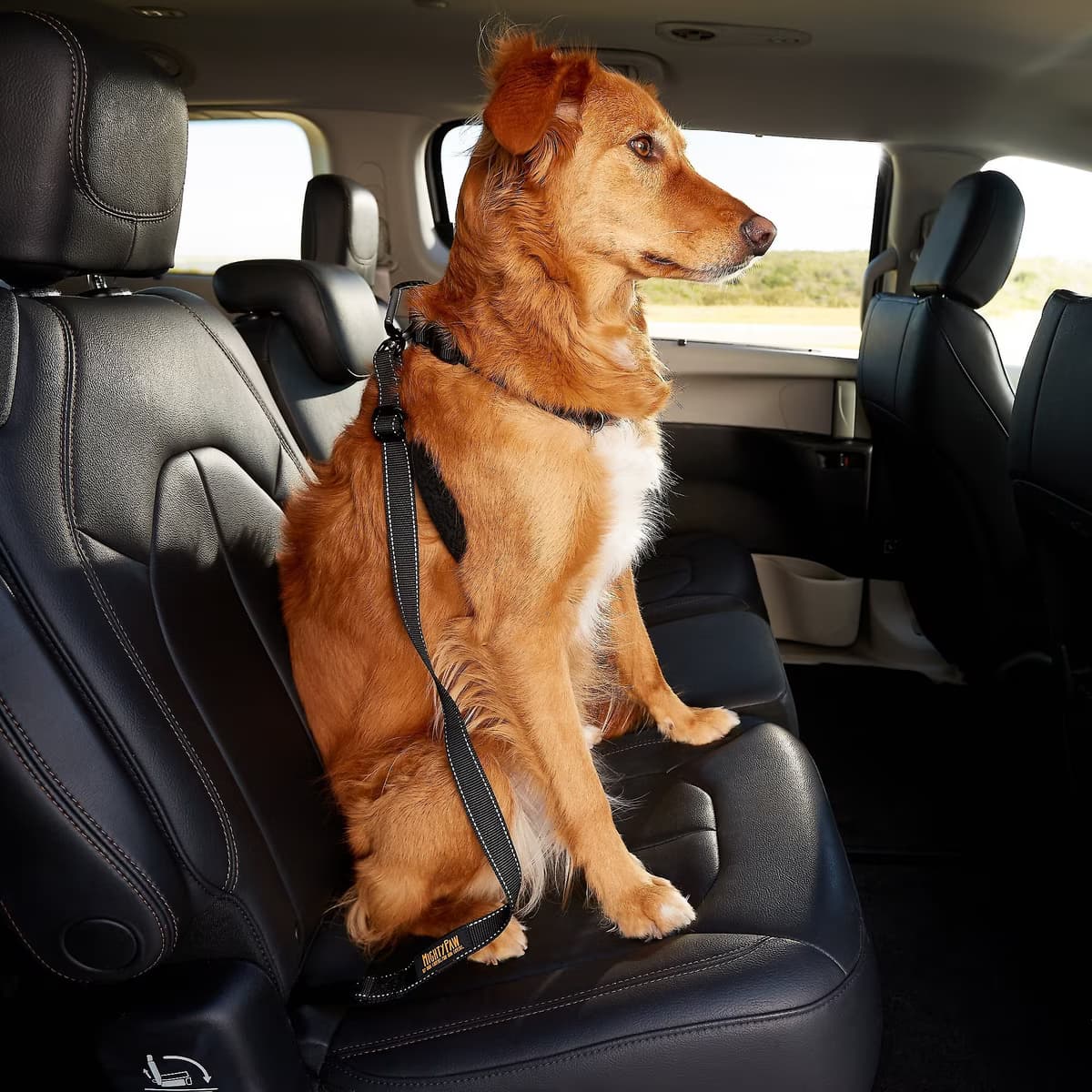
Mighty Paw's LATCH model offers a 16-to-26-inch range, weather-resistant nylon, all-metal hardware, and a rotating harness clip at a moderate price. Anchoring to the child-seat bar prevents a dog from stepping on a buckle-release button. Use it with a vest-style harness and treat its published component-strength language as material information, not proof of crash protection.
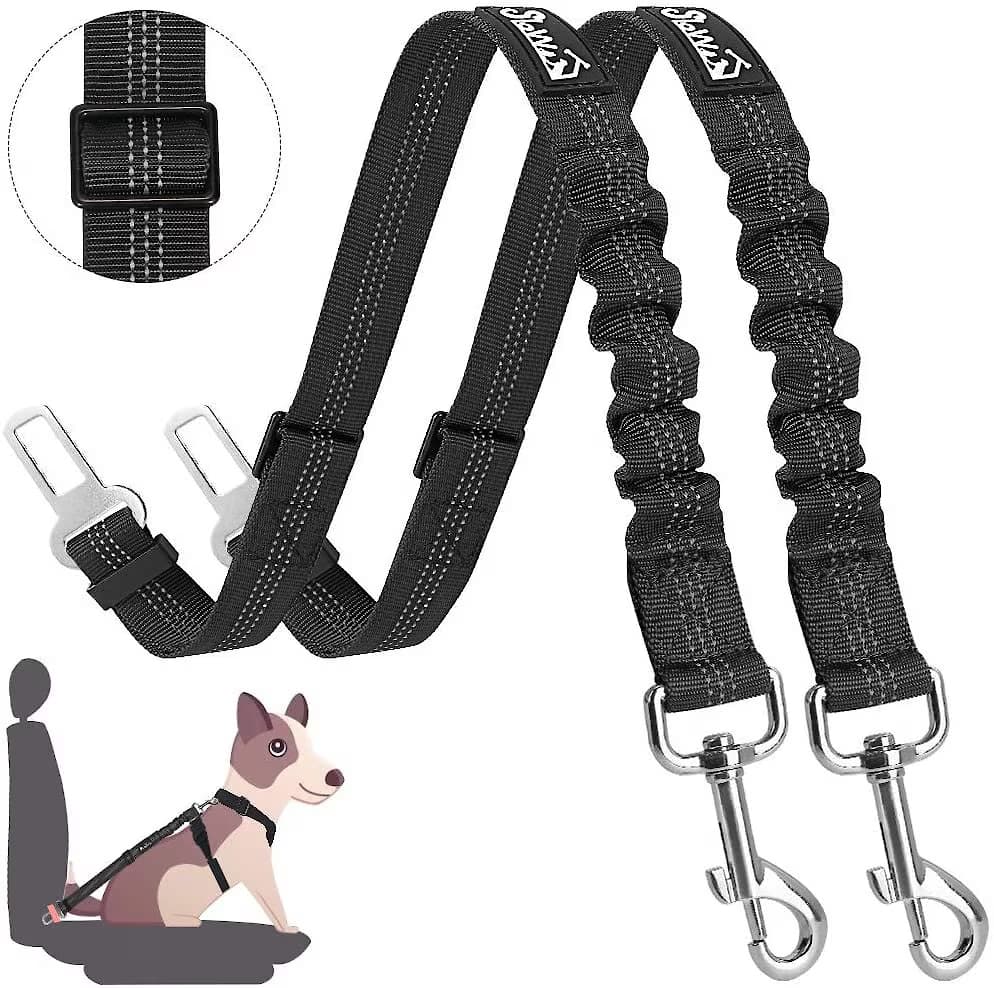
SlowTon packages two buckle-in tethers with elastic bungee sections, adjustable nylon, reflective accents, and lockable quick-release clips. The bungee can soften routine starts and repositioning, and the two-pack is useful for two cars or two dogs. Elasticity is a comfort feature rather than verified collision energy management, so the tether still belongs on a harness and should be kept short enough to prevent front-seat access.
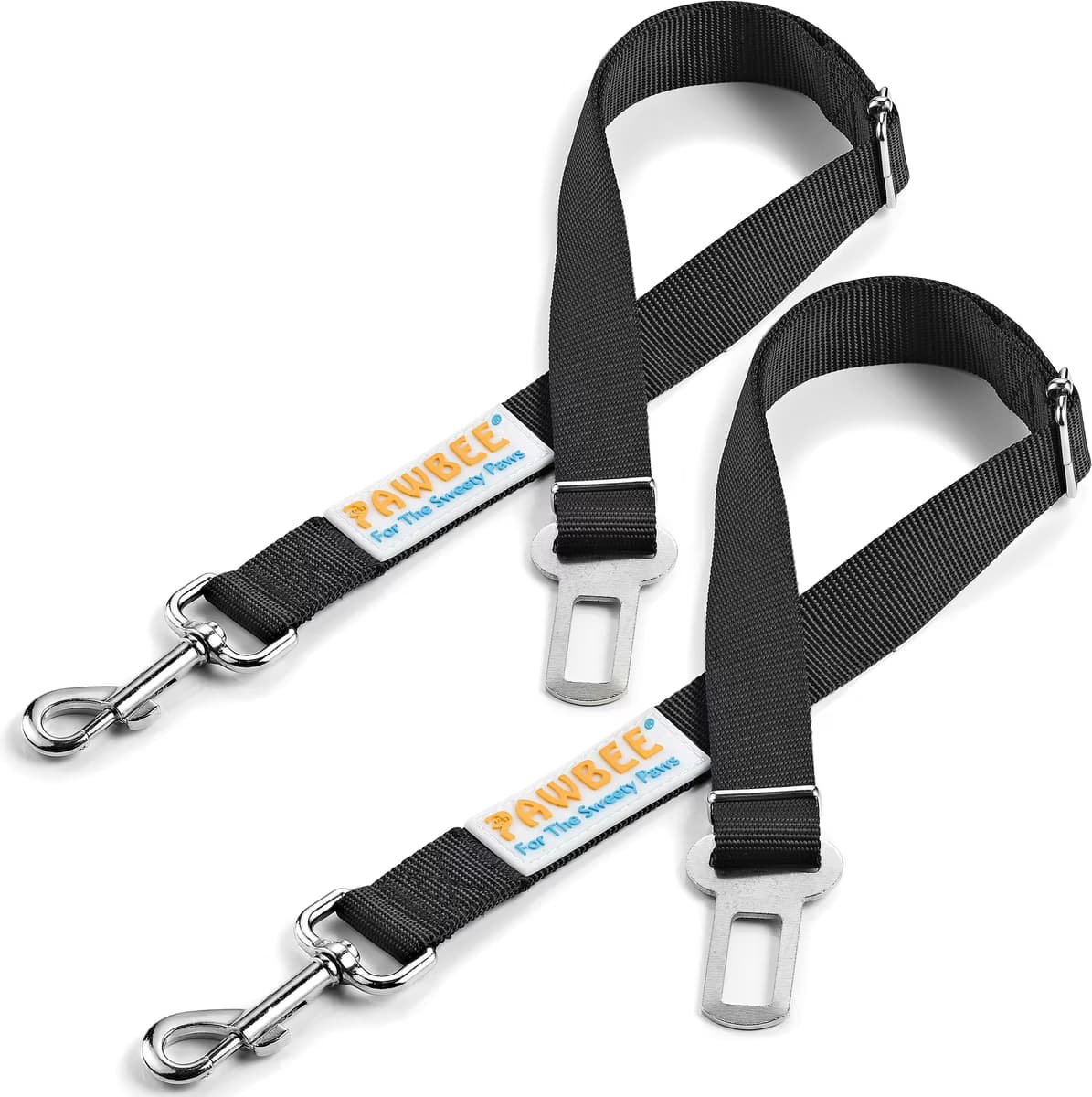
PAWBEE provides two straightforward buckle-in tethers with an 18-to-30-inch adjustment range and a 360-degree rotating clip. The wide range is helpful for different rear-seat layouts, but it also makes overextension easy. Although the retailer listing uses crash-tested language, no independently verifiable protocol or result was found, so this comparison treats it only as an ordinary movement-limiting tether and recommends harness attachment.
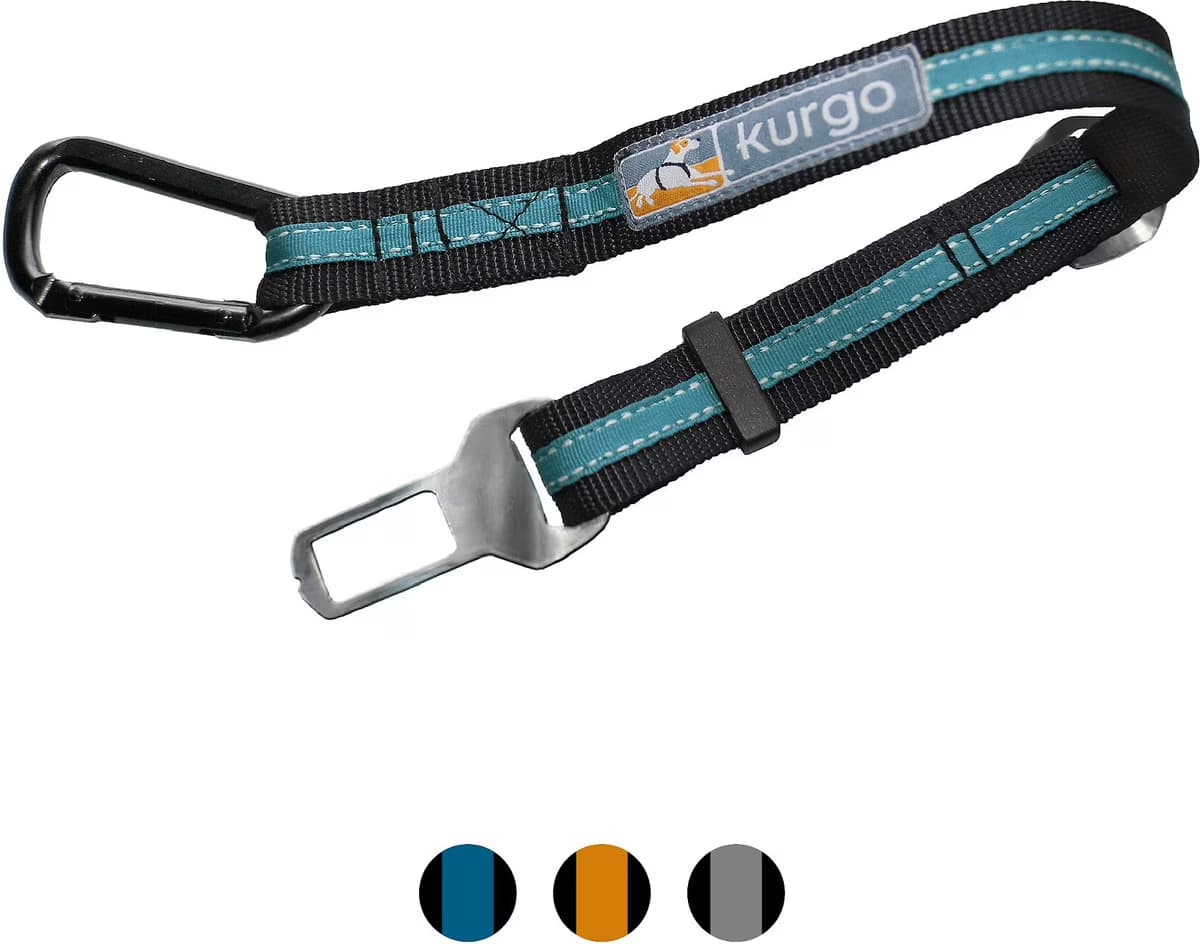
Kurgo's long-running Direct to Seatbelt model clips to a harness with a steel carabiner and inserts into the female belt receiver. Its very large review sample and simple adjustable design make it easy to understand, while clear Volvo and Ford-truck exclusions help avoid some poor fits. It ranks lower because the average public score trails several alternatives and the ordinary buckle design carries no verified crash-protection claim.
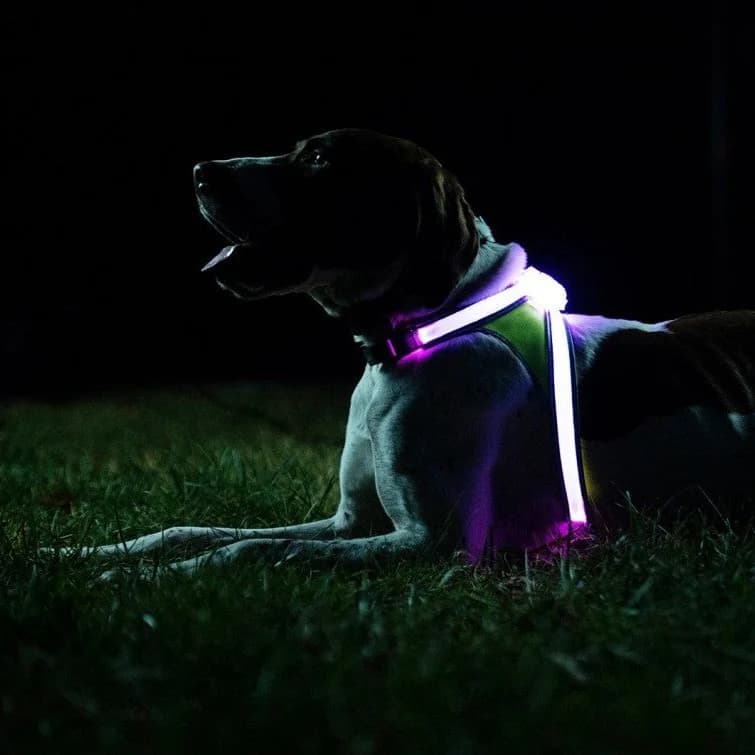
LightHound wraps the torso in illuminated fiber optics instead of relying on one forward-facing lamp. Noxgear documents six multicolor flashing modes, eight solid colors, a claimed battery life of up to 12 hours, USB-C charging, and four adjustable sizes. Its removable light unit lets the fabric base be machine washed, but the light housing is not waterproof and can be severely damaged if submerged. The broad light coverage improves noticeability only; it does not prevent traffic incidents or replace attentive handling.
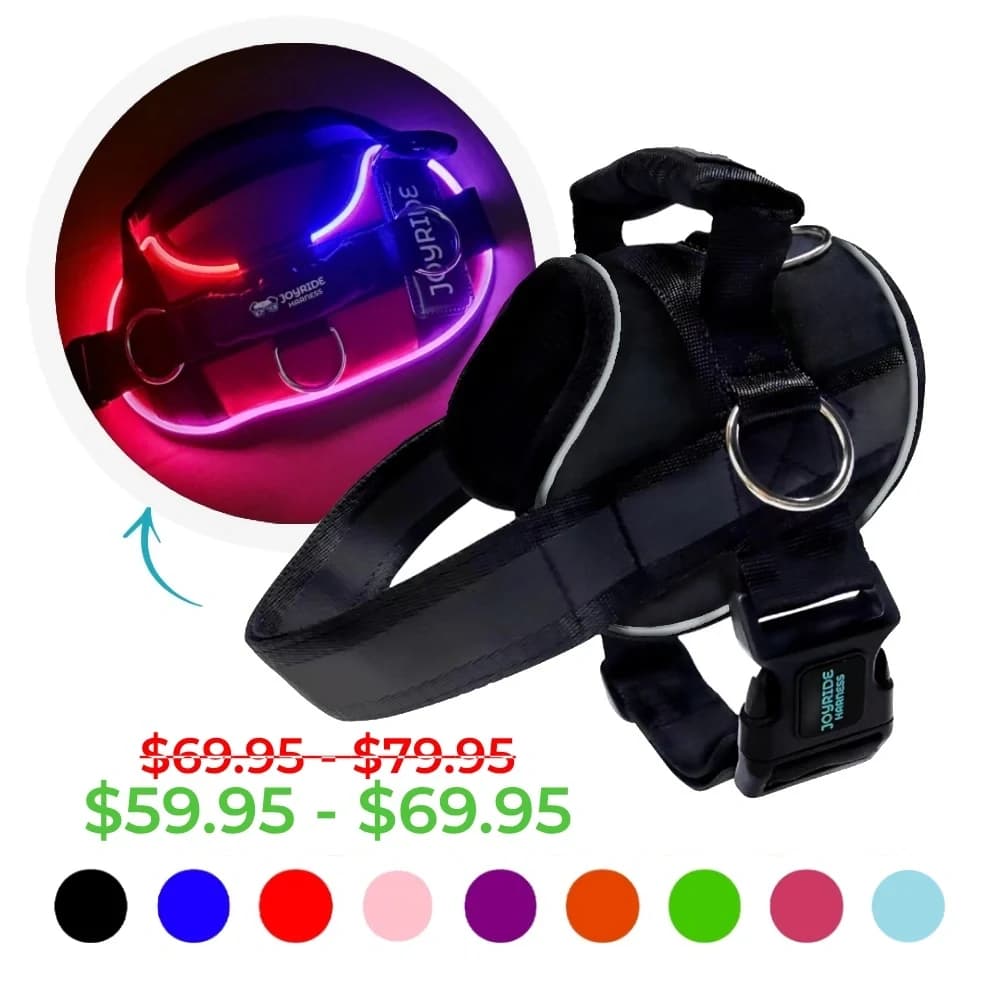
NightSafe 2.0 combines a familiar adjustable no-pull harness with built-in rechargeable LEDs and reflective material. Joyride documents three light modes, a claimed six-to-eight-hour runtime, sizes XS through XXL, and a four-to-140-pound fit range. That conventional harness format is easier to use as primary walking gear than a visibility-only vest, but published reviews include fit and battery concerns, so owners still need to measure carefully and test charging before each outing. Illumination cannot guarantee a driver or cyclist will see the dog.
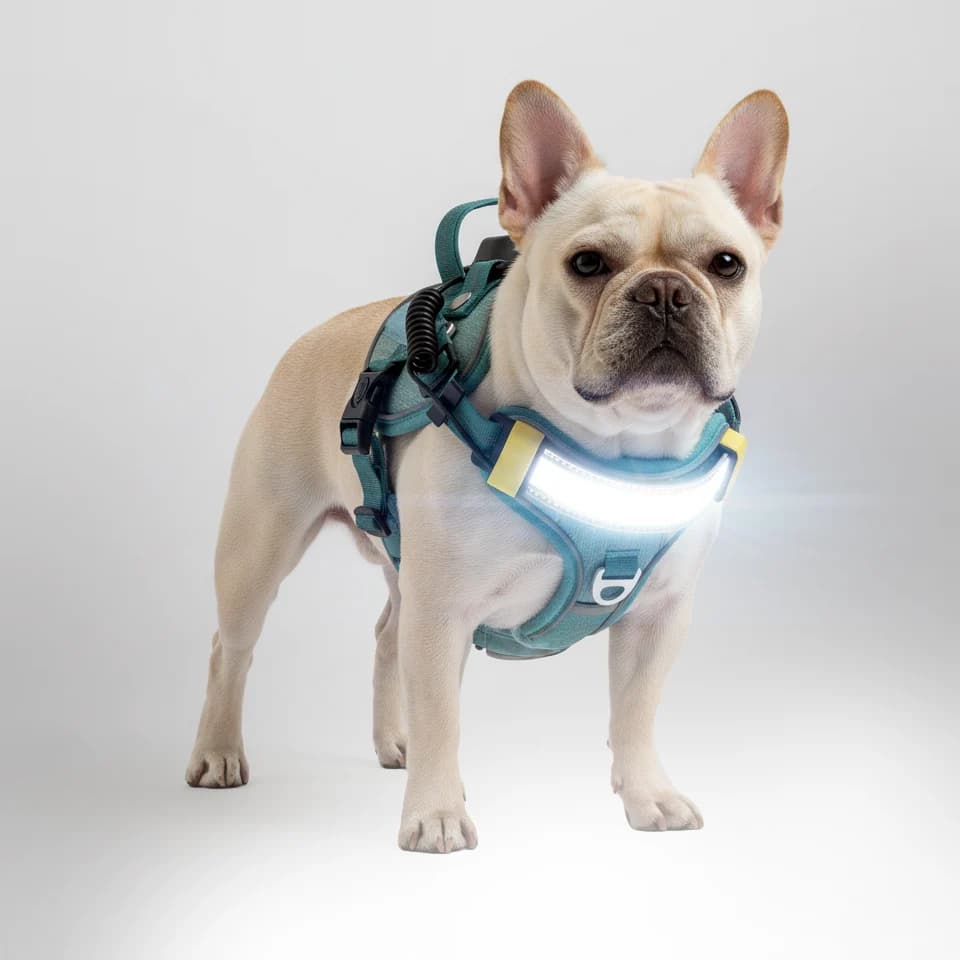
Lumi One is built around a forward-facing beam rather than 360-degree accent lighting. The manufacturer claims 1,000 lumens, illumination up to about 1,400 feet, roughly 16 hours of use, USB-C charging, and a wireless remote. The small six-review sample limits independent confidence, and the same page conflicts on care by advertising machine washability while instructing hand washing elsewhere. Treat the battery assembly as water-resistant rather than submersible, remove electronics, and follow the current label before cleaning.
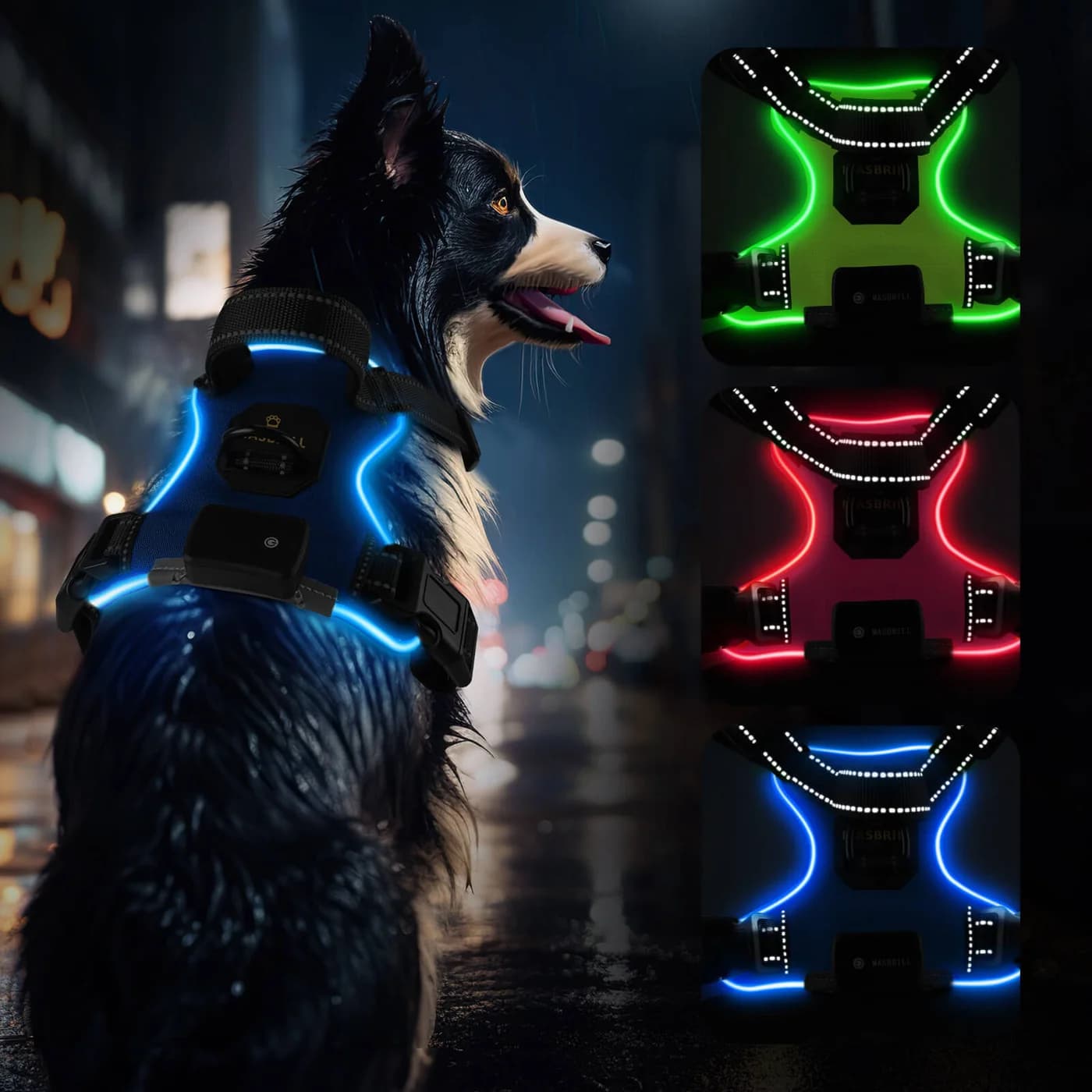
MASBRILL pairs a breathable padded harness with reflective material, front and rear D-rings, four adjustment straps, USB charging, and three light modes. The Walmart listing supplied the best combination here of low current price and a large exact-product rating sample. Availability differed between retailers: Walmart showed the exact product orderable while the official default variant was backordered. Neither source published a dependable runtime or water-resistance rating for this exact listing, so those figures should not be borrowed from similar MASBRILL products.


