Learn why a tether must connect to a properly fitted body harness rather than a collar, how to verify exact crash-test evidence, where to restrain a dog in the rear seat, how much slack to allow, and when a certified carrier is the safer alternative.
Leash Boss
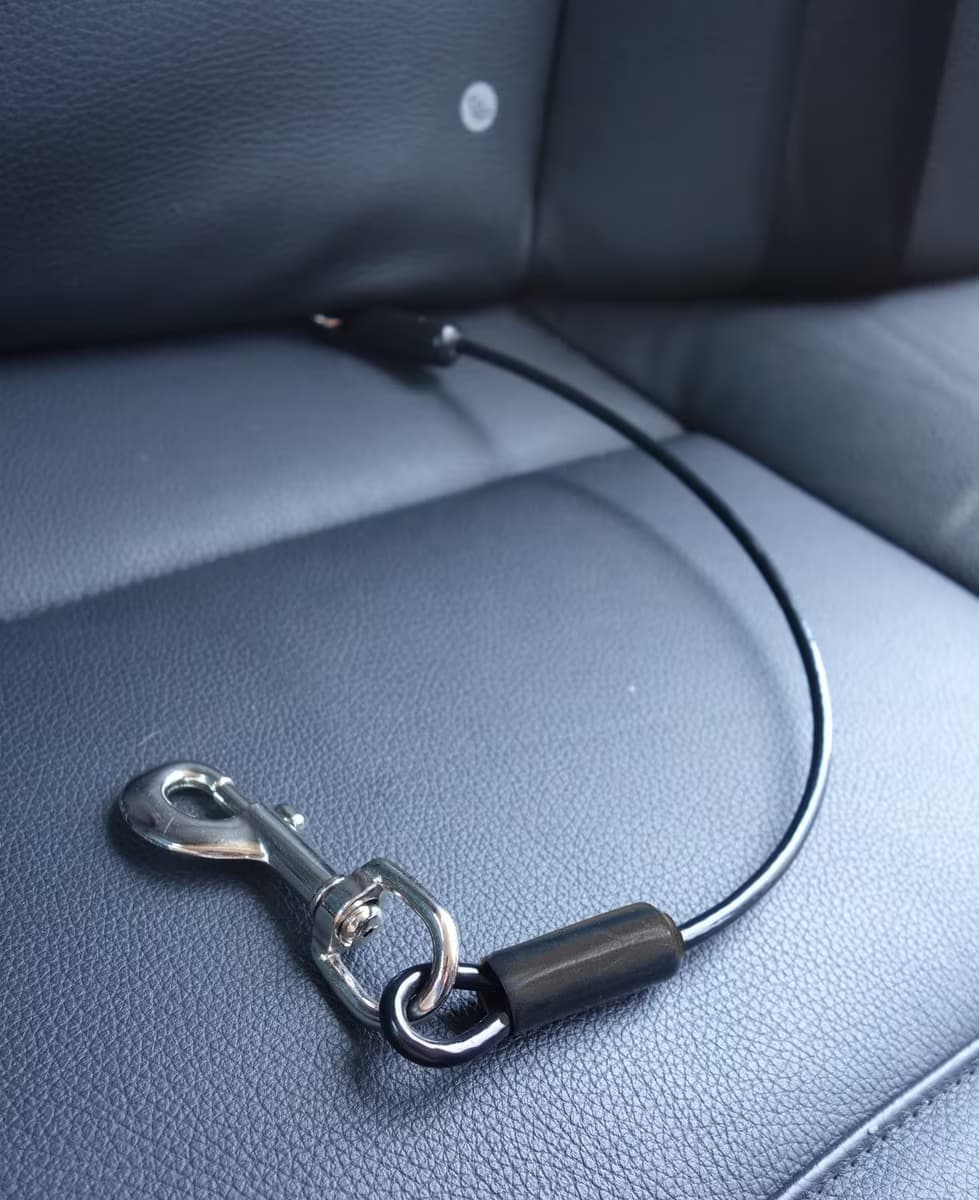
Leash Boss replaces exposed webbing with a nylon-coated steel cable and clips to a rear-seat LATCH bar, making it the strongest fit here for dogs that quickly chew ordinary fabric tethers. Multiple lengths and a simple anchor clip make setup straightforward. It still only limits movement: it has no independently verified crash-protection claim and must connect to a well-fitted harness rather than a collar.

A dog seat-belt tether can reduce roaming, keep a dog away from the driver, and make calm rear-seat travel easier to manage. Those benefits do not automatically make every tether a crash-protection device. Center for Pet Safety warns that extension tethers and zipline-style systems can increase forward excursion, permit impact with the vehicle interior, and undermine the performance claimed for a tested harness. Treat an ordinary buckle-in or anchor-mounted tether as a distraction-management tool unless the exact complete system—harness, connector, size, routing, and attachment method—has relevant documented crash evidence. Never connect a vehicle tether to a collar: a sudden stop can concentrate force on the neck and airway. The Leash Boss Heavy Duty No-Chew Car Restraint is therefore best evaluated for compatibility, reach control, hardware, and current instructions, not assumed crash protection from its cable construction or product name.
Säker
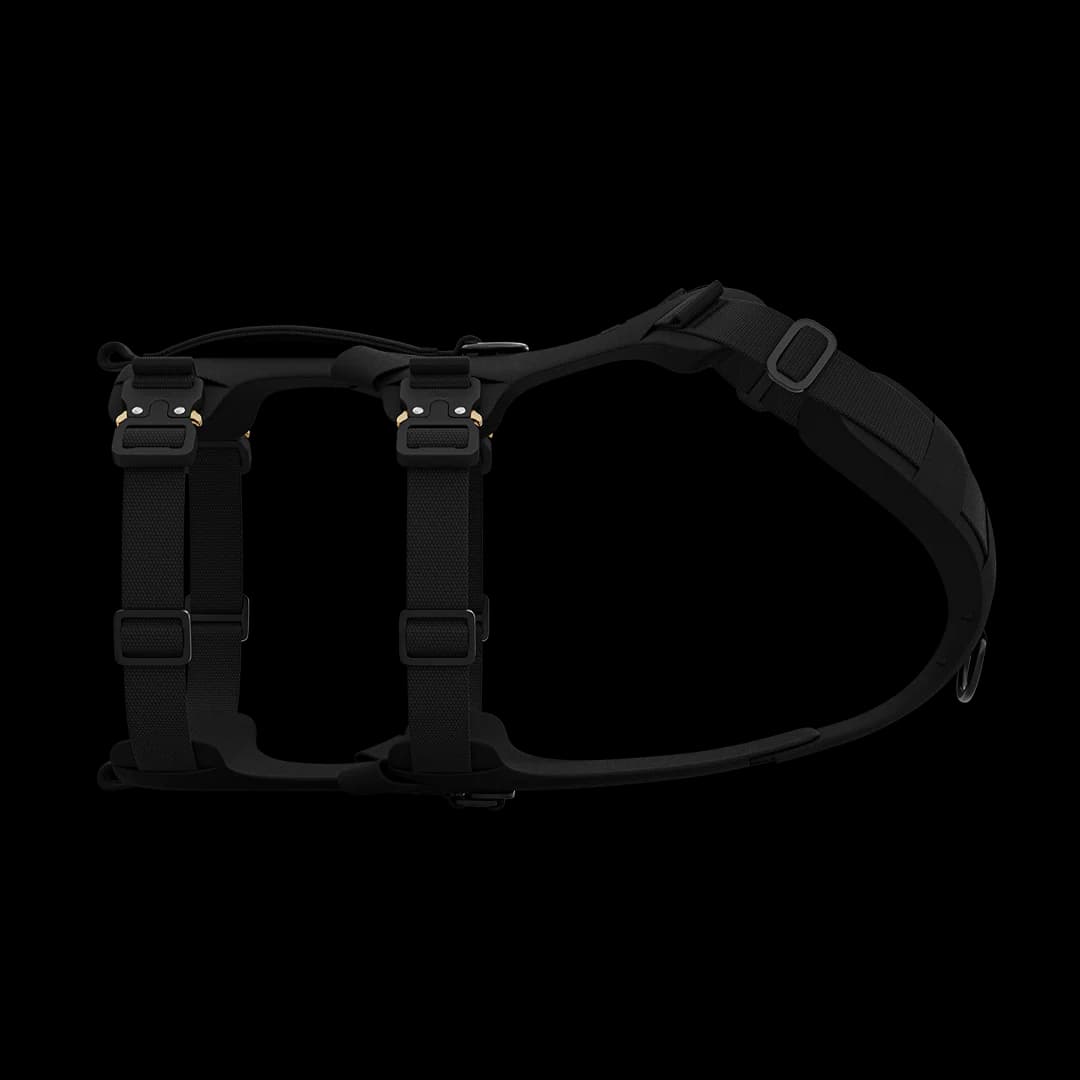
A modular trail-and-car harness that is currently listed by Center for Pet Safety as a 5-Star certified safety harness in XS through L. CPS reports a November 2022 test under protocol CPS-001-014.01 with a 75 lb test dog; that independent certification is the main reason it ranks first, not a claim that it eliminates crash risk.

Start with the current Center for Pet Safety certified-products list, then match the exact model, size range, and installation path rather than relying on the phrase “crash tested.” Independent certification, manufacturer-commissioned testing, and a marketing statement are different levels of evidence. The Säker Bomber Harness is listed by Center for Pet Safety as a certified harness in specified sizes, but that does not extend to a different Säker model, an oversized dog, an added extension strap, or an improvised anchor. Some brands mention FMVSS 213 test conditions. FMVSS 213 is a federal child-restraint standard; using parts of that procedure does not mean NHTSA or the Department of Transportation approved a pet product, and the United States has no equivalent federal approval program for dog restraints. Save the product manual and evidence page, confirm the dog falls within every published limit, and recheck both before a long trip because models and certifications can change.
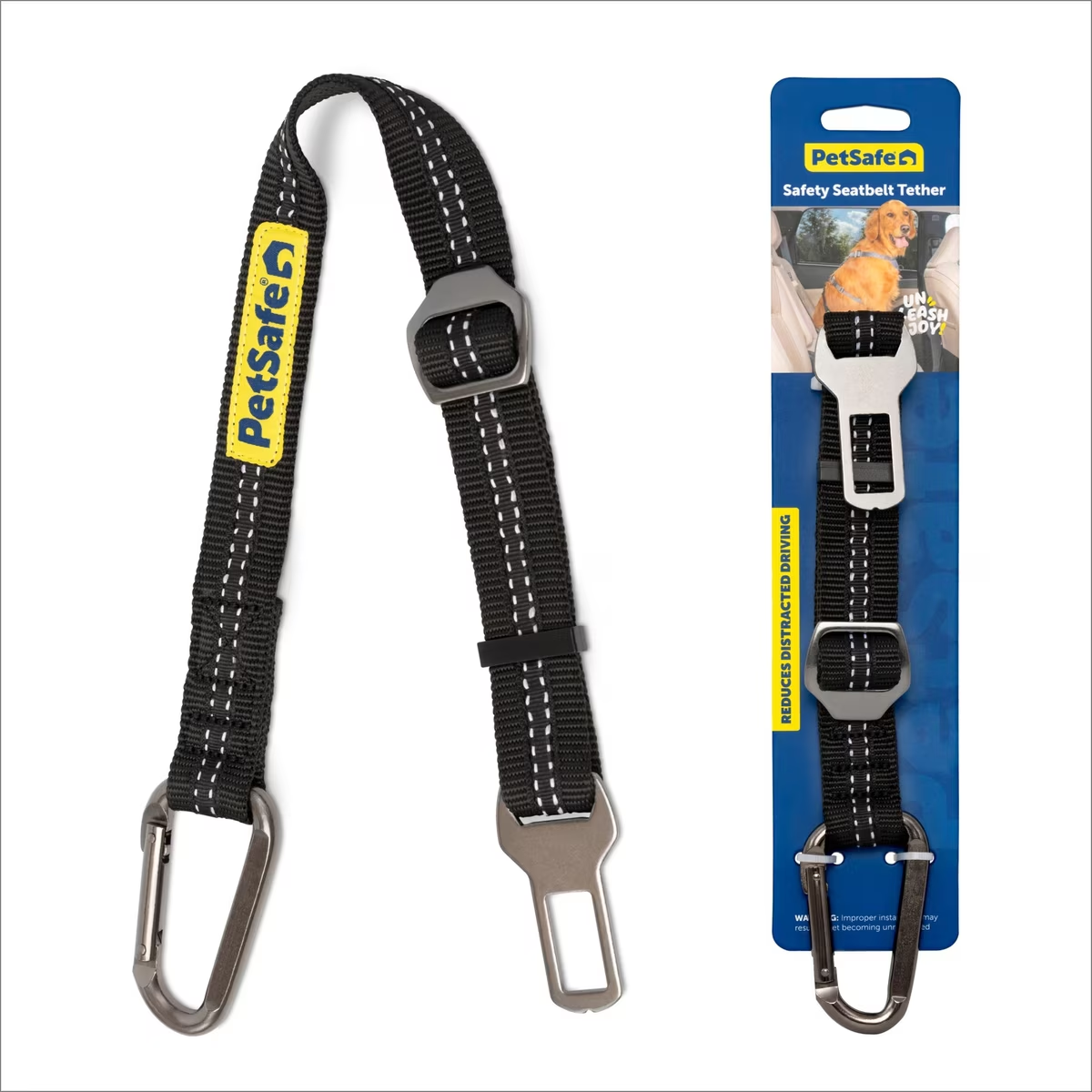
PetSafe
PetSafe offers a short 15-to-22-inch adjustable tether with a stainless carabiner and a 7/8-inch buckle tongue. Its explicit compatibility warning is useful: it does not fit Volvo vehicles and is not recommended for Ford F-series trucks. The compact range works best when the goal is keeping a dog in the back seat, but it is an anti-roaming aid rather than a verified crash restraint.
Fit the dog in a body harness before connecting any vehicle tether. Follow the harness maker’s measuring points and fit test; the chest panel and straps should sit as directed, remain flat, and allow normal breathing without letting the dog back out. Do not route a connector through a decorative loop, walking-leash ring, or handle unless the vehicle instructions identify that point. Recheck fit over seasonal coats and after weight or body-shape changes. With a PetSafe Safety Seat Belt Tether, verify the current buckle compatibility, length range, harness connection point, dog limits, and manufacturer warnings before use. Its presence in the car does not turn an untested walking harness into a crash-rated system. Remove a loose walking leash that could wrap around legs, but keep a separate leash accessible for a controlled exit. If the dog can twist the harness, chew the connector, or reach the driver during a parked fitting session, stop and revise the setup before driving.
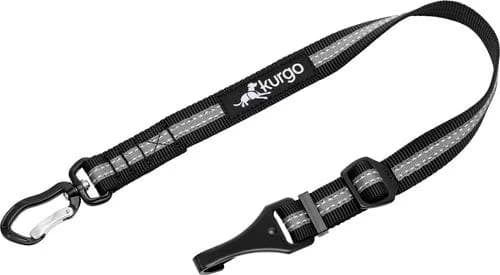
Kurgo
Kurgo's Direct to LATCH tether combines a child-seat anchor connection with a rotating joint that helps reduce twisting as a dog changes position. It is a neat choice for owners who want the buckle receiver left free and have confirmed a compatible rear-seat LATCH point. The public review sample is modest, and neither the swivel nor the anchor location makes this an independently crash-tested restraint.
The rear seat is the default location for a restrained dog. AVMA guidance advises keeping pets out of the front passenger seat, where an air bag can injure them, and keeping heads and limbs inside the vehicle. Read both the vehicle manual and the restraint manual before choosing a belt buckle, lower anchor, shoulder-belt route, or cargo-area connection. A vehicle’s child-seat LATCH hardware has defined locations and limits, but a pet accessory attaching near that hardware is not automatically government-approved or crashworthy. For the Kurgo Direct to LATCH Swivel Tether, confirm that the exact vehicle position, connector, dog weight, adjustment, and companion harness match Kurgo’s current instructions. Do not attach to a headrest post, cargo hook, seat frame, or exposed metal point merely because it feels solid. Avoid the front seat, open pickup beds, and unapproved cargo arrangements. Never combine components from different systems unless both manufacturers explicitly allow the complete configuration.
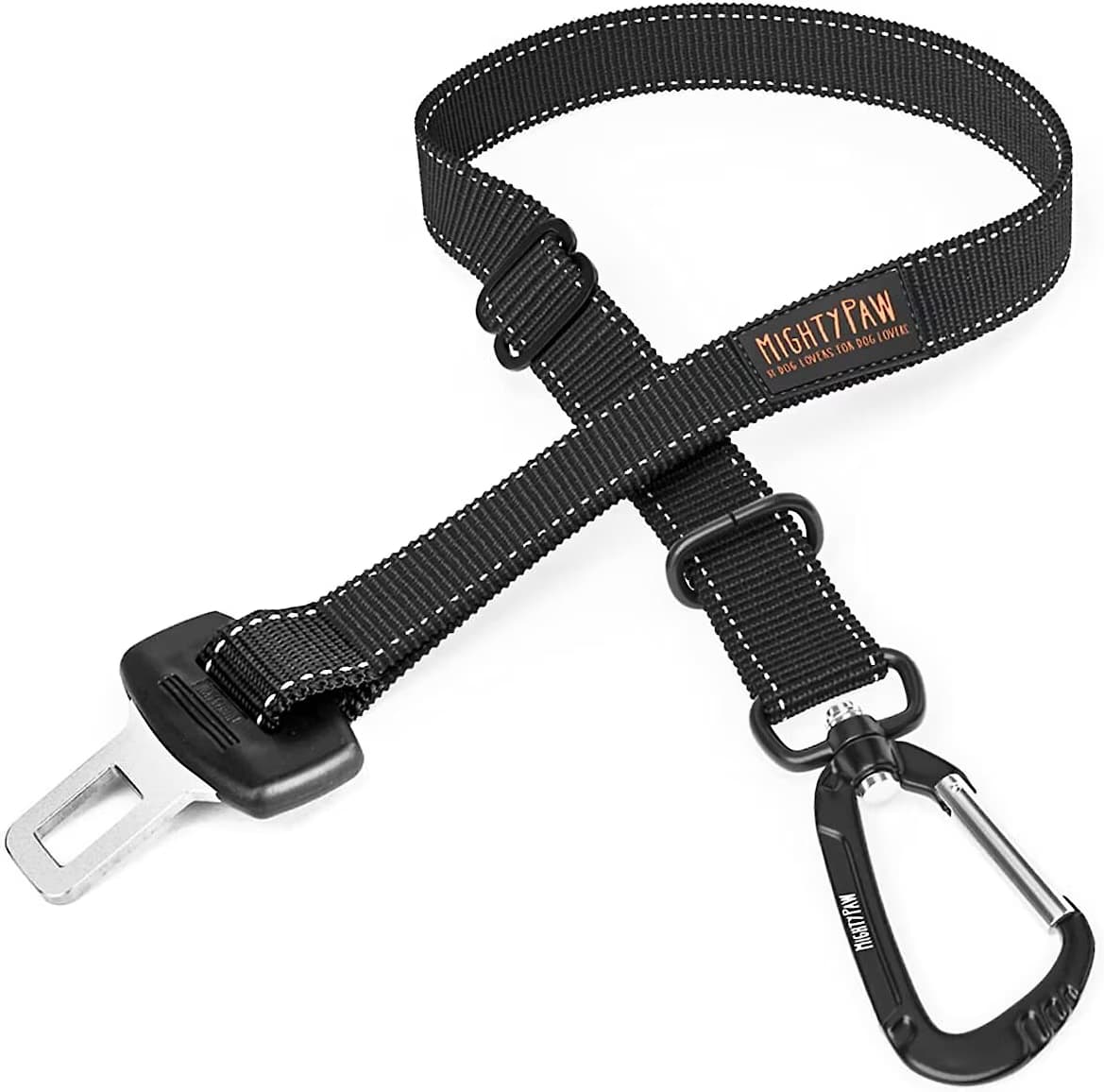
Mighty Paw
This Mighty Paw model uses a familiar human-style buckle tongue, adjusts from 16 to 26 inches, and adds a swivel at the harness end. That makes it simple to move between compatible cars without reaching for a LATCH bar. Owners still need to check the buckle dimensions and keep the clip on a harness; published hardware-strength figures are not evidence of complete crash protection.
Set the shortest length that still lets the dog sit or lie in the intended position without constant tension. The dog should not be able to climb into the front, fall into a footwell, reach an open window, or become wrapped around the tether. More slack increases the distance traveled before restraint; too little can pull the harness out of position or prevent comfortable posture. Center for Pet Safety specifically cautions against extension tethers and ziplines because extra reach can increase excursion and contact with hard interior surfaces. A Mighty Paw Nylon Dog Seat Belt Buckle can be considered for day-to-day movement control only after checking buckle compatibility, current instructions, and wear, and it should not be presented as independent crash protection without exact supporting evidence. Do not add carabiners, knots, splitters, elastic extensions, or a second tether to solve a fit problem. Choose another approved size or system instead, then test reach while parked with every door closed.
Safety depends on behavior as well as hardware. Teach the dog to wait while a rear door opens, enter on cue, stand quietly for connection, settle, and remain in place until released. Begin with the engine off, reward calm behavior, and progress to a brief drive on a familiar low-traffic route. AKC guidance recommends gradual positive exposure for dogs that are uneasy in cars rather than forcing a long trip immediately. Close windows enough to keep the dog’s head and paws inside, engage child locks where useful, and secure loose luggage that could strike the dog. Keep identification current and carry a separate leash for stops. If the dog pants heavily, drools, vomits, panics, chews the restraint, or cannot settle, return home and address motion sickness or fear with a veterinarian or qualified behavior professional. Never reach back to adjust the restraint while the vehicle is moving; stop safely first.

Sleepypod
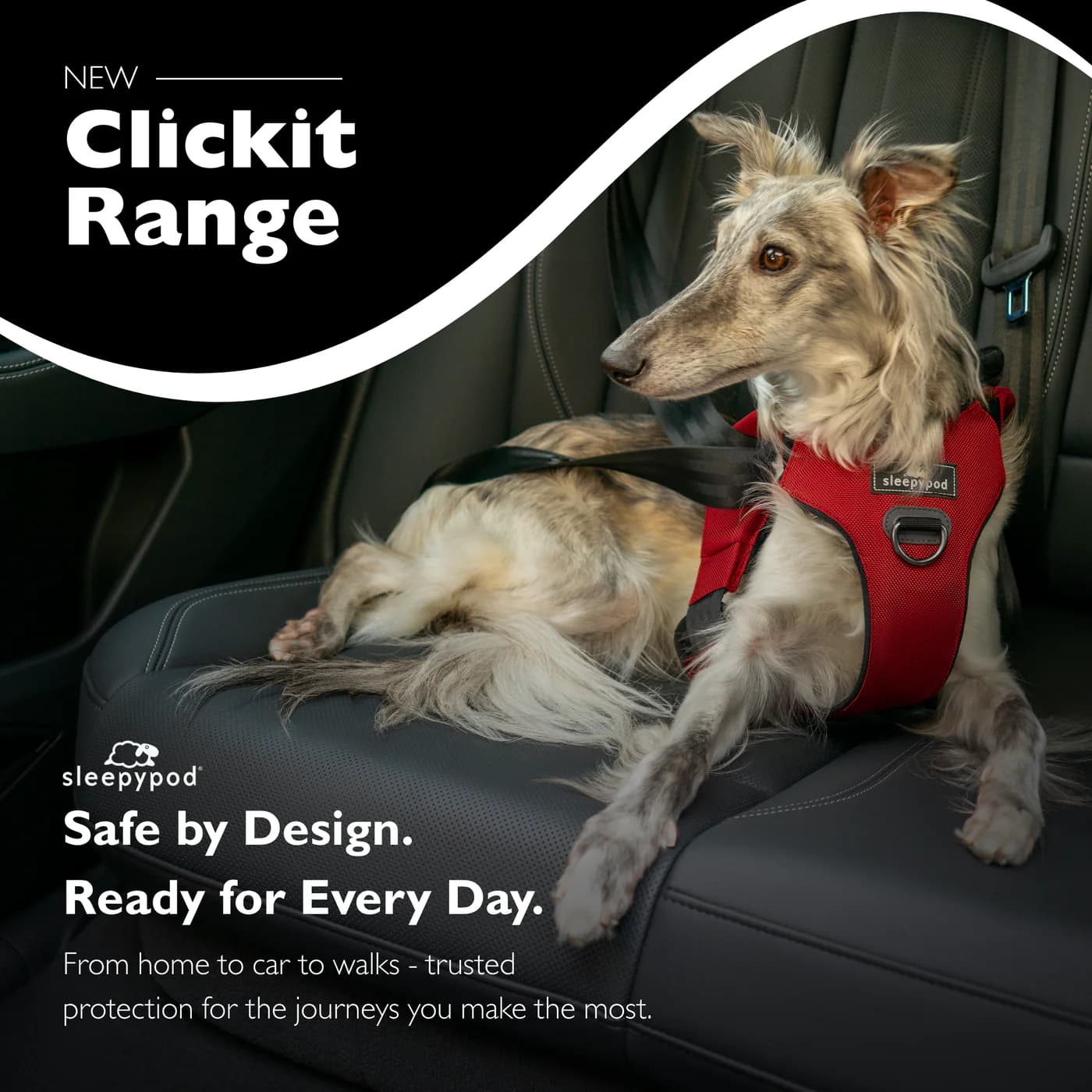
The Sleepypod Mobile Pet Bed combines a familiar bed, zip-up carrier, and seat-belt-routed vehicle restraint for pets up to 15 lb. Its current Center for Pet Safety certification gives it the strongest independent crash-safety evidence in this comparison, but that certification applies only to this exact model, weight range, fit, and prescribed belt path.

A tether is not the best solution for every dog. Very small dogs, dogs that repeatedly escape harnesses, and animals that cannot maintain a safe restrained posture may be better served by an appropriately sized carrier with documented vehicle instructions. The Sleepypod Mobile Pet Bed is currently listed by Center for Pet Safety as a certified carrier for pets within its stated weight limit, but the certification applies only to that exact model, size, closure, belt path, and installation. A soft carrier placed loosely on a seat or held on a passenger’s lap is not equivalent. Acclimate the dog to the carrier at home, confirm that the pet can assume the positions allowed by the manufacturer, close every required panel, and route the vehicle belt exactly as shown. For a dog outside the carrier’s limits, choose another evidence-backed system rather than squeezing the dog into a small enclosure. Ask a veterinarian about transport after surgery, injury, or breathing problems.
Before every departure, inspect webbing, stitching, buckles, swivels, carabiners, chest panels, and vehicle connection points. Look for cuts, stretched seams, corrosion, deformation, chewing, contamination, or a latch that no longer closes positively. Confirm the harness fit, approved route, dog limit, tether length, rear-seat position, closed windows, child locks, and secured cargo. Replace parts only with components authorized for that exact system. After a collision or severe hard stop, stop using the restraint until the manufacturer’s replacement guidance has been followed; damage can be hidden even when the hardware looks normal. Check the dog for pain, breathing changes, weakness, limping, or unusual behavior and obtain veterinary care promptly when an impact may have occurred. Keep the manual, purchase record, model and size details, and photographs of the installed setup. Revisit certification pages and instructions periodically. No restraint can guarantee survival or prevent every injury, but evidence-based selection, correct rear-seat installation, calm training, and routine inspection can reduce avoidable risk.
We used these primary or authoritative references when checking this guide. Product instructions and local rules can change, so confirm details that affect your trip.
Yes. It explains the main decision points in plain language and links to relevant product reviews when published options are available.
No. Prices, coupons, stock, and shipping terms can change. Confirm the current offer on the retailer page before checkout.
Related content