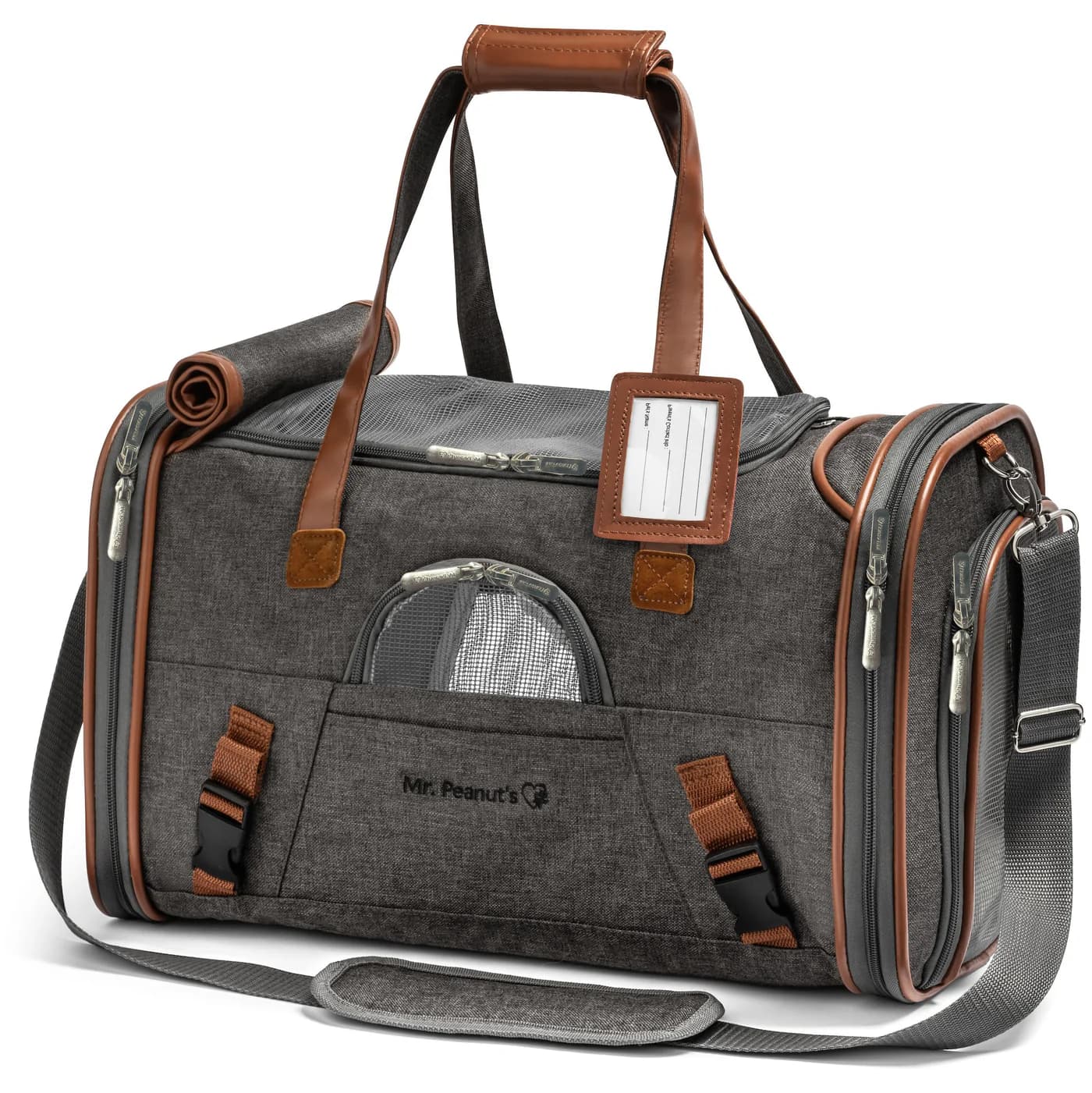
A frameless 18 x 11.5 x 11.5-inch carrier that the maker says can flex to 8.5 inches high, with ventilation on five sides, self-locking zippers, warm and cool pad options, and a strap that converts to a leash. The published recommendation is up to 25 lb, but the stated best fit is a pet under roughly 17 inches long while lying down; dimensions and comfortable posture matter more than the generous weight ceiling.
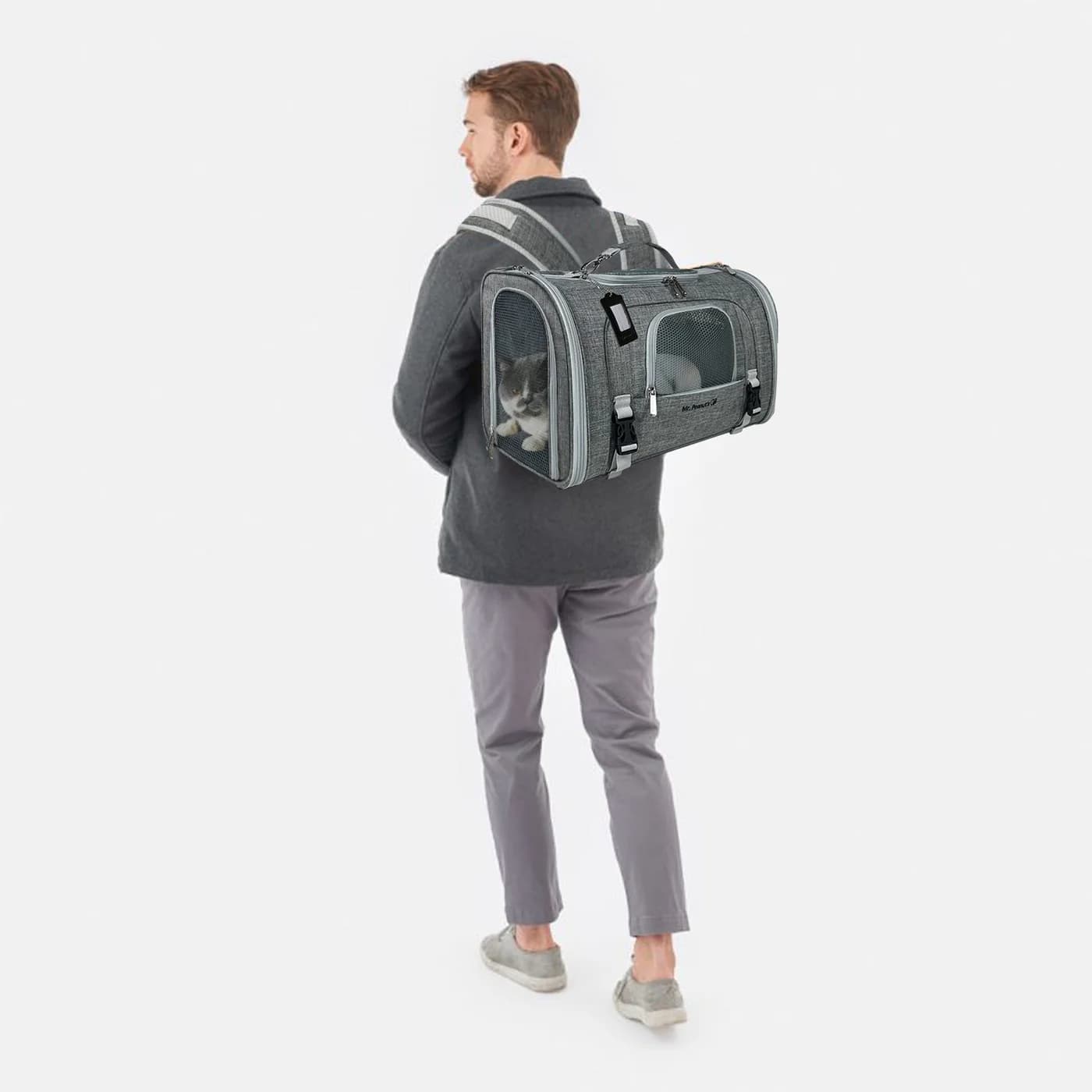
A horizontal-layout backpack designed so a cat or small dog can lie lengthwise instead of sitting in a tall vertical compartment. Medium is 18.9 x 9 x 11.4 inches upright, recommended to about 16 lb; Large is 19.7 x 9.8 x 12.6 inches, recommended to about 24 lb. Four mesh sides, self-locking zippers, thermal padding, chest strap, storage, laptop sleeve, seat-belt points, and leak-resistant materials make it travel-friendly, though the long shape is less agile on steep trails.
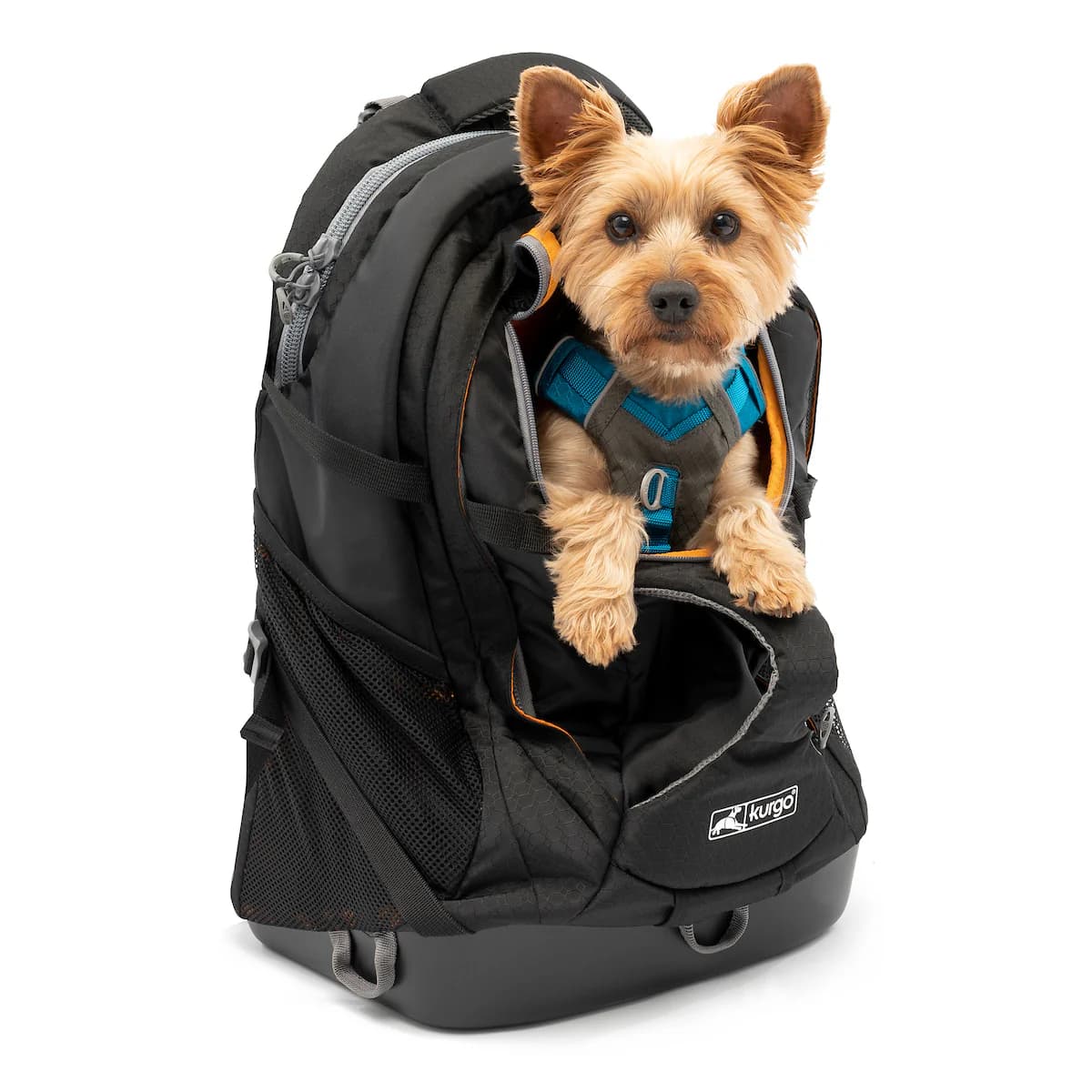
8 Best Dog Carrier Backpacks
Eight dog carrier backpacks compared from official dimensions, dog-weight guidance, ventilation, support, posture, storage, and current source evidence. Measure girth, back length, height, and usable interior space rather than relying on weight alone, acclimate gradually, and never connect an internal tether to a collar.
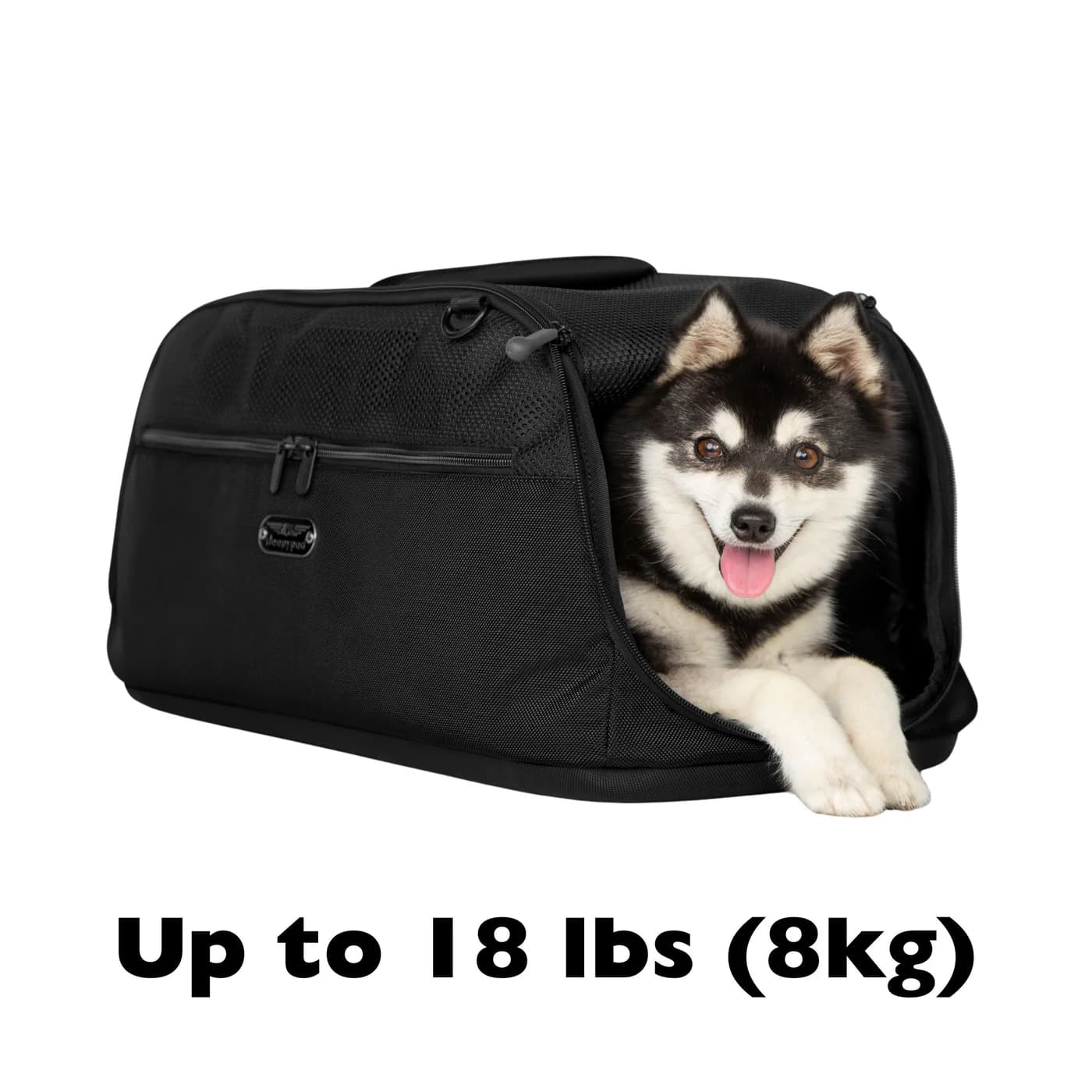
5 Best Airline-Friendly Soft Pet Carriers
Five soft-sided carriers compared for under-seat adaptability, pet fit, ventilation, closure security, carry comfort, and current buying confidence. There is no universal 'airline-approved' carrier: acceptance depends on the airline, route, cabin, aircraft, assigned seat, pet reservation, and the animal fitting comfortably inside. Confirm the exact flight with the airline before purchase and again before departure; a brand's FAA, airline-compliant, or fits-most-airlines language is not a boarding guarantee.
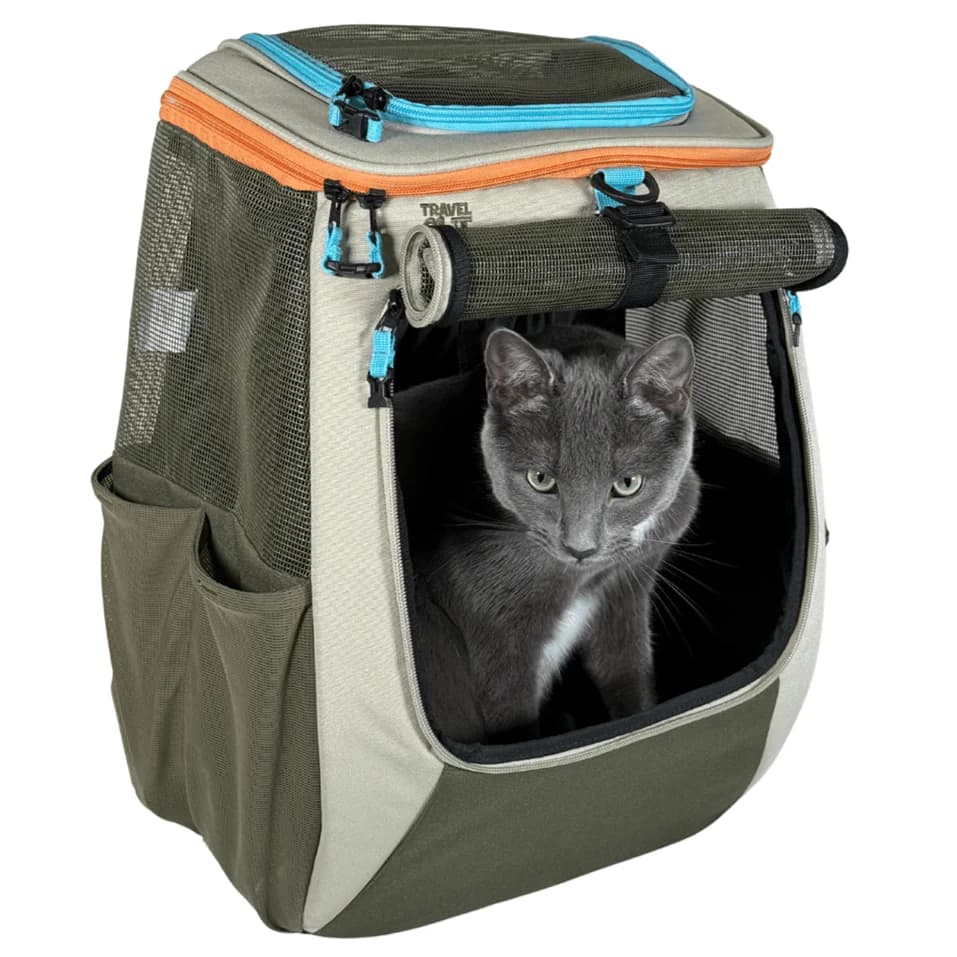
5 Best Cat Backpacks for Travel and Outdoor Trips
Five current cat-compatible backpacks compared for ventilation, structure, escape-resistant closures, harness-tether options, cat space, wearer support, trail storage, and value. A backpack is a supervised transport tool, not a place to leave a cat unattended: acclimate the cat gradually, monitor heat and breathing, keep openings secured, use any internal tether only as the maker directs and with an appropriate harness rather than relying on a neck collar, and stop if the cat shows distress. Published weight limits do not prove that a particular cat can sit, turn, and rest comfortably.
