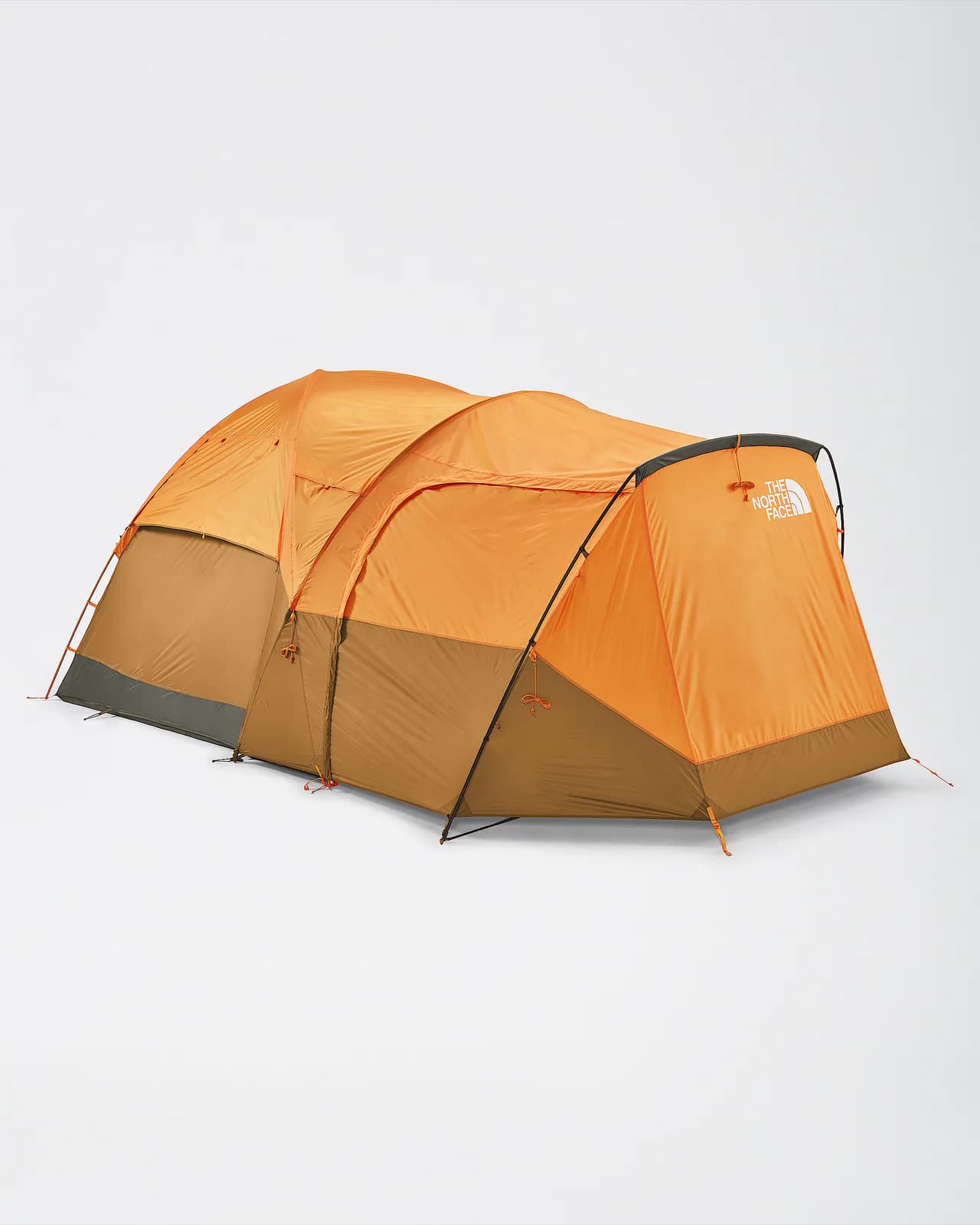
The Wawona 6 combines an 86.11-square-foot sleeping floor with a 44.7-square-foot front vestibule and a smaller rear vestibule. The covered front space is useful for wet towels, leashes, shoes, and supervised transition time before a dog enters the sleeping area. The hybrid double-wall design, DAC MX poles, color-coded setup, and substantial review sample are strengths, but the 19-pound-plus weight, large campsite footprint, and partial hybrid-wall coverage keep it behind the more purpose-specific top choices.
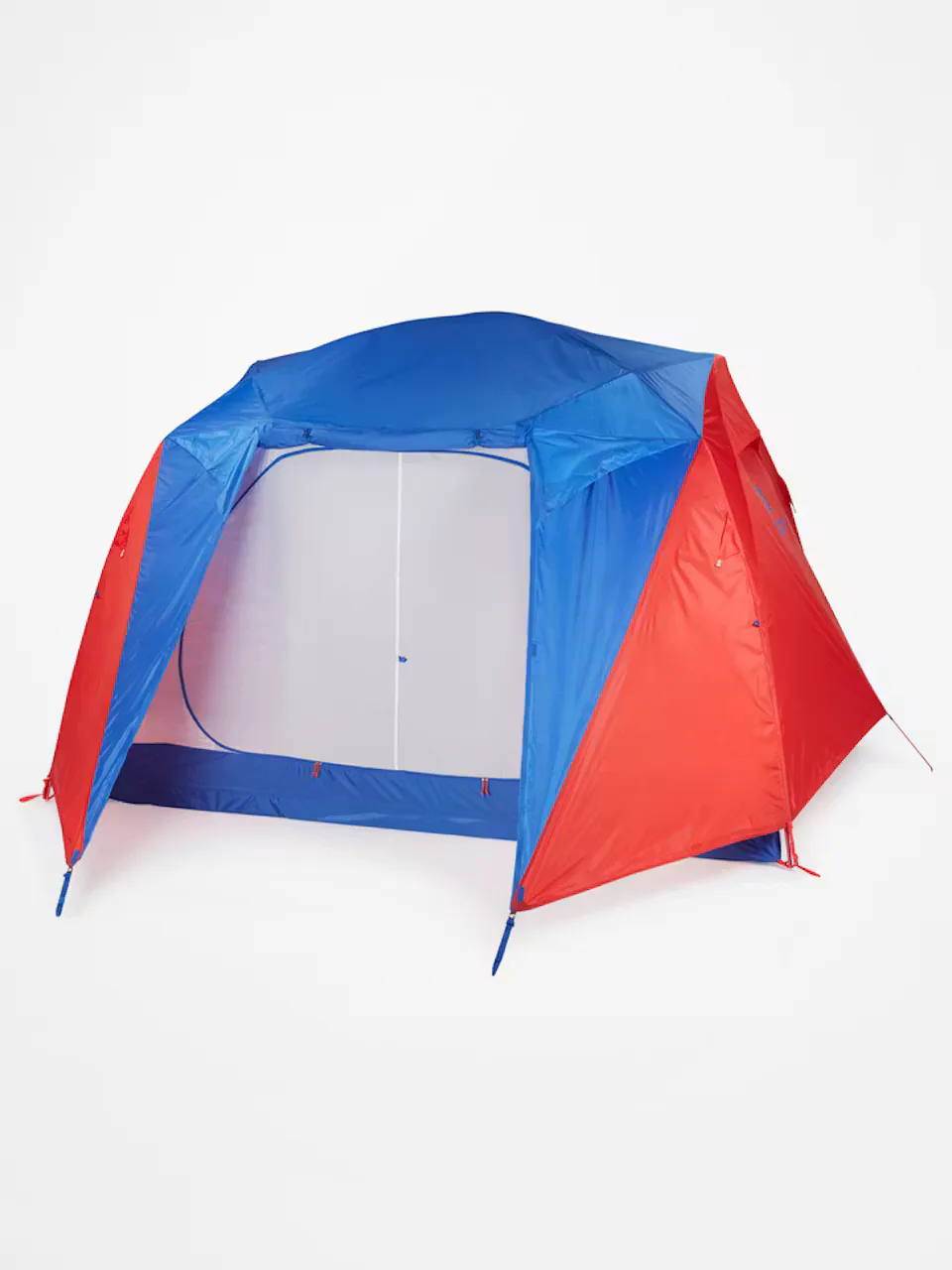
The Limestone 6 offers an 82.9-square-foot floor, 76-inch peak height, two doors, and two vestibules, so people and a dog do not have to share one congested entry. Pre-bent poles create steeper walls and the full-coverage seam-taped fly provides three-season protection. The verified 30% official discount improves value, but review evidence for this current version is absent, it still weighs about 17 pounds, and the smaller floor area plus limited current evidence place it tenth.
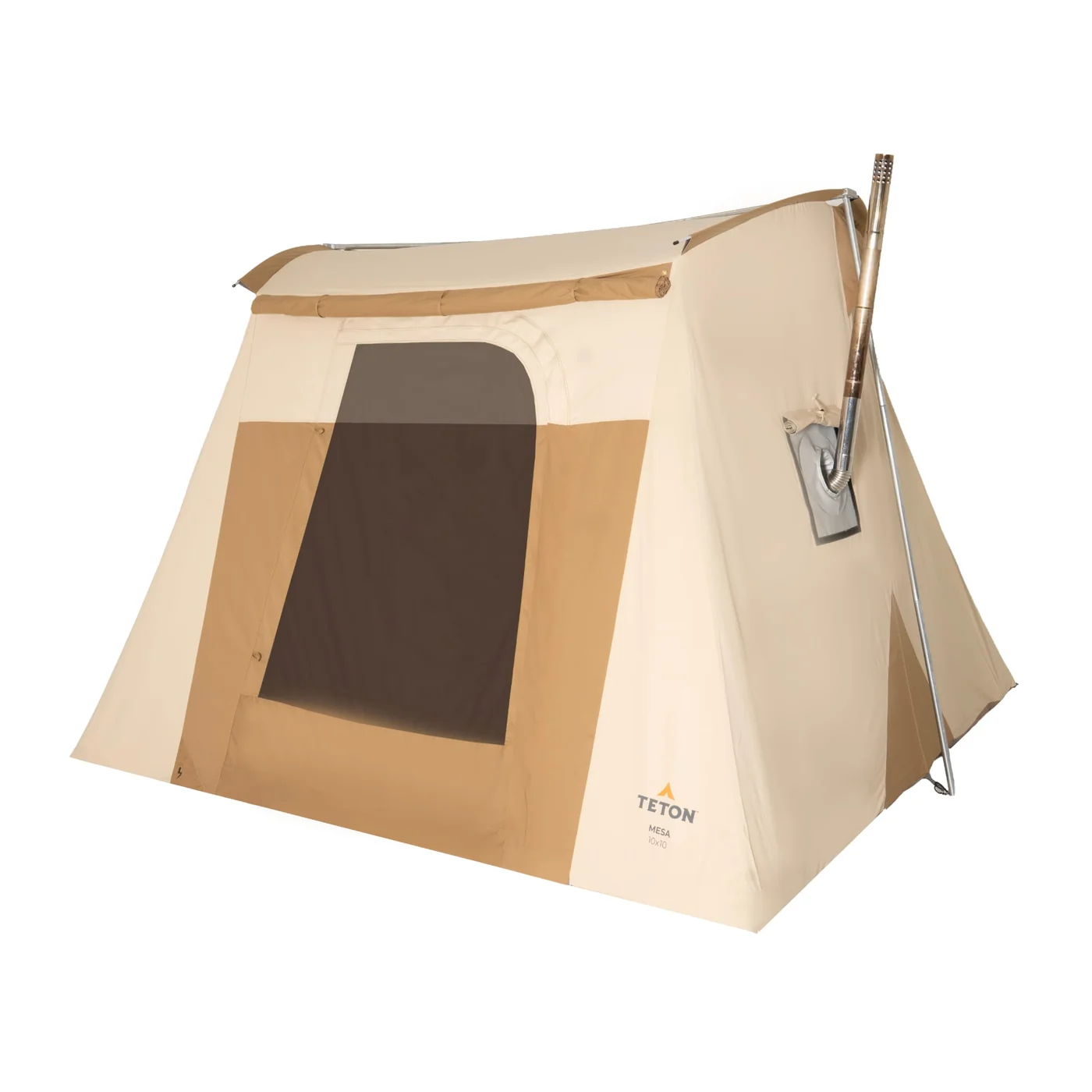
The Mesa 10 provides a 100-square-foot square floor, two extra-wide doors, a heavy PVC floor, and an integrated stove jack in a four-season cotton-canvas shelter. Those features suit a fixed cold-weather base camp where a dog needs easy entry and a durable barrier from wet ground. At 67.24 pounds packed, it is strictly a vehicle-supported choice, and stove use adds fire, ventilation, hot-surface, and carbon-monoxide hazards that require the stove maker's clearances and active adult supervision.
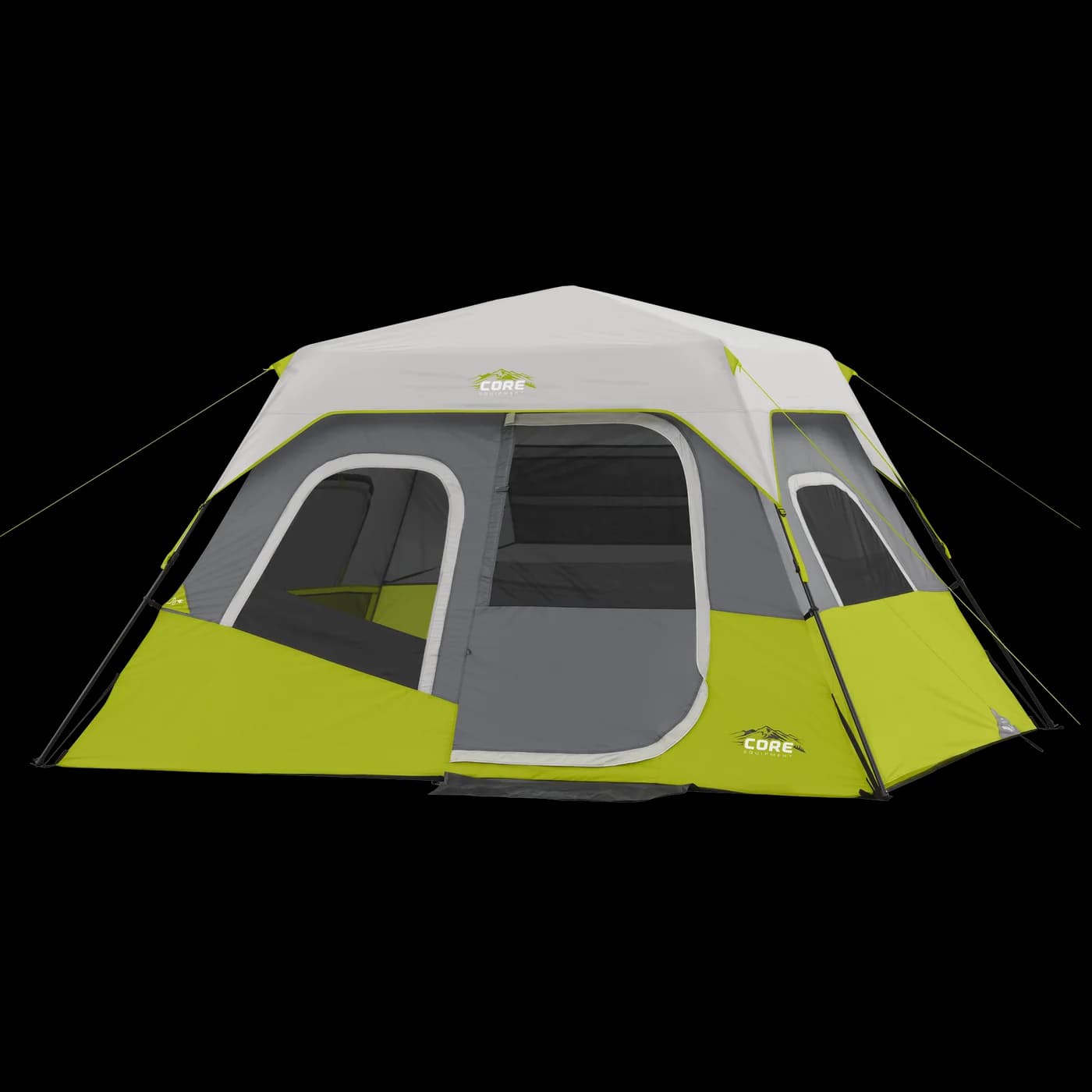
CORE's preattached frame is designed to unfold in about 60 seconds with two people, reducing the time a dog must wait while camp is set up. The 11-by-9-foot floor, 72-inch height, ground vents, and mesh ceiling provide a roomy, ventilated cabin for car camping. Its 23-pound weight, single door, fiberglass awning poles, and comfort guidance of roughly three people plus gear make it less versatile than the higher-ranked tents, but the verified retailer discount and substantial review sample add value.
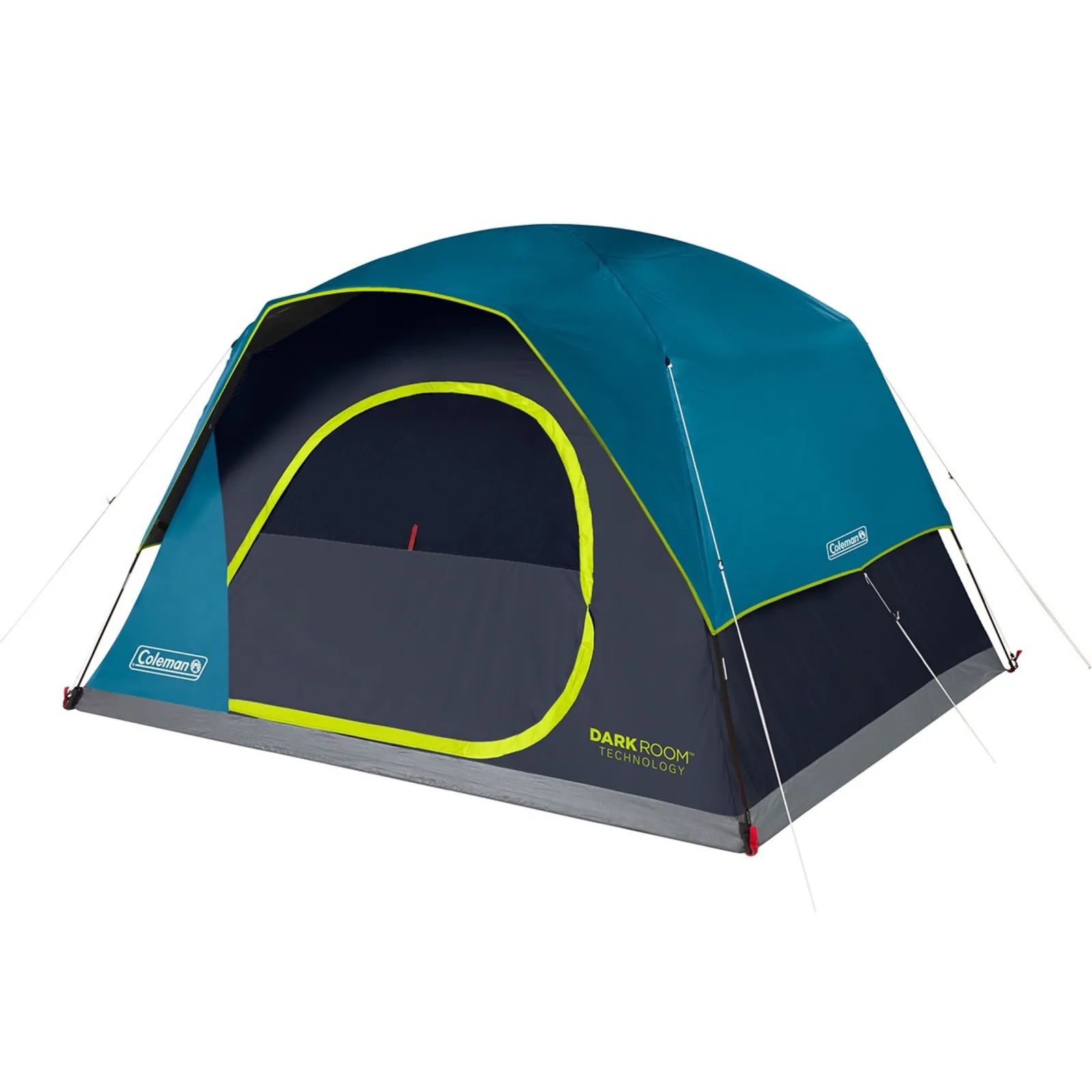
Coleman's Skydome uses preattached poles for a stated setup time under five minutes, near-vertical walls for extra headroom, and Dark Room fabric that the brand says blocks 90% of sunlight and reduces heat versus comparable Coleman tents. That can help people and dogs settle during bright summer mornings, but it is not a guarantee of a safe interior temperature. The single door, lack of vestibule, 18-pound weight, and mixed 3.9-star review signal keep it below the more flexible cabin and vestibule designs.
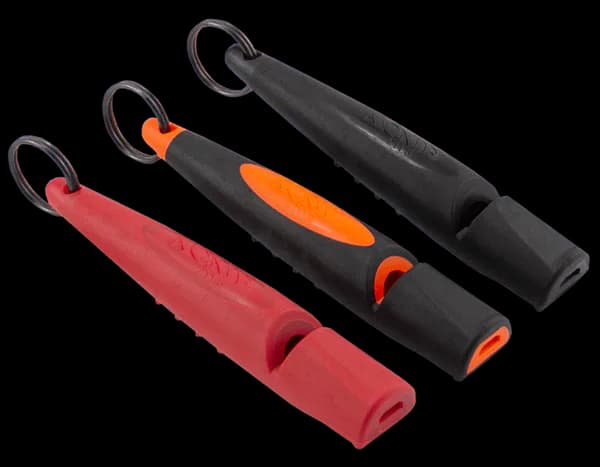
The Alpha 211.5A combines ACME's standardized 211.5 fixed pitch with a pealess chamber, an approximately 3-inch body, and a rubberized knobby grip. A fixed tone is easier for multiple handlers to reproduce than an adjustable whistle, and the retailer review sample is the strongest in the top five. It costs more than a basic plastic whistle, only Red was immediately orderable when checked, and it still needs gradual reward-based conditioning before it can function as a recall cue.
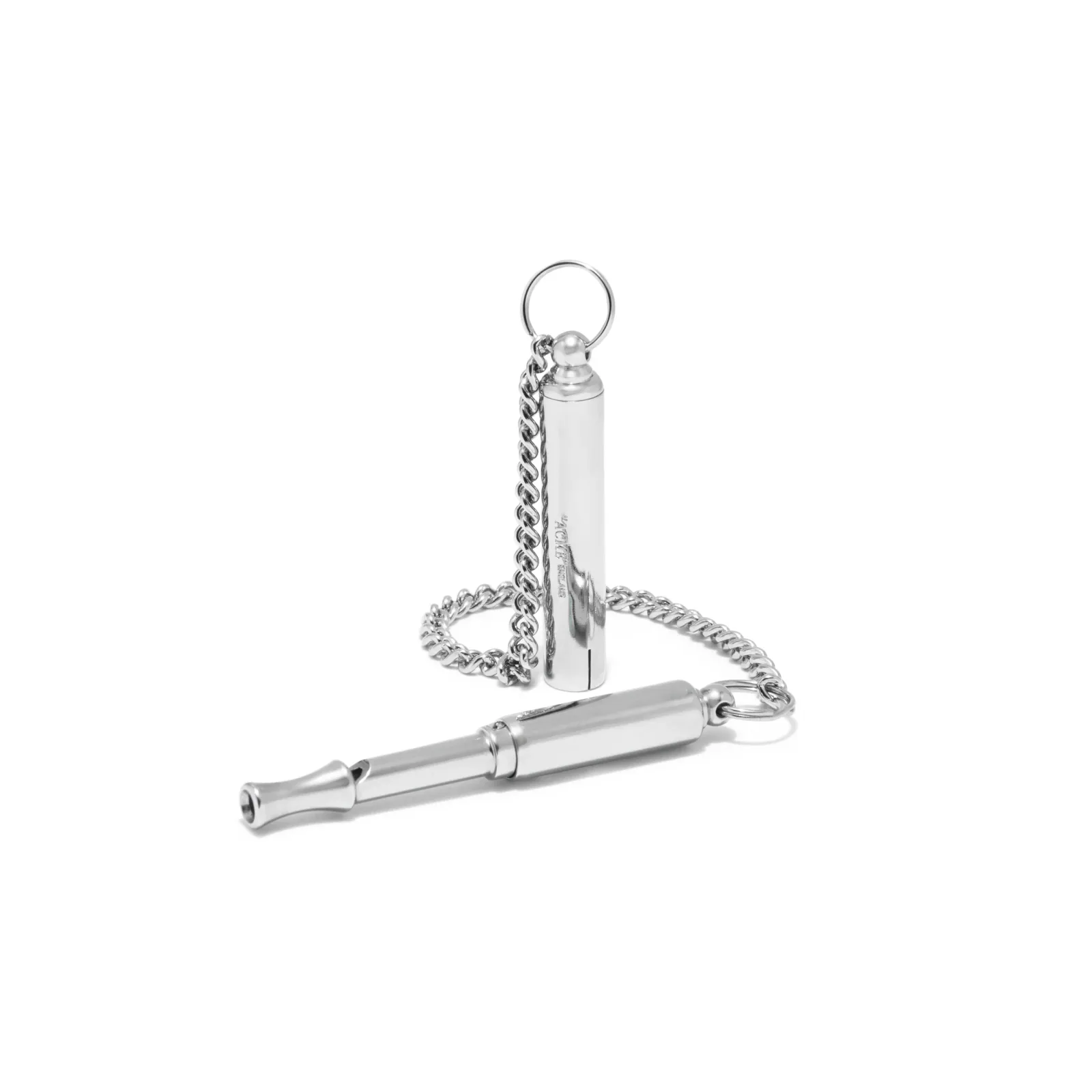
The ACME 535 uses a solid-brass body with nickel plating, an adjustable 5,400-12,800 Hz range, a locking nut, protective cap, and chain. It is the most substantial adjustable design in this group and lets a handler preserve a selected tone after setup. The whistle is not literally silent to every person or dog, weighs more and costs more than plastic options, and the differing retailer ratings make it important to expect a learning curve rather than instant results.
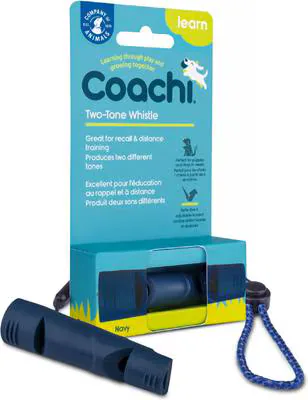
Coachi's Two-Tone provides two fixed ends in the documented 3,300-4,200 Hz range, allowing a trainer to condition separate cues or distinguish work with two dogs. It is rated at 100 dB, includes an adjustable reflective lanyard, and is described as dishwasher-proof. Two signals require more careful training than one, the pitch is not adjustable, and both tones remain audible to people.
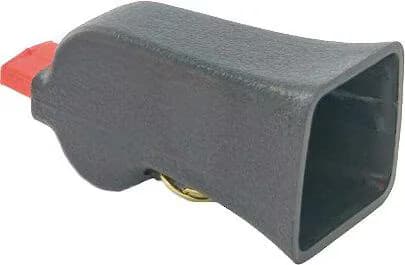
The Roy Gonia Mega uses a pea chamber and a flared body intended to project sound forward rather than back toward the handler. Its listed dimensions are 79.38 by 43.18 by 48.64 mm, making it larger than slim tube whistles, and Chewy showed a small current discount. The larger body needs more storage and breath, while a pea can be less predictable when moisture or severe cold affects movement.
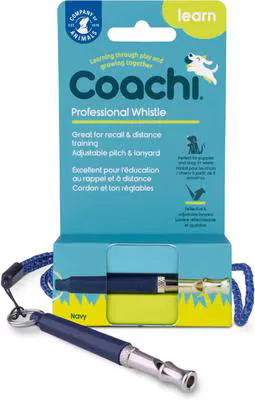
The Coachi Professional offers an adjustable 5,500-8,500 Hz pitch range, a locking adjustment, a lightweight body, and an adjustable reflective lanyard at a low entry price. Its stated output is 90 dB. The public rating is weak, feedback about adjustment and tone is mixed, and the setting must be tightened correctly before relying on it as a consistent conditioned cue.
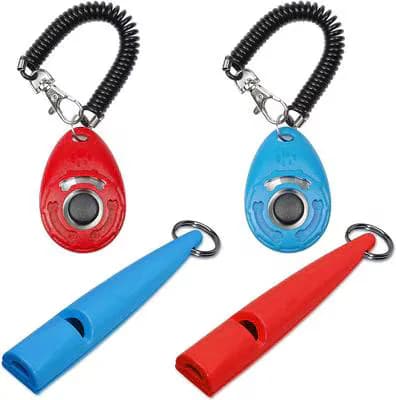
PetSpy packages an audible whistle and a clicker so a handler can condition one sound as a recall cue and the other as a precise reward marker. Both pieces are lightweight and can be carried in a pocket, on keys, or with training gear. This is not a single-purpose premium whistle, each sound must be trained separately, and the small review sample includes concerns about clicker durability.
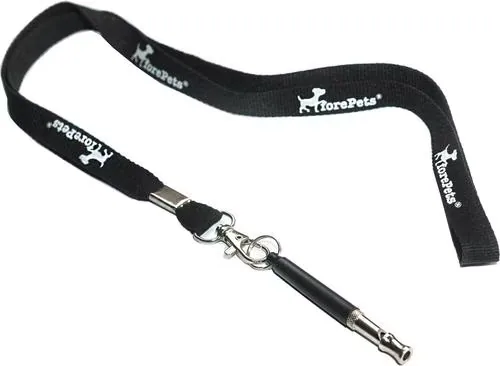
The forePets WhistCall provides adjustable pitch, a locking nut, protective cap, and lanyard, while Chewy displayed the largest verified discount in this group. Its 212-rating sample is also substantial, but the 2.9/5 average and repeated adjustment complaints are important limitations. Despite the product name and marketing, this whistle cannot be represented as an automatic bark-control or obedience solution; it only becomes a cue through consistent reward-based training.

Dog Hiking Gear Checklist: What to Pack for a Day Hike


