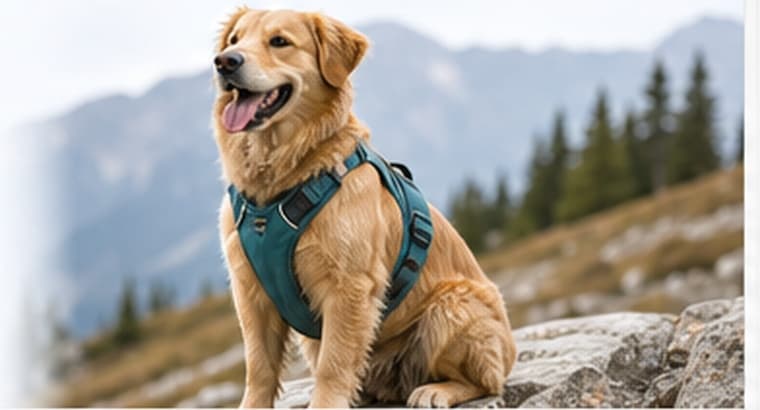
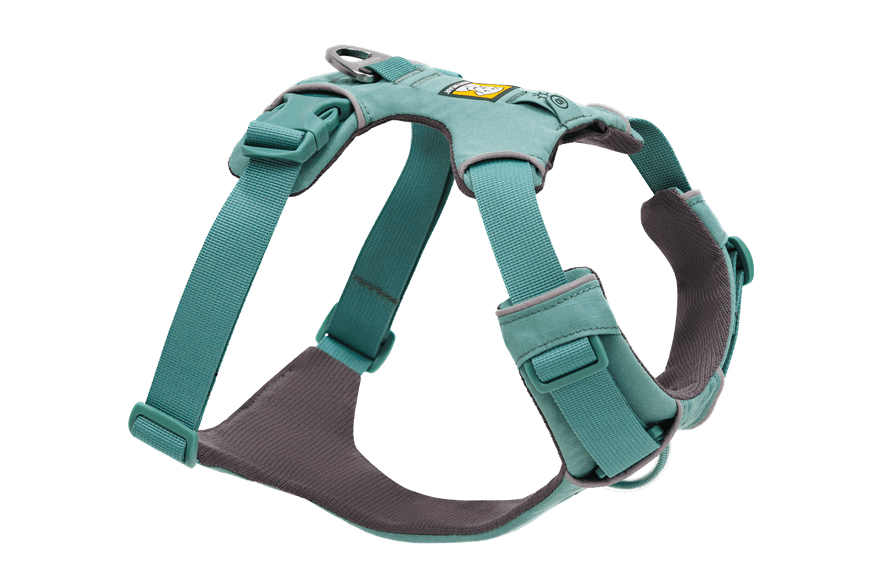
Compare shock-absorbing, multi-handle, hands-free bungee, locking, pulling-sport, convertible, and rope leash designs without treating equipment as a substitute for reward-based loose-lead training.
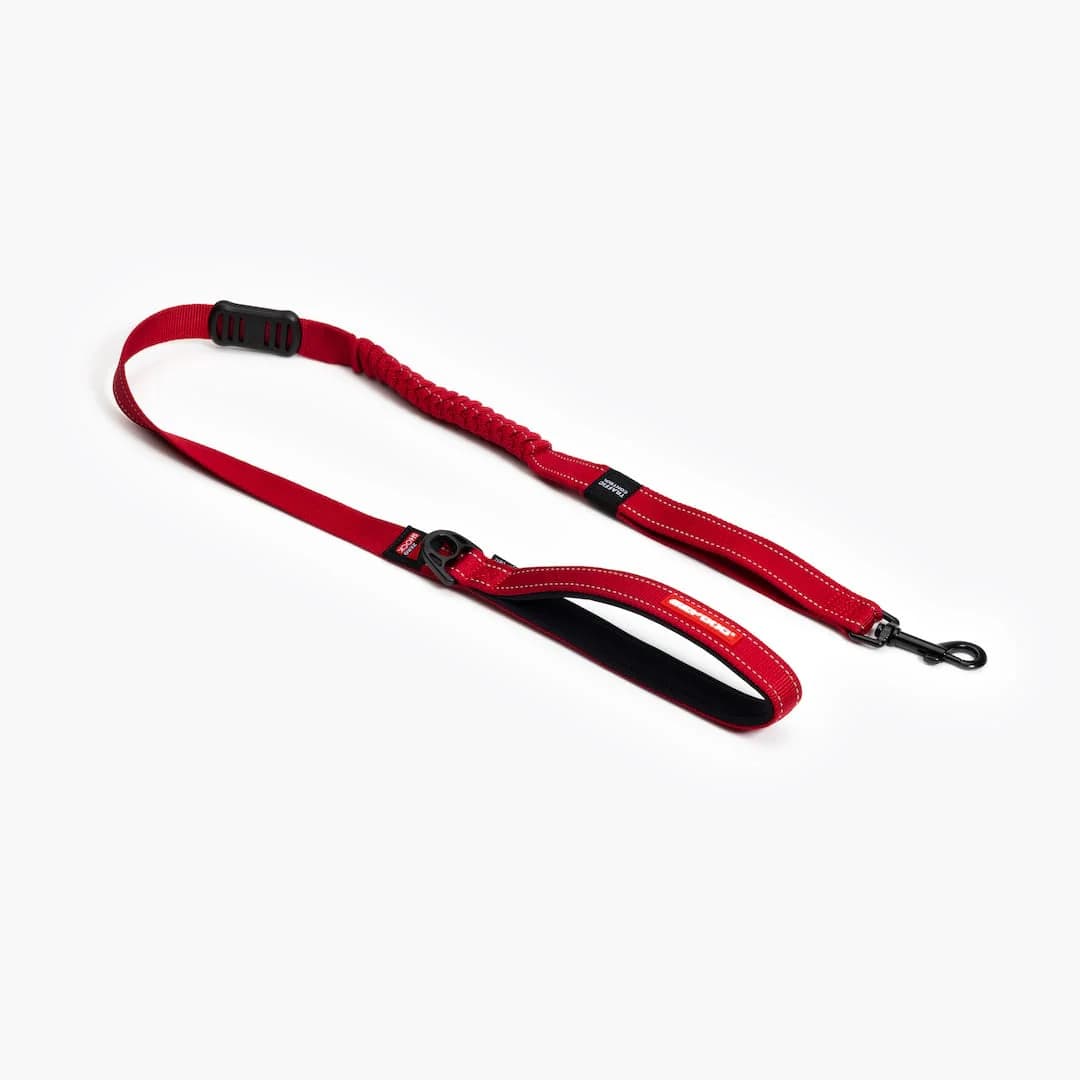
EzyDog
An everyday walking leash with a built-in Zero Shock section, three length choices, a neoprene-lined handle, reflective trim, and current exact-product availability at Chewy. It is the strongest general-purpose fit here for reducing abrupt arm jolt, but the elastic section does not stop pulling or replace loose-leash training.

A short elastic section can soften the jolt when a dog reaches the end of the leash, which may make an ordinary walk less punishing on the handler's hand and shoulder. EzyDog's Zero Shock Leash combines that section with a neoprene-lined handle, reflective trim, and three length choices. The useful choice depends on the route: a shorter model keeps the dog nearer at a busy trailhead, while a longer one gives more room on a clear path. Stretch also delays the instant when the line feels fully tight, so it can make precise timing harder during a loose-lead lesson. It does not teach the dog to stop pulling. The RSPCA's loose-lead guidance instead rewards the dog while the lead is slack and has the handler stop when the dog moves far enough to tighten it. AVSAB recommends reward-based methods and advises against leash corrections and other aversive techniques. Use the elastic for comfort while practicing those skills. Check the webbing and attachment points before each outing, and retire the leash if the elastic or stitching is damaged.
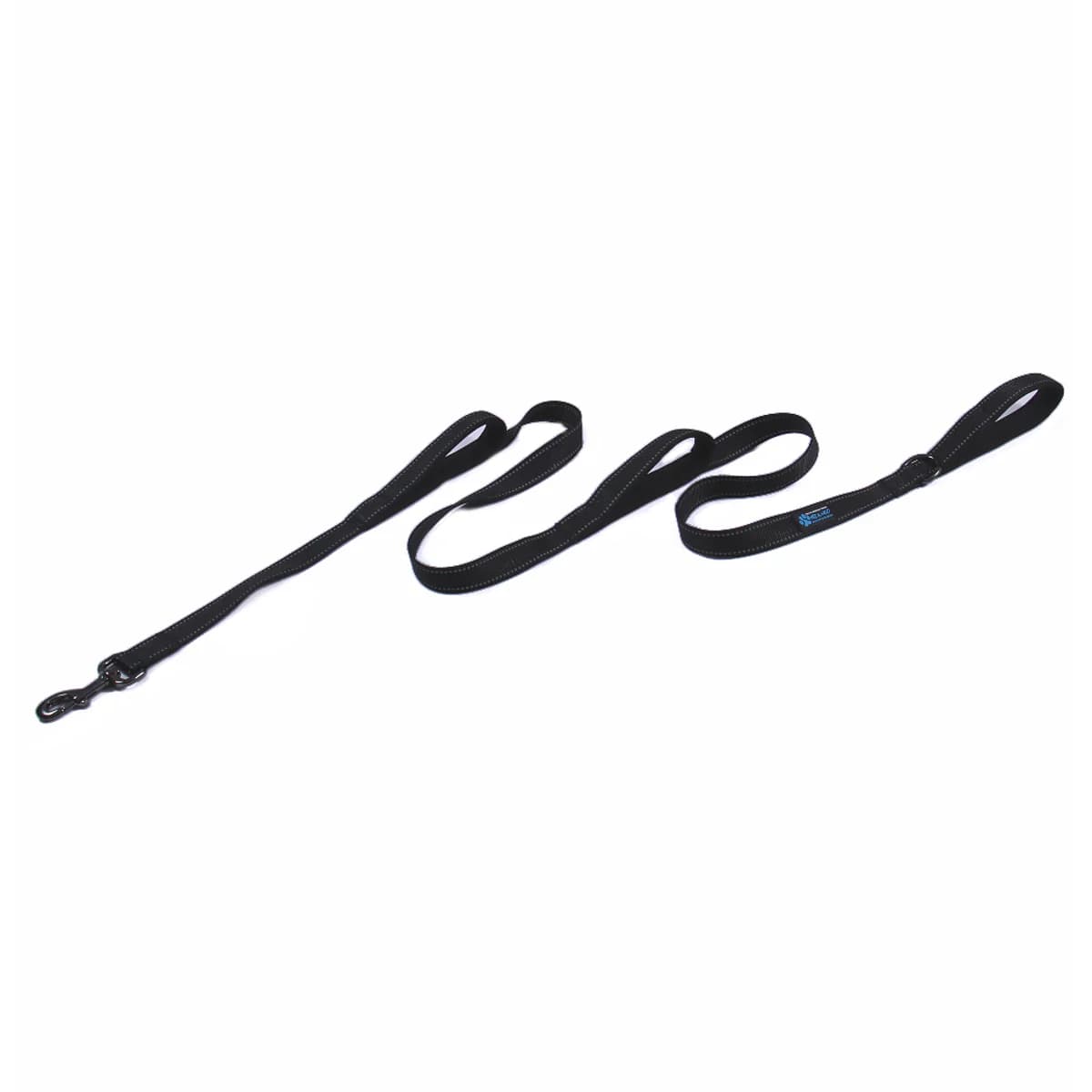
Max and Neo
A six-foot, one-inch-wide reflective nylon leash with padded handles near 18 inches, 44 inches, and the end. It gives handlers three deliberate control positions and is explicitly positioned by the brand for dogs that pull, but it has no bungee section to absorb abrupt force.
Extra handles are useful when the route repeatedly changes from open walking to tight control. The Max and Neo Triple Handle Heavy Duty Reflective Leash is a six-foot, one-inch-wide nylon leash with padded grips near 18 inches, 44 inches, and the far end. That layout lets a handler shorten the connection before crossing a road, passing another dog, or moving through a crowded parking area without winding loose webbing around a hand. It is a fixed leash, so there is no elastic section to absorb a sudden lunge. The closest handle also brings the dog very near the handler; use it before the difficult moment, then release back to a longer grip when there is safe space. Avoid holding a dog close for an entire hike simply because the handle is available. Practice changing grips at home, keep fingers out of loops when a hard pull is possible, and pair the leash with reward-based attention and loose-lead work. Reflective stitching helps visibility, but it does not replace a light where local conditions require one.
Ruffwear
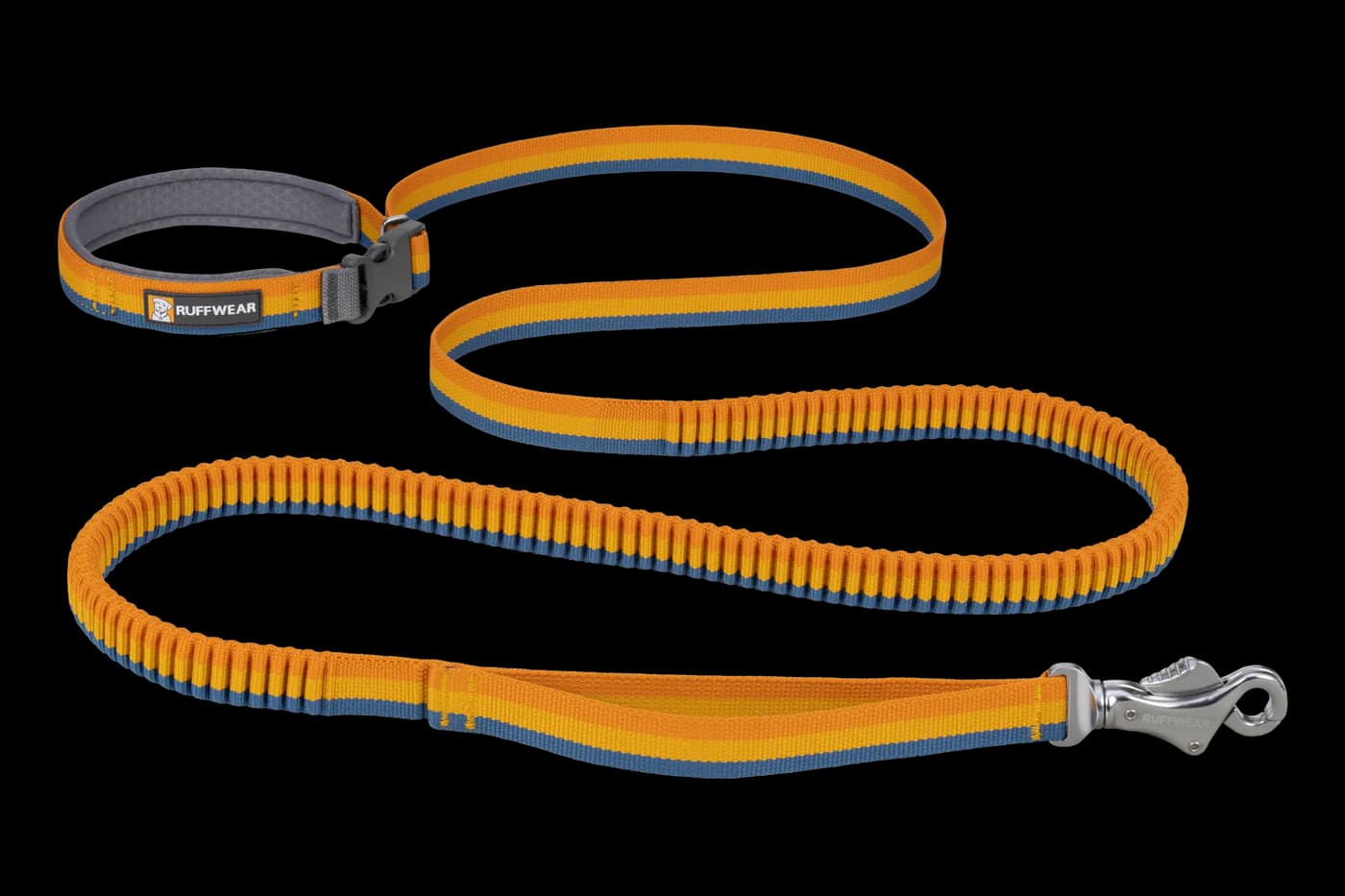
A well-established stretch-webbing leash that can be hand-held, worn around the waist, or secured around an object. Two lengths, a padded adjustable handle, traffic handle, Talon Clip, and a large public review base make it the most established mainstream option here, though the clip is not a locking design.

A wearable bungee leash frees the hands for trekking poles or running form, but it also transfers a dog's pull to the handler's waist. Ruffwear's Roamer Bungee Dog Leash can be held in the hand, worn around the waist, or secured around an object. It comes in two length ranges and includes stretch webbing, an adjustable padded handle, a traffic handle, and a swiveling Talon Clip. The clip does not lock. It is a poorer match for icy ground, steep descents, narrow ledges, or a dog whose sudden lunges can pull the handler off balance. Set the waist loop snugly enough that it does not slide, keep the traffic handle reachable, and rehearse a quick transition to hand-held control before entering a crowded area. Do not tether the dog to an object and walk away. A bungee can reduce abrupt load, but it can also reward leaning into steady pressure if every forward step happens on a tight line. Continue reinforcing slack and check that the leash length will not cross the path of other hikers.
Non-stop dogwear
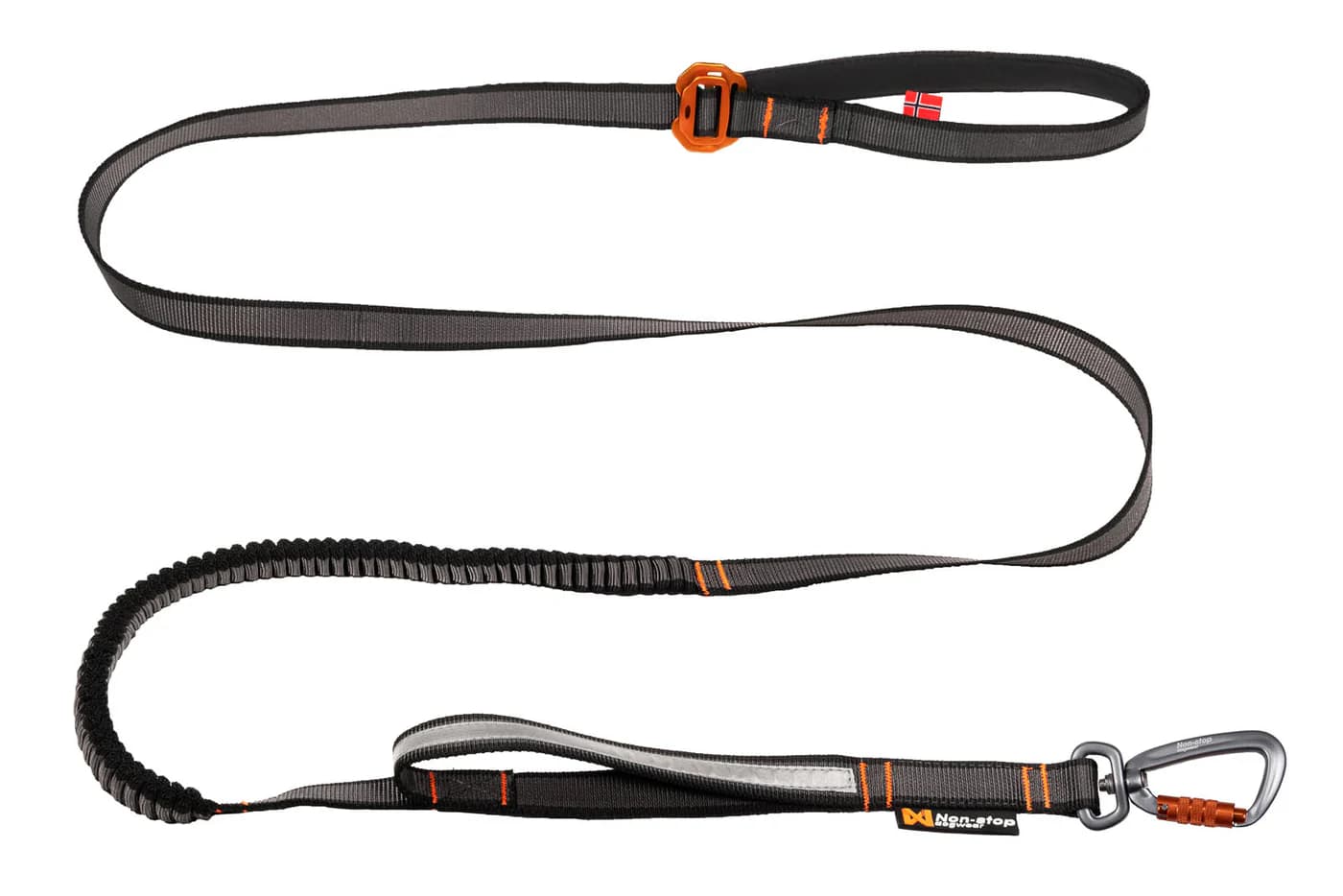
A purpose-built elastic leash that switches between waist-worn, hand-held, and tether configurations. Its 300 kg-rated twist-lock carabiner, traffic handle, neoprene-lined grip areas, 3M reflective material, and two widths make it the most complete technical system in this group.

Some hikers want the comfort of a wearable bungee but place more weight on a locking dog-end connection. Non-stop dogwear's Touring Bungee Adjustable switches among waist-worn, hand-held, and tether configurations. The brand specifies a twist-lock carabiner with a 300 kg rating, plus a traffic handle, neoprene-lined grip areas, 3M reflective material, and two widths. Those details suit routes where an accidental gate opening would have serious consequences, but a published hardware rating is not a guarantee for every use. Sand, mud, ice, corrosion, wear, and an incompletely closed sleeve can still compromise the connection. Lock and inspect the carabiner by hand before setting off, then check it again after breaks or brushy sections. The same balance warning applies as with any hands-free leash: if the dog can topple the handler, move the leash to a secure hand-held position or choose a different route. Use the traffic handle early around wildlife, drop-offs, bicycles, and narrow passing points. Elasticity manages force; training manages the behavior that creates it.
Non-stop dogwear
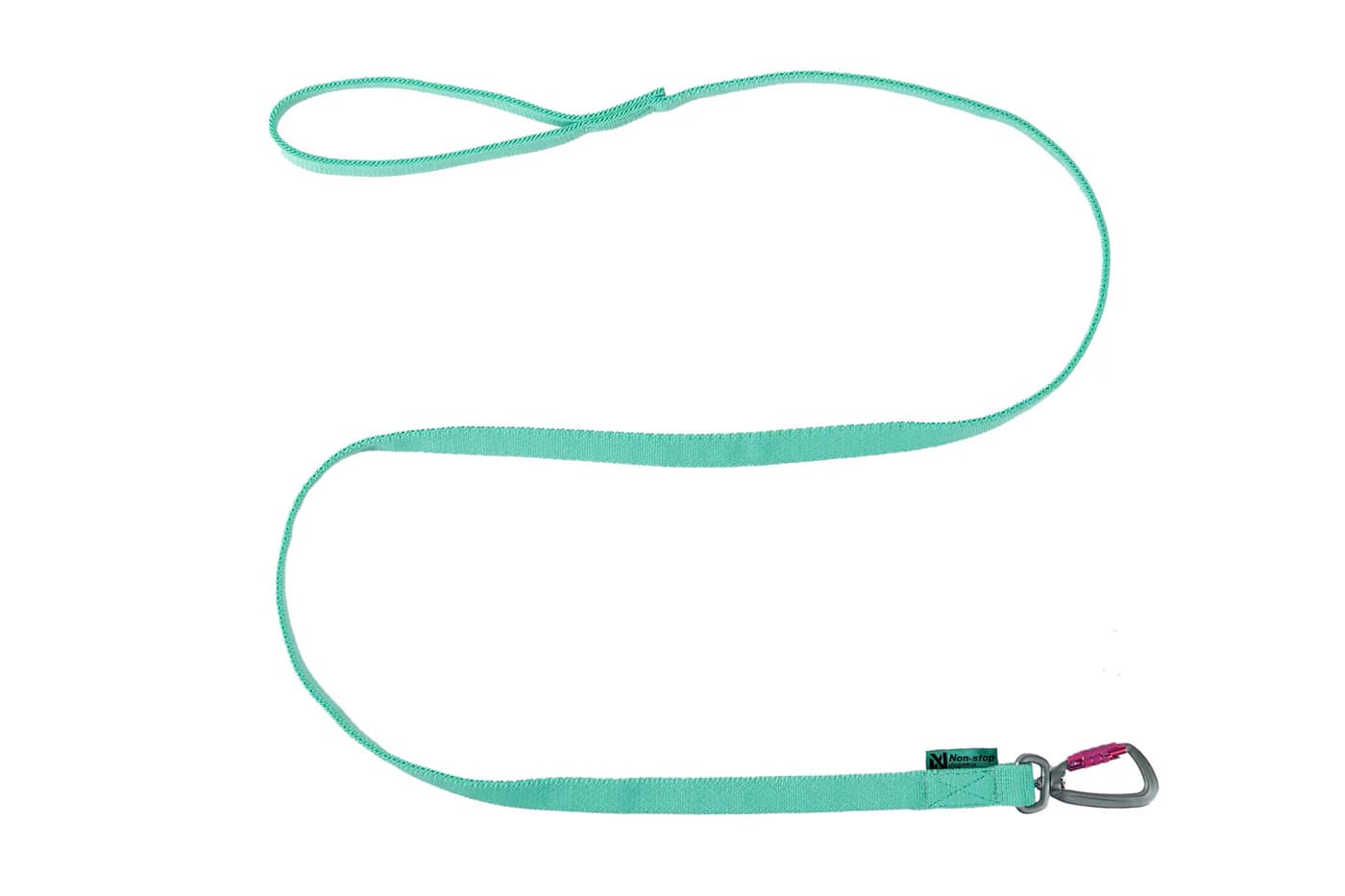
A fully elastic 2.0- or 2.8-meter line designed for canicross, bikejoring, and skijoring. It belongs in this ranking only as the specialist choice when pulling is intentional: it makes sustained pull more comfortable and must not be described as an anti-pull or training leash.
A pulling-sport leash solves a different problem from an everyday walking leash. Non-stop dogwear's Bungee Leash is fully elastic and comes in 2.0- and 2.8-meter versions for activities such as canicross, bikejoring, and skijoring. In those sports, the dog is taught to pull into a suitable harness while the elastic line smooths changes in load. That is the opposite of a loose-lead walking lesson. Do not buy this design because a dog already pulls on neighborhood walks and expect the equipment to discourage the habit. Use it only with the right pulling harness, activity setup, cues, conditioning, and instruction for the chosen sport. The longer line also needs clear space; it can snag on trees, cross another trail user's path, or create excess speed before the dog reaches full tension. Inspect the elastic cover, core, seams, and attachment hardware before each session, and stop if recoil becomes uneven or damage appears. Keep a separate fixed or moderately elastic leash for walking to and from the activity area so the dog receives a clear change of equipment and context.
Kurgo
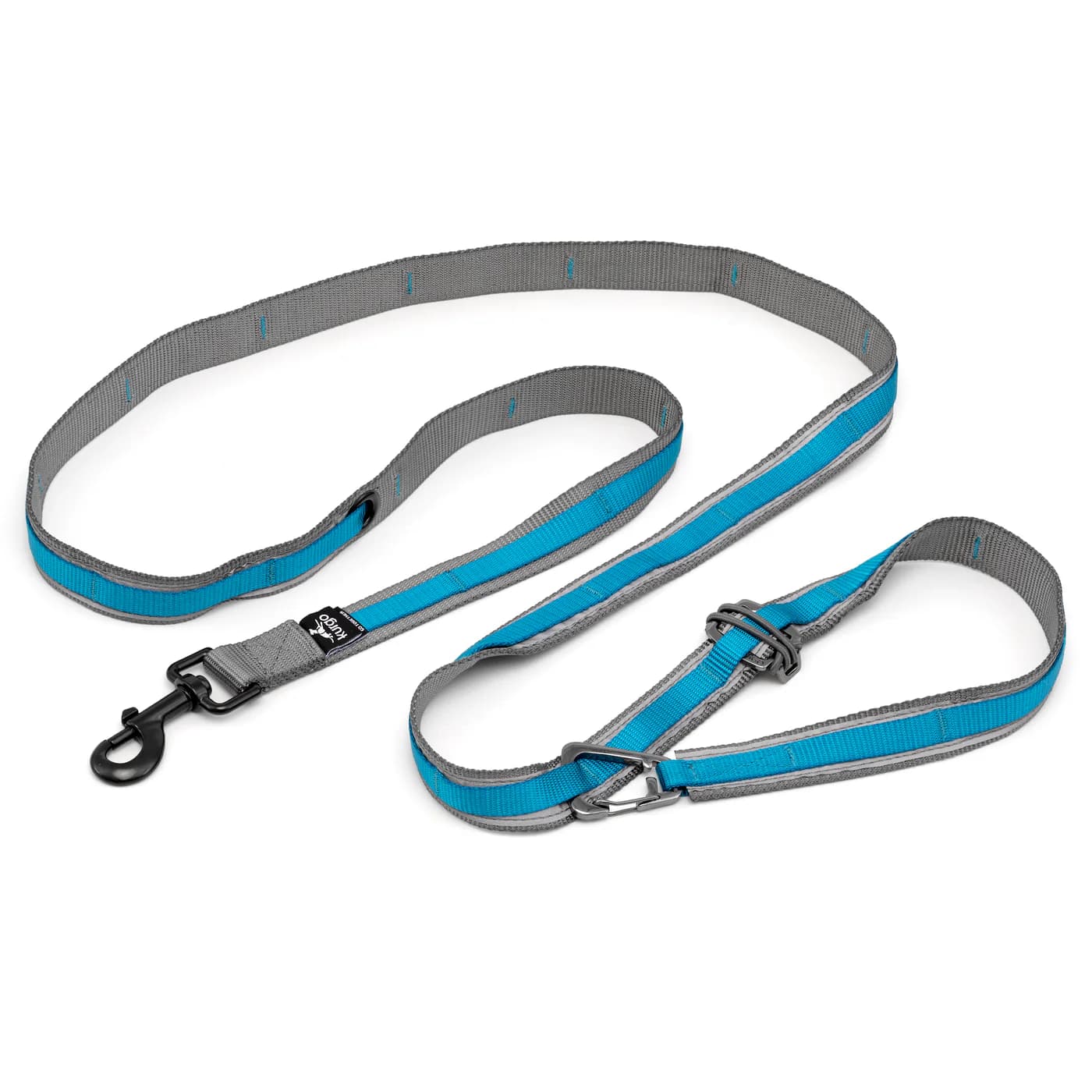
A reflective 48-72 in leash that reconfigures into six modes, including waist-worn running, over-shoulder hiking, short training, double-dog, and tether arrangements. It is the most affordable true multi-mode option here, but it lacks an integrated shock-absorbing leash section.

A convertible leash can cover several ordinary situations without adding elastic. Kurgo's Quantum Leash 2.0 adjusts from about 48 to 72 inches and can be arranged in six configurations, including waist-worn, over-shoulder, short training, double-dog, and tether modes. The value is flexibility: a handler can use a standard grip on a busy sidewalk, switch to crossbody carry on a calm trail, or shorten the leash for a controlled passage. The compromise is setup. Every added loop and connection has to be routed correctly, and the leash has no dedicated shock-absorbing section. Learn each configuration from the brand instructions before leaving home rather than experimenting beside a road. Confirm that the chosen arrangement cannot tighten around the handler's neck, catch a backpack strap, or leave a loose loop at knee height. The double-dog mode also assumes both dogs can move together without tangling or multiplying the handler's balance problem. For a strong puller, begin with the simple hand-held setup and reward slack. Move to a wearable mode only after the handler can maintain balance and change back to close control without fumbling.
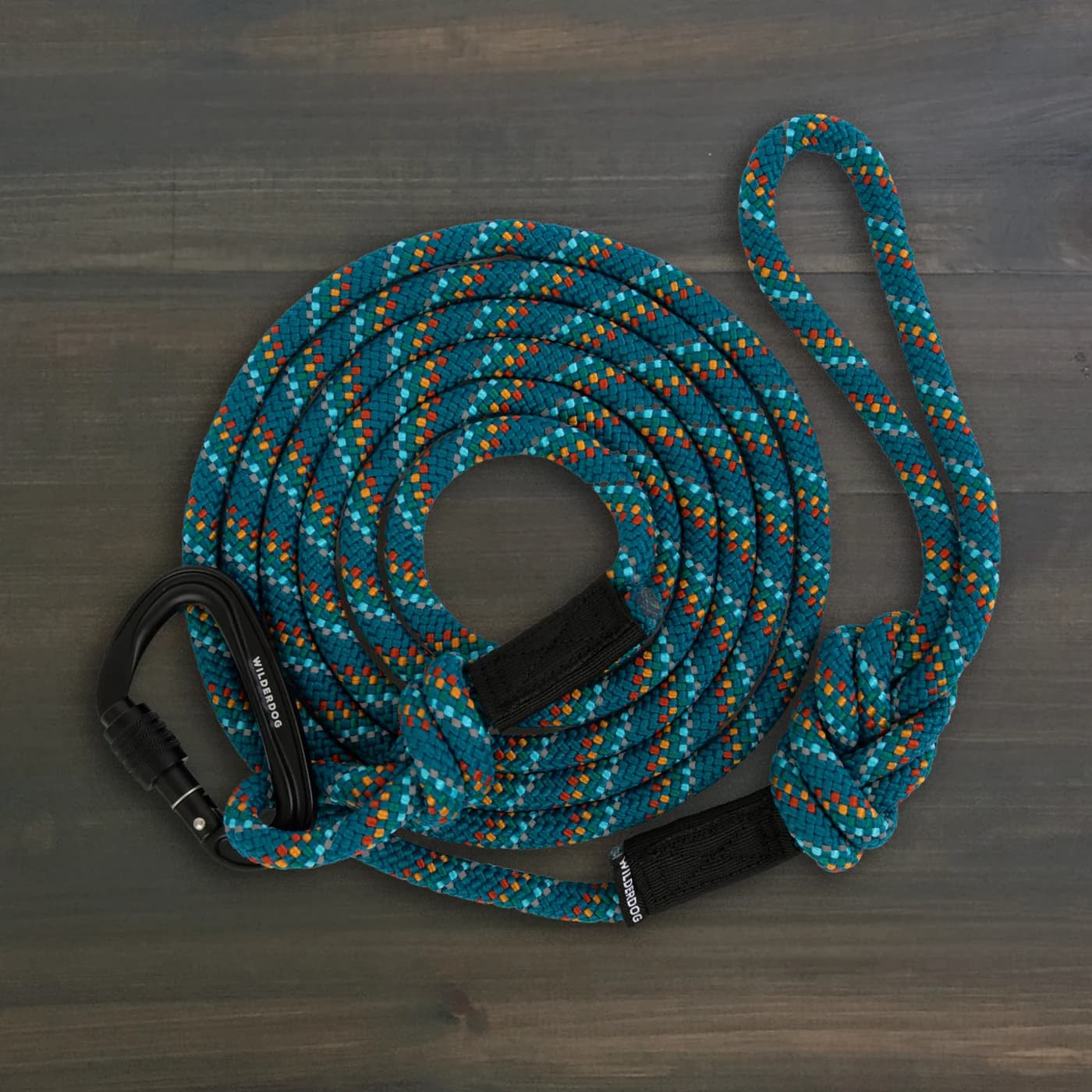
Wilderdog
A 3/8 in climbing-rope leash with a screw-lock aluminum carabiner rated to 17 kN. Only the 10 ft version can be knotted into the brand's hands-free setup, which also requires one additional carabiner. It gives dogs more hiking room, but has no bungee or swivel and requires the user to configure and manage the knots correctly.

A rope leash can feel familiar to hikers who already handle climbing-style cord, but its strength and length need context. Wilderdog's Big Carabiner Rope Leash uses 3/8-inch rope and a screw-lock aluminum carabiner that the brand rates to 17 kN. The five-foot version works as a conventional leash. Only the ten-foot model can be tied into Wilderdog's hands-free arrangement, which requires an additional carabiner and correct knot management. Ten feet can give a dog useful sniffing room on an open trail, yet it also creates more line to step over, wrap around vegetation, or carry across a switchback. There is no bungee to soften a lunge and no swivel to remove twists. The brand also advises against pairing it with a metal choke-chain collar. Inspect the rope for glazing, cuts, soft spots, and contamination, and make sure the screw sleeve closes completely. Do not treat the 17 kN figure as permission to absorb unlimited force with the dog's body or your own. Shorten the leash before blind corners and other trail users, then reward the dog for returning to a slack connection.
We used these primary or authoritative references when checking this guide. Product instructions and local rules can change, so confirm details that affect your trip.
Yes. It explains the main decision points in plain language and links to relevant product reviews when published options are available.
No. Prices, coupons, stock, and shipping terms can change. Confirm the current offer on the retailer page before checkout.
Related content