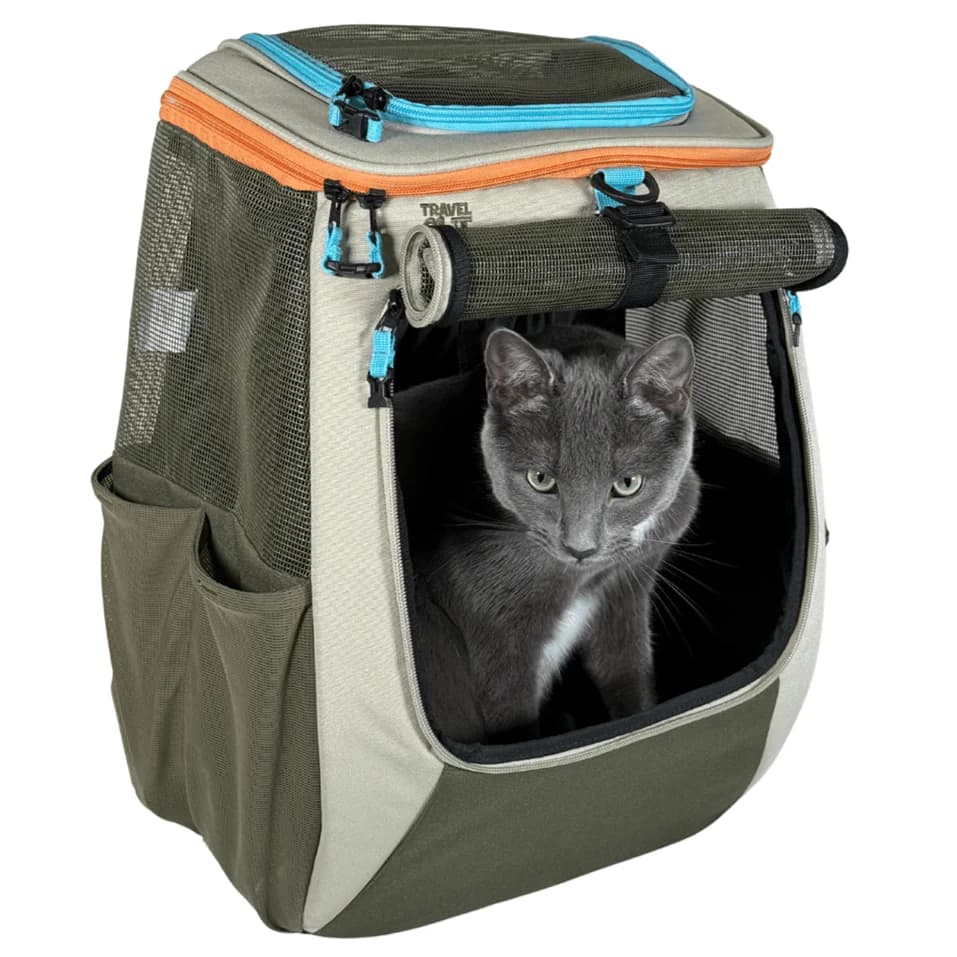
Check a cat harness before an outdoor walk using the exact model's size chart, model-specific one- or two-finger guidance, buckle and D-ring alignment, indoor movement checks, a gentle backward-step observation, hardware inspection, and a carrier-and-door backup plan.
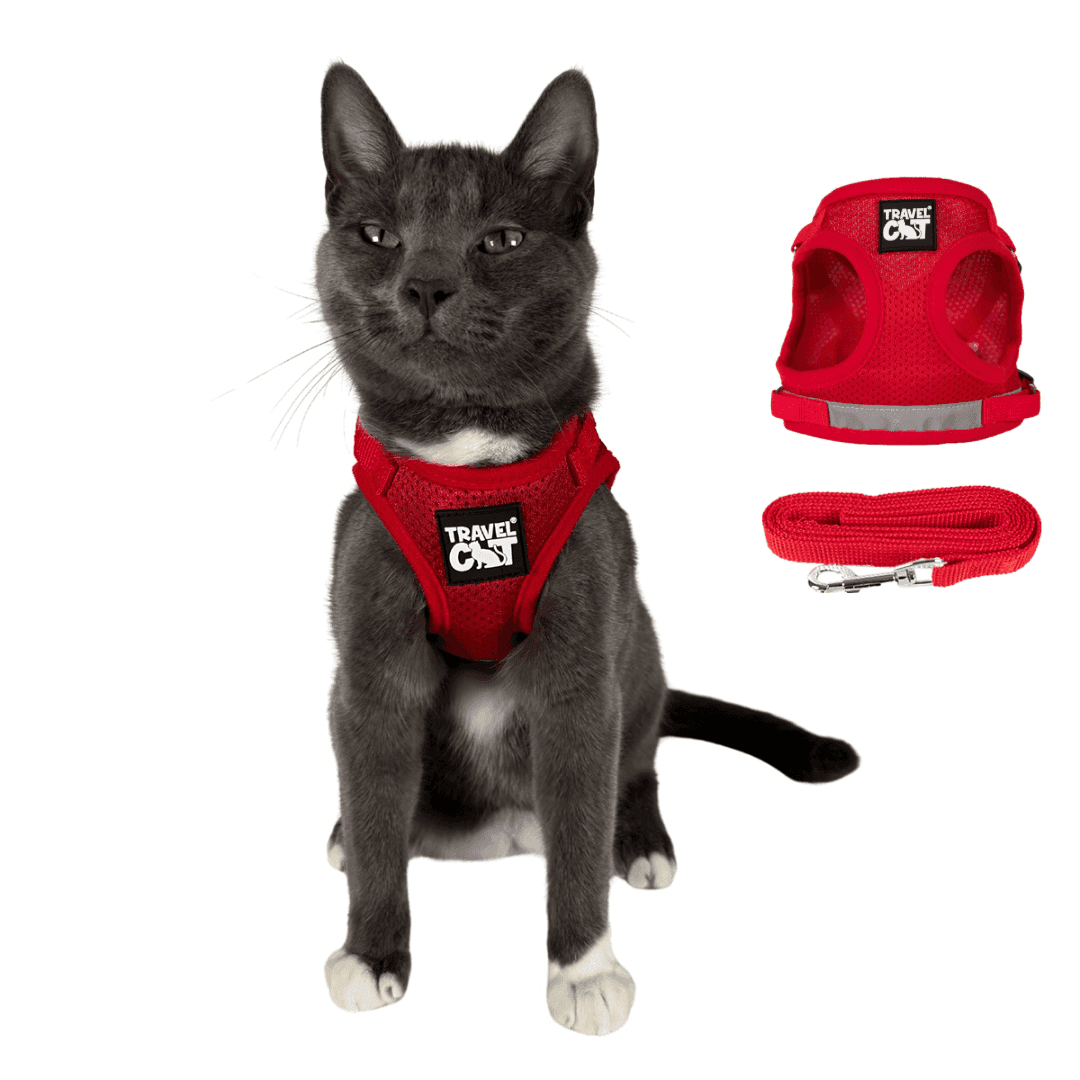
Travel Cat
True Adventurer combines breathable mesh, reflective trim, four strap adjusters, a hook-and-loop panel, a buckle, and a 4-foot leash. Its XS–L range and substantial public review history make it a practical middle-ground vest for supervised walking. Travel Cat's available harness-training session is general educational material rather than an exact-model demonstration, so it is not included as product-specific video evidence; no vest can compensate for incorrect sizing or rushed outdoor introduction.

Treat this as a pre-walk fit check, not a first-time harness-training lesson. If your cat is not already calm while wearing and moving in a harness, begin with our Cat Harness Training Guide at /articles/cat-harness-training-guide before using this checklist. For a cat that is ready, identify the brand, exact model, size, and current manufacturer chart; do not transfer a size from another harness, even one sold by the same brand. Measure with the cat standing naturally and use a soft tape at every point that the exact chart requests. Bring the tape close to the body through the coat without squeezing the chest. Travel Cat tells shoppers to measure chest girth behind the front legs for its applicable styles, but another design may request different points. Match the live measurement to the current chart for the Travel Cat True Adventurer rather than choosing by breed, weight, age, or a previous purchase. If a measurement falls outside the chart or the instructions conflict, postpone the walk and ask the manufacturer for help.
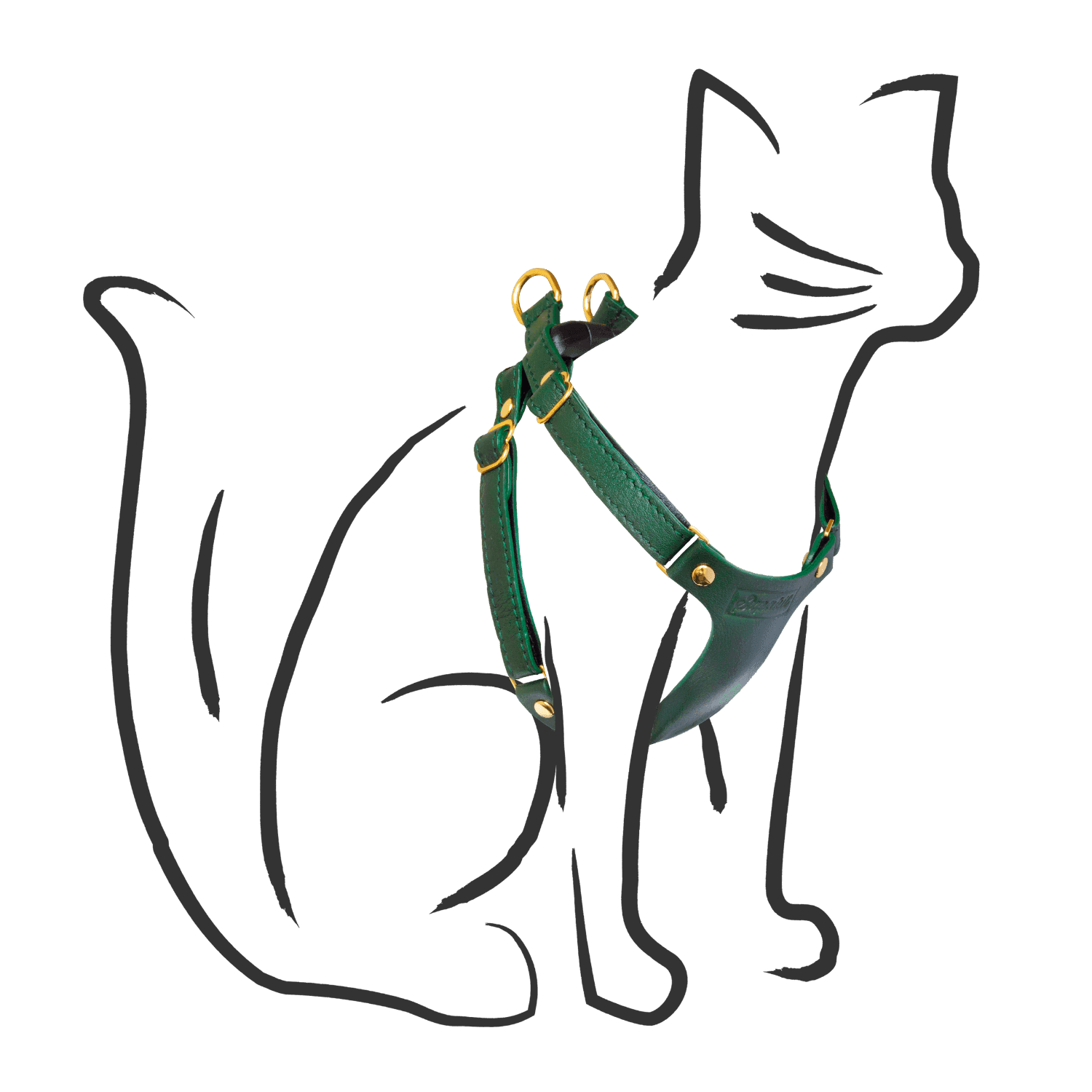
Supakit
Supakit is a low-profile step-in design with four-way adjustment and a supportive chest piece, offered in leather or vegan cork. The official product page and exact brand video provide useful fitting evidence. Its premium £60 price does not include a leash, some configurations may be on pre-order, and no low-profile harness can guarantee escape prevention without correct measurements and leash handling.

A finger-space check is useful only when it follows the instructions for the harness being worn. Travel Cat describes a two-finger check for the harness styles covered by its fitting guide. Supakit instead directs owners to compress the fur and fit one fingertip between the cat and its harness while the cat stands neutrally. Those directions are not interchangeable, and neither number should become a universal rule for every cat harness. For the Supakit Cat Harness, use the current Supakit size and fitting pages, adjust the left and right sides evenly, and then repeat the specified one-fingertip check after the cat has moved. Too much space can let the assembly shift; too little can restrict movement or create rubbing. A successful finger check is only one observation, not proof that a cat cannot escape. The harness must also remain centered during normal movement, and any model advertised as escape resistant still requires supervision and a controlled environment.
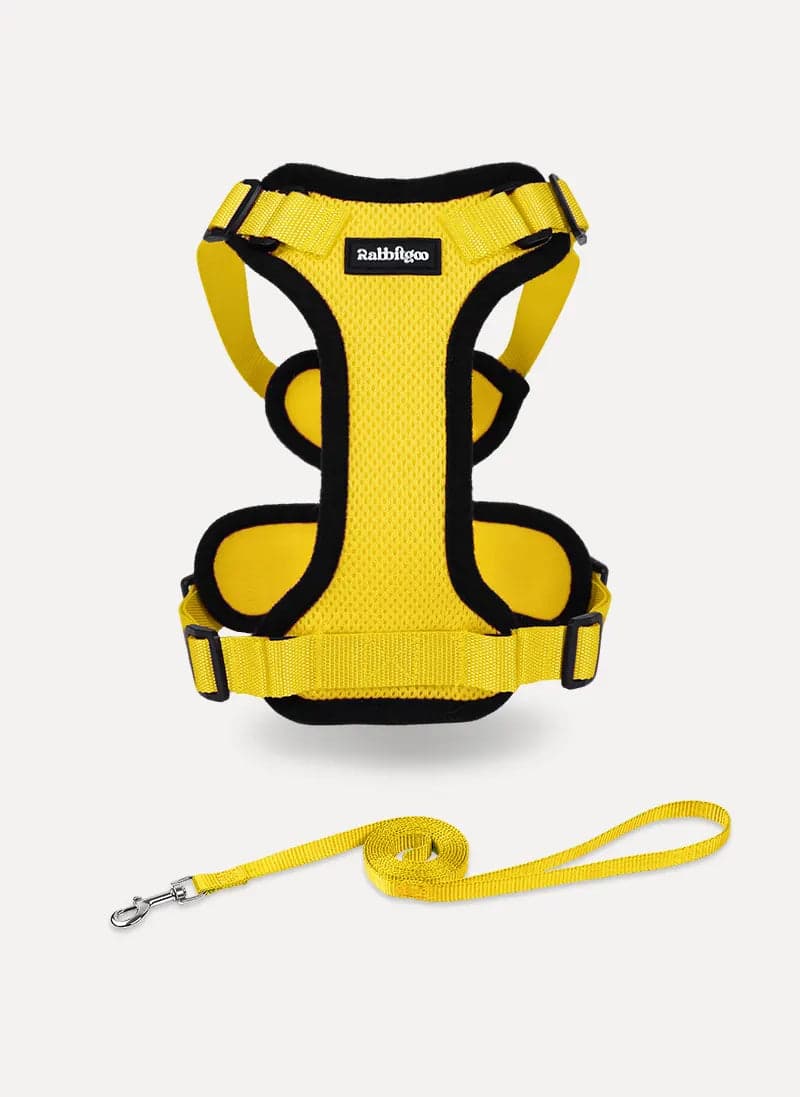
Rabbitgoo
Rabbitgoo offers a budget Y-shaped mesh vest with four adjustment points, two side buckles, reflective trim, soft edging, and a 4.9-foot leash. It has a wide color range and a verified official fitting video. Published size bands have gaps, the over-head entry will not suit every cat, and public feedback confirms that a determined or incorrectly fitted cat can still back out.

Lay every strap flat before clipping the leash. Remove twists, free trapped fur, and confirm that webbing passes through each adjuster exactly as the product instructions show. Close every buckle until it is fully seated, secure the full hook-and-loop contact area where one is used, and contain loose strap ends as directed. Position guidance is also model-specific. Supakit places its main buckle around the shoulder-blade area, its chest piece against the front of the chest, and its rear straps behind rather than over the front elbows. Rabbitgoo's corresponding cat-harness instructions use their own strap, hook-and-loop, and buckle sequence, so follow that page for the Rabbitgoo Adjustable Cat Harness instead of copying the Supakit layout. From above, verify that the back panel and leash D-ring are centered rather than hanging to one side. From the front, check that the harness does not migrate toward the throat. Any buckle, panel, or ring that cannot hold its intended position is a reason to refit before leaving.
OutdoorBengal
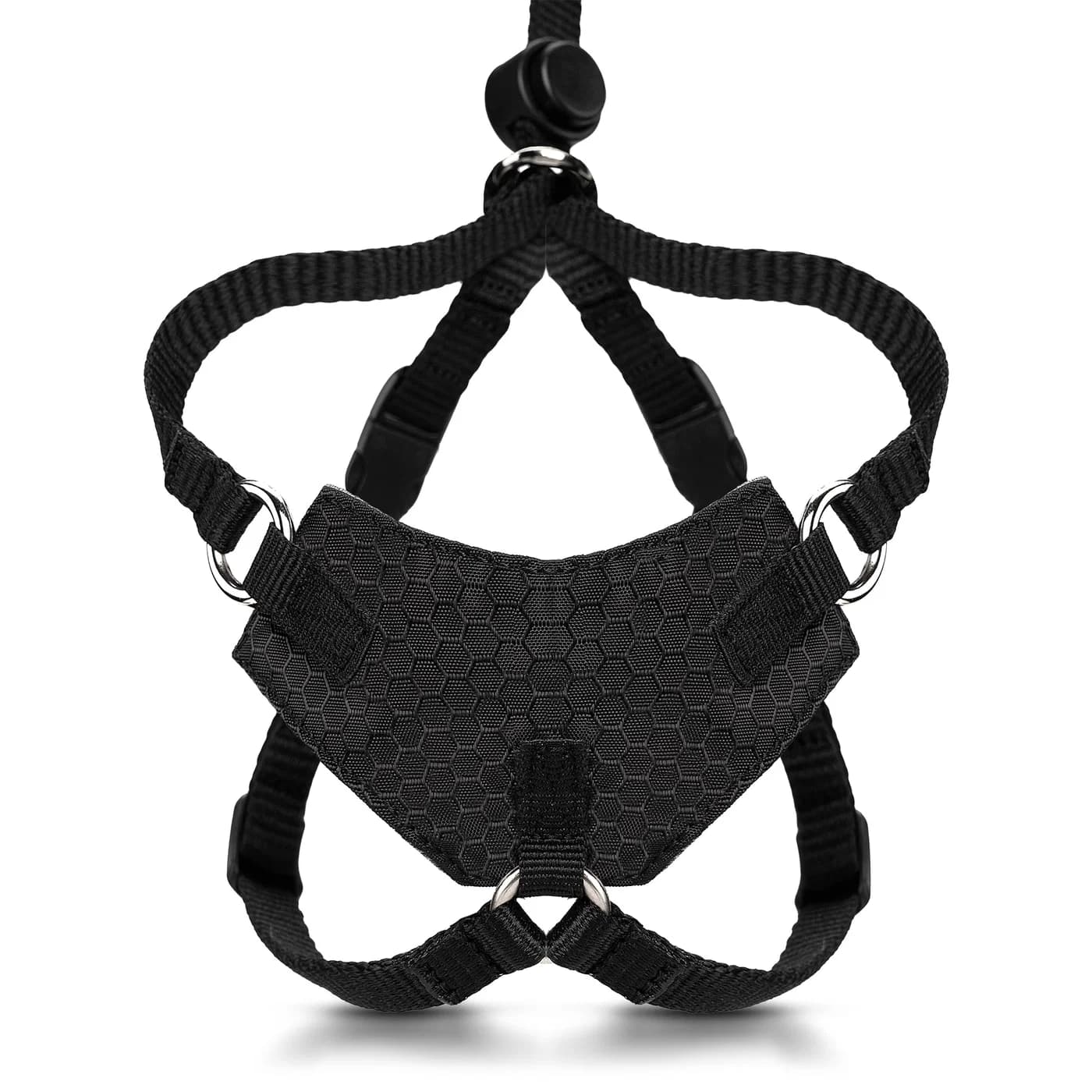
Houdini leads this research-based order because its light chest pad, adjustable side buckles, three girth ranges, included 6-foot leash, and back-out-resistant neck system are documented on one exact product page. That page also links an exact official OutdoorBengal video, while explicitly stating that the harness must not be used for tethering or left on an unattended cat. The product and brand use the phrase “escape-proof,” but no harness guarantees escape prevention; fit, leash direction, training, and continuous supervision remain essential.

A static fit can change as soon as the cat moves. In a closed indoor room, observe a short sequence of natural standing, straight walking, turning in both directions, sitting, and lying down. Do not lure the cat through a long workout; the purpose is to see whether the OutdoorBengal Houdini Cat Harness stays in place during ordinary positions. Watch the shoulder openings, neck edge, breastbone, armpits, belly edge, adjustment sliders, back panel, and D-ring. The harness should not rotate markedly, climb toward the ears, trap a front leg, press into an armpit, or visibly shorten the cat's stride. Travel Cat notes that difficulty walking, limping, or chafing can indicate a poor or overly tight fit. After the movement sequence, check the manufacturer-specified clearance again because the coat may settle and a slider may move. Passing while standing does not cancel a failure during sitting or turning. If movement looks altered, remove the harness and reassess rather than expecting the cat to adapt outdoors.
Kitty Holster
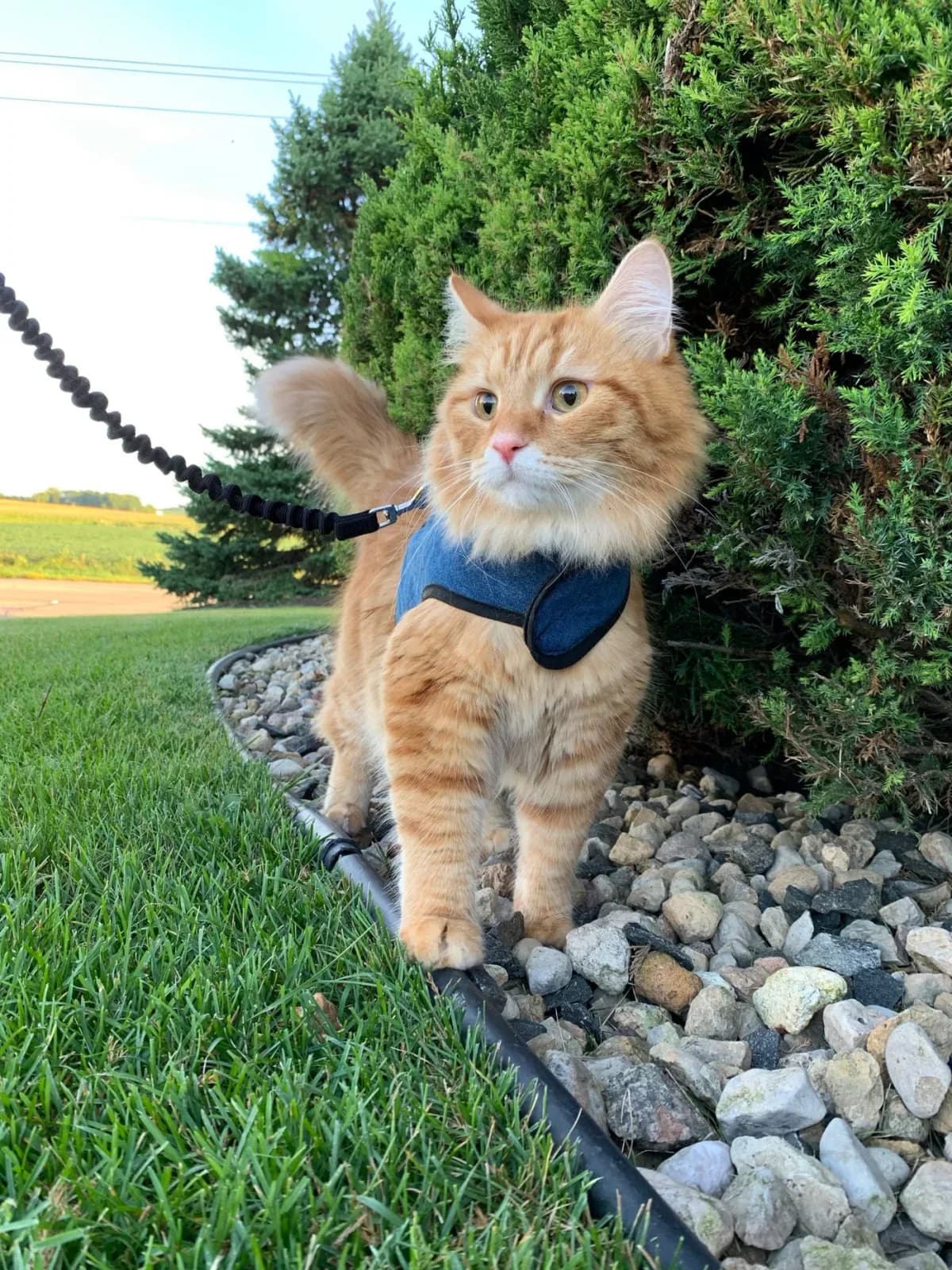
Kitty Holster uses a broad wraparound vest with a cotton shell, breathable muslin lining, and wide hook-and-loop closures instead of thin neck and belly straps. Four published sizes and free-exchange language help with fit, while the official CrazyKFarm video demonstrates how to put on this exact model. The larger fabric footprint may feel warm or restrictive to some cats, and the brand's escape-resistant wording still does not guarantee that a cat cannot get out.
Cats can reverse suddenly when startled, so observe how the harness behaves during a natural backward step before approaching an exterior door. Work in the same closed room, attach the leash to the designated ring, and keep the line short enough to prevent tangling but without pulling the cat backward. Let the cat turn or step back voluntarily while you maintain only steady, light control. With the Kitty Holster Cat Harness, use the current manufacturer instructions for its own layout and adjustment; the product name does not replace a fit check. Stop if the neck opening moves toward or over the ears, a shoulder begins to pass through an opening, the body section rotates, a slider lengthens, or any closure separates. Never jerk the leash, drag the cat, deliberately frighten the cat, or repeat the maneuver until the cat struggles. This observation can reveal an obvious fit problem, but no indoor test proves that a harness is escape-proof in an unpredictable outdoor setting.
PetSafe
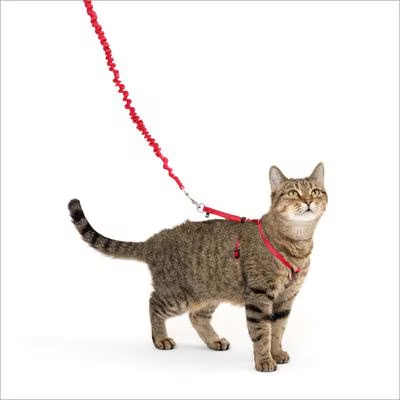
Come With Me Kitty is the lightest-feeling option near the top of this list: two adjustment points and a quick snap pair with a contrasting belly strap, rubber stopper, and bungee leash. Three sizes cover published chest ranges from 9 to 18 inches. It has less body coverage and no documented reflective element, so it is better suited to calm, trained cats and daylight walks than owners wanting a vest or low-light visibility.

Do not preserve an adjustment merely because it worked on the last walk. A growing kitten, weight gain or loss, seasonal coat changes, grooming, mat removal, and a wet coat can all change how the same harness sits. Re-measure after a visible body or coat change and compare the new numbers with the exact model's current chart. Clothing, cooling layers, flotation gear, and tracker mounts can also change clearance or pull the harness off center. Do not place anything beneath or on the PetSafe Come With Me Kitty Harness and Bungee Leash unless the applicable instructions allow that setup; fit every permitted combination as a new configuration. Repeat the position, finger-clearance, movement, and backward-step observations after making any adjustment. If the cat sits between sizes, follow the current manufacturer direction rather than automatically sizing up or down.
Fit is irrelevant if a worn component cannot carry the leash load. Before each outing, run your fingers along the webbing and fabric while looking for cuts, thinning, hard creases, stretched holes, frayed edges, loose stitching, sharp damage, or seams pulling away from a panel. Move each adjustment slider and confirm it holds its position after light hand tension. Open and close every buckle, checking that both sides engage completely without cracks, deformation, trapped fur, or debris. Clean hair and grit from hook-and-loop closures and confirm the full intended surface attaches. Examine the D-ring for looseness, bending, corrosion, or separation from its stitched anchor, then operate the leash clip and confirm its gate closes fully on its own. A gentle hand check is sufficient; do not conduct a destructive pull test with the cat inside. Retire the harness or leash whenever a load-bearing part, closure, or seam is doubtful. Past successful walks are not evidence that damaged equipment remains usable.
Complete the entire check inside a closed room, attach the leash, take control of the handle, and only then manage the exterior door. If the walk begins away from home or involves a vehicle, move the cat in a secure, familiar carrier rather than treating a harness and leash as transportation restraint. Feline veterinary guidance says a harness or collar with a leash is not a safe substitute for a cat carrier during travel. Keep the carrier available as a second containment layer and a predictable retreat; do not open it beside traffic or an uncontrolled entrance and then attempt the fitting. Cancel the outing if the size is outside the current chart, the harness rotates or rides forward, a leg can enter the wrong opening, a slider slips, hardware is damaged, or the cat's normal movement changes. Also stop for freezing, hiding, a body held close to the ground, flattened ears, frantic escape attempts, trembling, or rapid breathing. International Cat Care identifies these as possible fear or anxiety responses. A well-checked harness reduces avoidable gaps; it never guarantees containment.
We used these primary or authoritative references when checking this guide. Product instructions and local rules can change, so confirm details that affect your trip.
Yes. It explains the main decision points in plain language and links to relevant product reviews when published options are available.
No. Prices, coupons, stock, and shipping terms can change. Confirm the current offer on the retailer page before checkout.
Related content